The coffee in Beirut tastes like cardamom and ash. If you sit on a plastic chair in Bourj al-Barajneh, just south of the city center, you can hear the Mediterranean crashing against the rocks a few miles away. But nobody is listening to the waves. They are listening to the sky. They are listening to the silence, which, in this part of the world, is the loudest sound of all.
For a few days, the silence held. A fragile ceasefire, brokered under the heavy glare of Washington’s diplomatic spotlights, promised to halt the devastation between Israel and Hezbollah. It was a piece of paper signed in rooms with high ceilings and polished mahogany tables. But on the ground, a ceasefire is not a document. It is a breath. It is the sudden, terrifying luxury of walking to the grocery store without looking up.
Then came the warnings from Tehran.
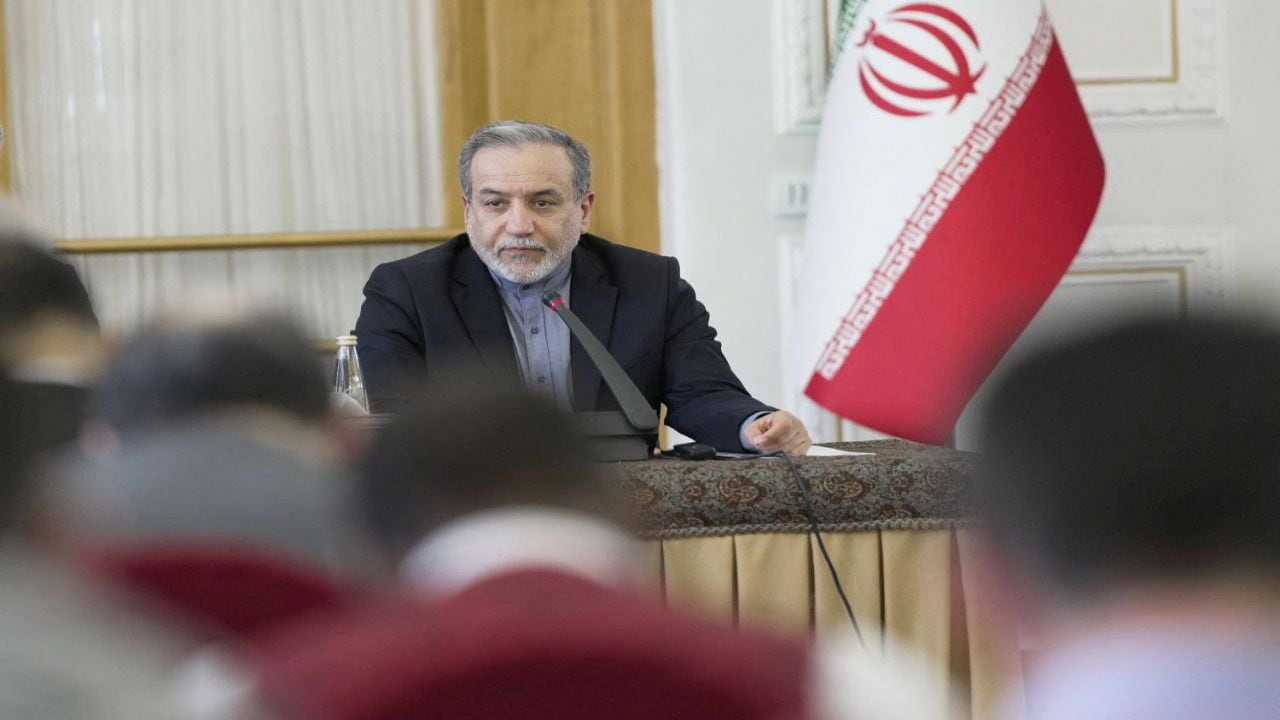
When the Iranian foreign ministry spoke out, declaring that any continued Israeli military action in Lebanon would not just be a localized skirmish but a direct violation of the American-backed truce, the words traveled fast. They rippled through the alleyways of Beirut and across the border towns of the south, where families were just beginning to sweep the broken glass from their doorsteps. The geopolitical machinery of the Middle East is massive, cold, and rigid. Yet its gears grind directly over the lives of people who just want to finish their coffee in peace.
To understand why this warning matters, we have to look past the official press releases. We have to look at the invisible threads connecting Washington, Tehran, Jerusalem, and Beirut.
Imagine a house built on a fault line. The architects in Washington claim they have reinforced the foundations. The neighbors, however, are pointing at the widening cracks in the drywall. Iran’s position is a stark reminder that in the modern theater of war, there is no such thing as a localized conflict. A drone strike on a small village in southern Lebanon is not an isolated tactical decision. It is a match struck in a room full of gasoline. Tehran is signaling that if the Western powers cannot or will not hold their allies to the letter of the agreement, the entire structure will collapse.
The tragedy of international diplomacy is that it speaks a language entirely divorced from human blood. Bureaucrats talk of "proportionality," "deterrence," and "spheres of influence."
Let us translate those terms into reality.
Consider a woman named Farah. She is not a politician. She does not belong to any militia. She is thirty-four years old, and she owns a small bakery that smells of wild thyme and olive oil. When the bombs were falling, her world shrunk to the dimensions of a windowless basement. When the ceasefire was announced, she did not celebrate. She simply walked back upstairs, wiped the dust off her countertops, and began to knead dough.
For Farah, the Iranian declaration is not a headline to be analyzed over a morning brief. It is a weather report predicting a hurricane. If Israel continues its incursions, arguing that it is merely clearing out residual threats, the truce evaporates. If Iran decides the violation requires a response from its proxies, the sky opens up again. Farah’s bakery, rebuilt three times in the last fifteen years, becomes ground zero once more.
The core tension lies in the definition of compliance. The text of the agreement, heavily influenced by US mediators, was meant to create a buffer zone, a space where weapons would be cleared and displaced civilians could return home. But a ceasefire is only as strong as the trust between the people who hate each other most.
Israel views its ongoing surveillance and occasional targeted strikes as defensive measures, essential to preventing a resurgence of hostilities along its northern border. Iran and its regional allies view those exact same actions as a blatant disregard for international law, a sign that the paper signed in Washington carries no real weight.
It is a classic, terrifying paradox. One side believes it must strike to maintain security; the other believes it must retaliate to maintain dignity. Both paths lead back to the rubble.
The role of the United States in this delicate dance is fraught with historical baggage. Washington wanted a win. A peace deal in Lebanon, even a temporary one, offers a rare moment of diplomatic success in a region that has spent years burning. But by attaching its name so prominently to the deal, the American government also attached its credibility.
When Iran states that attacks violate the ceasefire with the US, they are intentionally shifting the blame. They are telling the world that if the deal fails, the failure belongs to the superpower that guaranteed it. It is a masterful piece of diplomatic leverage, turning a local truce into a test of global authority.
But the real problem lies elsewhere. It lies in the exhaustion.
Spend enough time talking to people in war zones, and you realize that fear is not the dominant emotion. Terror wears off after the first hundred sirens. What replaces it is a profound, crushing weariness. It is the fatigue of knowing that your life is a currency spent by people you will never meet, in capitals you will never visit.
The people of Lebanon are trapped in a geopolitical vice. On one side is the military might of a technologically superior neighbor. On the other is the strategic ambition of a regional superpower that views their country as a forward operating base. In the middle is a civilian population that has mastered the art of survival at the expense of their own sanity.
The numbers are easy to find. Thousands dead, tens of thousands displaced, billions of dollars in infrastructure reduced to gray powder. But those statistics are numbing. They do not tell you about the sound a refrigerator makes when the power goes out for the third day in a row, or the specific shade of yellow the sky turns when a building collapses two blocks away. They do not capture the quiet, desperate calculations of a father wondering if he has enough fuel in his car to reach the mountains if the sirens start again tonight.
We often treat these international standoffs like a chess game. We analyze the opening moves, the sacrifices, the grand strategies of the grandmasters. But in chess, the pieces do not bleed. The pawns do not have children who wake up screaming in the middle of the night because a truck backfired down the street.
Iran’s warning is a declaration that the chess game is reaching a critical juncture. The piece of paper signed with American ink is tearing at the edges. If it rips completely, the fallout will not be contained within the diplomatic corridors of Washington or the government offices of Tehran. It will pour down on the hillsides of southern Lebanon, through the valleys, and into the crowded apartments of Beirut.
The sun goes down over the Mediterranean, casting long, dark shadows across a city that has been broken and rebuilt more times than history cares to count. The bakery is closed now. The streets are quiet, save for the distant hum of a generator struggling to keep the lights on. Everyone is waiting. They are waiting to see if the people with the power to destroy will choose to hold back, or if the silence of the night will once again be shattered by the roar of the sky.
A man sits on his balcony, smoking a cigarette, watching the horizon. The glowing ember is the only light for blocks. He does not look at his phone for news updates. He knows that if the world changes, he will hear it long before it is written down.