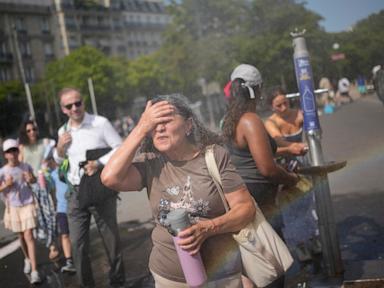
France heatwave excess deaths signal a structural crisis
When Santé Publique France released its preliminary numbers for early summer, the toll was jarring. Between June 17 and July 2, France recorded 5,764 excess deaths—a 36% jump above statistical norms for that time of year. More than half of those casualties occurred across just three days, from June 25 to June 27, when daytime temperatures surged far past 40°C (104°F) and night air barely cooled.
It's the highest excess mortality rate the country has seen during a single heat event since the infamous 2003 disaster. Yet back in 2003, people treated extreme heat as a freak statistical anomaly. Today, it’s a recurring seasonal threat.
What makes this early summer spike so brutal isn't just the raw mercury level. It's the timing and the environment. Arriving in mid-June, the heat hit when schools were in session, offices were packed, and municipal infrastructure was operating at normal capacity. The human body hasn't had time to acclimate to summer, let alone extreme heat. When you pair an early-season spike with Western Europe's build environment, the risk compounds fast.
Expected Deaths vs Actual Deaths (June 17 - July 2)
-------------------------------------------------------
Expected Baseline Deaths:  15,910
Actual Recorded Deaths:   21,674
Excess Mortality Spike:    5,764 (+36% above baseline)
Why early summer heat waves hit harder than August spikes
Early heat waves catch human biology off guard. Physiologically, acclimatization to heat takes about ten days to two weeks of gradual exposure. During that window, the cardiovascular system adjusts. Plasma volume expands, sweating becomes more efficient at cooling the skin, and heart strain decreases under thermal stress.
When heatwaves hit in mid-June instead of late August, that biological buffer doesn't exist.
The Paris region took the hardest hit, logging nearly 2,000 unexpected deaths—an 80% jump above typical baseline numbers. In dense urban zones, concrete, asphalt, and stone absorb solar radiation all day and bleed it back into the air at night. When overnight low temperatures stay elevated, the body gets zero recovery time. Cardiovascular systems work overtime trying to pump blood to the skin for cooling, which triggers fatal events for vulnerable populations.
Where the Excess Casualties Occurred
-------------------------------------------------------
Hospitals:                       ~50% of total deaths
Private Homes:                   ~33% of total deaths
Care Homes / Senior Facilities:  ~17% of total deaths
Roughly two-thirds of those who died were 75 or older. Elderly individuals often have a reduced thirst response and lower sweat capacity, meaning dehydration sets in rapidly before they even feel thirsty. But heat stroke isn't the only killer. Most excess deaths get classified under "all causes" because extreme heat aggravates underlying conditions like renal failure, heart disease, and respiratory illness.
The architectural trap in Western European cities
It’s easy to ask why people don’t just turn on the air conditioning. In France, less than 25% of residential homes have air conditioning units. That isn't an oversight—it's a reflection of historical design choices.
Traditional French homes, apartments, and public institutions were engineered for thermal retention. Thick stone walls, tiled roofs, and compact layouts kept heat indoors during long, cold winters. In a changing climate, those same buildings act like thermal ovens during sustained heat events.
European Urban Infrastructure Challenges
----------------------------------------------------------------------
Building Design    | Built to retain winter warmth, traps indoor heat.
AC Adoption        | <25% in homes; high electrical grid strain if scaled.
Night Cooling      | Urban Heat Island effect prevents overnight drops.
Public Spaces      | High ratio of paved surfaces to green canopy.
Installing retrofitted AC units everywhere seems like a quick fix, but it comes with sharp trade-offs:
- Thermal rejection: Air conditioners cool indoor rooms by dumping excess heat directly back out into the street, compounding the local urban heat island effect for pedestrians.
- Power grid stress: Mass adoption triggers massive electricity demand spikes, straining regional energy grids when power systems are already stressed.
- Economic barriers: Lower-income households and elderly citizens on fixed pensions can't afford purchase and operating costs, widening health inequality gaps.
Beyond residential units, public infrastructure suffered across the region. Drowning deaths spiked nationwide with 40 recorded drownings in a single week as people sought relief in rivers, canals, and unmonitored waters. Firefighting crews faced brutal conditions, battling flare-ups from south-western Gironde to the Fontainebleau Forest outside Paris.
Moving from crisis management to heat resilience
Managing heat-related mortality requires shifting away from emergency alerts and moving toward structural urban adaptation. Cities need practical interventions that cool neighborhoods naturally while protecting vulnerable populations.
Passive cooling retrofits
Simple architectural adjustments yield immediate temperature reductions indoors. External window shutters, reflective roof coatings, and shade awnings stop solar radiation before it hits glass and stone. Keeping windows sealed during daytime hours and opening them only during peak overnight cool windows remains the simplest baseline defense.
Expanding urban green canopy
Replacing non-porous asphalt with urban forests, pocket parks, and permeable surfaces breaks up heat sinks. Tree canopies block direct sunlight and cool surrounding air through evapotranspiration, dropping ambient street temperatures by 2°C to 5°C.
Automated checks for isolated residents
During the 2003 heatwave, isolation was a major factor in senior mortality. Modern municipal registries allow local health authorities to track vulnerable residents, deploy community volunteers, and verify that isolated individuals have access to cool water and properly ventilated spaces.
Creating accessible cooling centers
When home cooling fails, public infrastructure must fill the gap. Libraries, public museums, civic centers, and underground spaces equipped with heavy climate control serve as essential cooling refuges during dangerous temperature spikes.
To protect yourself and family members during extreme heat spikes, focus on core physical defenses. Keep indoor spaces shaded by lowering exterior shutters early in the morning. Drink water steadily throughout the day without waiting for thirst signals, and avoid heavy exertion between 11:00 AM and 6:00 PM. Check in daily on elderly neighbors or relatives living alone, ensuring they have functional fans, airflow, and adequate hydration.


