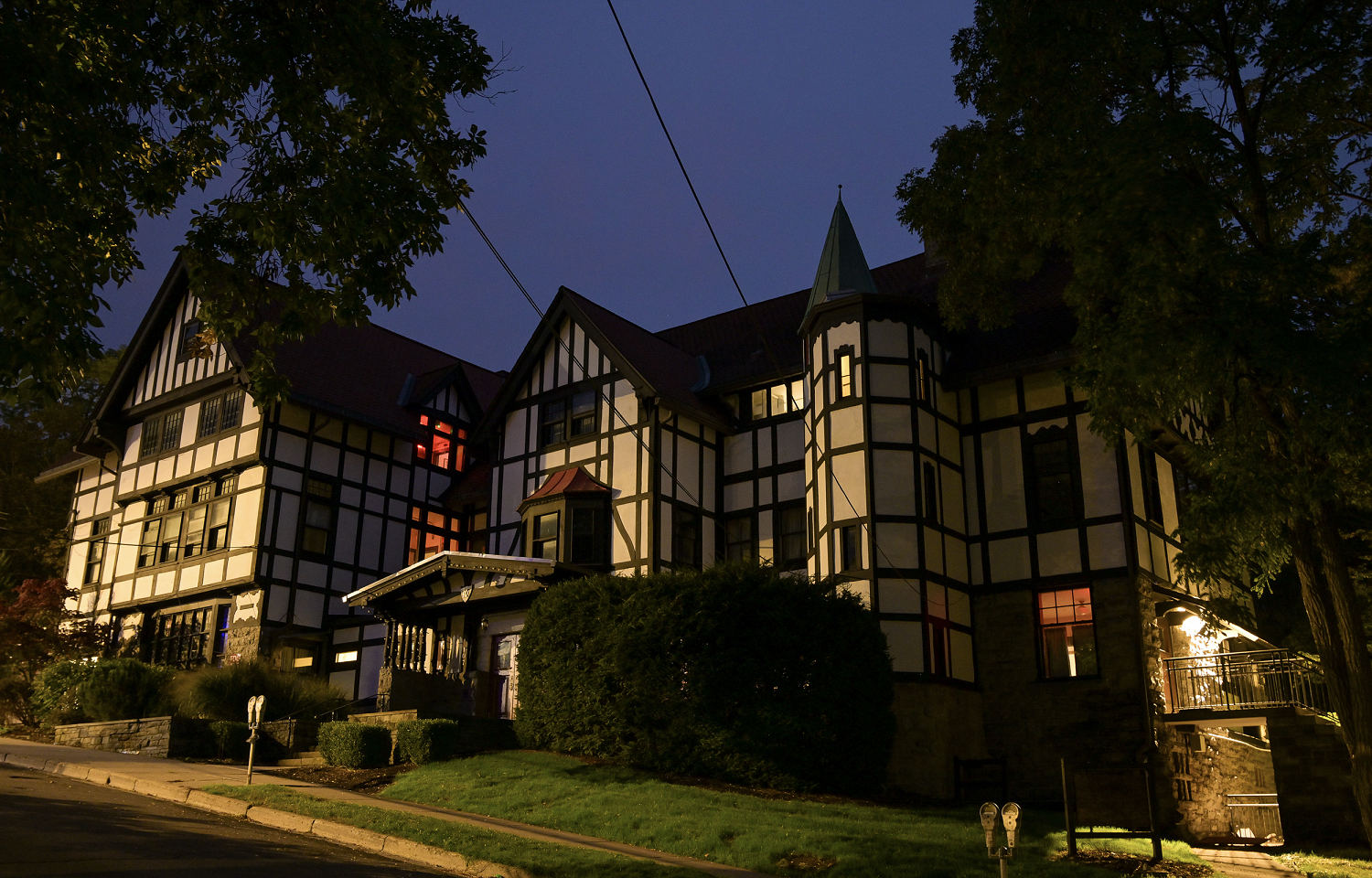
Blanket bans on fraternity parties rarely eliminate sexual assault on college campuses because they treat physical venues as the root cause rather than addressing power asymmetries, substance-induced incapacitation, and fragmented accountability. When Cornell University moved to prohibit fraternity social events and parties amid high-profile allegations of sexual assault involving a fraternity chapter, the decision followed a familiar institutional playbook: restrict high-visibility gatherings to demonstrate immediate control while investigations and lawsuits unfold.
Standard news coverage of a fraternity party ban usually stops at a surface chronology: an allegation emerges, protests or legal actions intensify, university leadership announces a moratorium on social events, and spokespeople promise a review. That framing treats a policy announcement as a resolution. In organizational terms, a social ban is an access control intervention—it alters where students gather—not a behavioral intervention that changes consent norms, intoxication dynamics, or institutional reporting pipelines.
Deconstructing the Standard Coverage Logic
Conventional reporting on campus crackdowns relies on a linear cause-and-effect chain that compresses complex institutional failures into a single headline. The implicit argument goes like this: fraternity houses host parties, sexual assaults are alleged in connection with fraternity life, therefore banning parties reduces risk and restores order.
Three structural blind spots weaken that analysis:
- Conflating venue with cause: A fraternity house is a physical bottleneck where alcohol, peer pressure, and social status concentrate, yet assault is driven by individual decisions, group dynamics, and substance incapacitation rather than drywall and square footage.
- Treating administrative bans as enforcement: Declaring a moratorium on parties does not automatically stop private gatherings, off-campus apartments, or smaller closed-door events where oversight is even thinner.
- Separating social policy from investigative credibility: When a university faces scrutiny over how past reports were handled, how evidence was documented, or whether leadership followed up on complaints, a social ban addresses public optics more directly than investigative rigor.
In the Cornell case, public anger has centered not only on the underlying allegations from late 2024 and subsequent civil litigation, but also on disputes over police summaries, prosecutorial decisions, disciplinary outcomes, and questions about administrative follow-through. Reporting that focuses solely on the party ban misses the institutional friction driving the crisis.
Known Facts Versus Working Hypotheses
Separating verified institutional actions from analytical interpretations prevents overclaiming where public records are contested or incomplete.
Known facts establish the formal actions and institutional tracks surrounding the dispute. Cornell placed restrictions on fraternity parties and social events following backlash and legal action tied to allegations involving the Chi Phi fraternity. The matter has spanned multiple overlapping tracks, including campus police and Title IX processes, a civil lawsuit naming the university and individual students, local prosecutorial scrutiny, state-level involvement, and an independent policy review.
Educated hypotheses explain why those measures produce mixed results. One hypothesis is that banning large chapter parties pushes social activity into less regulated spaces—such as private residences or off-campus rentals—where there is no chapter roster, no event registration, and no baseline institutional visibility. A second hypothesis is that campus confidence depends less on event restrictions than on perceived fairness, transparency, and timely communication across Title IX, campus safety, and senior leadership.
Where exact longitudinal numbers are unavailable—such as the true unreported prevalence of campus sexual misconduct or the exact share of social gatherings that move off-campus after a ban—the rigorous move is to examine the mechanisms of displacement, reporting friction, and incentive alignment rather than inventing statistics.
The Cost Function of a Social Moratorium
Every campus policy carries a cost function made up of compliance costs, displacement costs, and reputational costs. A fraternity party ban shifts those costs unevenly across students, chapters, and administrators.
Displacement Risk and Shadow Venues
In economics and crime prevention, restricting one legal or semi-regulated venue often triggers spatial displacement—activity moves to nearby substitutes with lower friction. Large registered parties are visible to campus security, residence staff, and event monitors. By contrast, small invitational gatherings at private apartments or off-campus houses operate below institutional radar.
A ban does not automatically lower alcohol or drug consumption if students simply redistribute into smaller rooms. In fact, smaller, closed settings can reduce bystander visibility and increase social pressure, making it harder for peers to intervene or for witnesses to corroborate accounts later.
Collective Punishment Versus Targeted Accountability
A blanket ban applies collective sanctions across an entire organizational category—often dozens of chapters and hundreds or thousands of students—regardless of individual conduct. Collective rules are easy to announce and simple to administer on paper, yet they create a sharp incentive problem: students who follow rules bear the same immediate restriction as those who violate them.
When rules feel overly broad or disconnected from individual culpability, compliance can erode into quiet workarounds. Administrators then face a second-order enforcement burden: patrolling off-campus locations and adjudicating rule-breaking without solving the underlying safety problem.
The Reputation Trap for University Leadership
Universities operate under competing pressures. Students, faculty, and external officials demand decisive action to protect safety and uphold accountability, while legal counsel and institutional leaders weigh due process, privacy rules, and litigation exposure.
A party ban signals urgency quickly. The limitation of that signal is that stakeholders—especially faculty senates, students, and public officials—often view event bans as secondary to core governance questions: Did leadership act on early warnings? Were investigative records clear and complete? Were disciplinary outcomes proportionate and consistent? If those foundational questions remain unanswered, a social ban will not restore trust on its own.
Three Pillars of Campus Risk and Accountability
To evaluate whether a campus crackdown actually improves safety, analyze the system across three structural pillars: Environment and Substance Dynamics, Investigative and Reporting Integrity, and Governance and Incentives.
1. Environment and Substance Dynamics
Sexual assault on or near campuses frequently intersects with heavy alcohol use, drug intoxication, and power or group dynamics. Incapacitation complicates both prevention and adjudication because intoxication impairs judgment, memory, and the ability to give clear, unimpaired consent.
Controlling venues without addressing social norms around rapid intoxication leaves a core risk factor intact. Effective prevention requires clear, unambiguous standards around incapacitation and consent, paired with practical bystander intervention and safe transit options that function regardless of whether an event takes place in a chapter house, a campus hall, or an off-campus apartment.
2. Investigative and Reporting Integrity
Credibility collapses when reporting channels feel opaque, slow, or contradictory. Complainants and witnesses often navigate parallel or sequential tracks: campus police, local or state law enforcement, and university Title IX or student conduct offices.
When summaries differ from full transcripts, when communication between offices is unclear, or when timelines stretch across semesters, trust erodes across the entire campus. Strong systems prioritize:
- Accurate, complete documentation at the point of intake so critical statements are not lost in condensation or handoffs.
- Clear role definitions explaining how criminal standards of proof differ from university conduct standards, and what complainants can expect at each stage.
- Timely escalation and follow-through so reports sent to leadership or investigative units do not stall in administrative silos.
3. Governance and Incentives
Greek organizations sit at a complex intersection of student members, alumni boards, national headquarters, and university administration. When incentives are misaligned, chapters may hide problems to protect recruitment or house privileges, while institutions may rely on temporary freezes rather than structural reform.
Sustainable governance requires enforceable standards tied to concrete behaviors—such as mandatory risk-management training, transparent incident reporting, and clear consequences for chapter-level violations or obstruction—rather than relying solely on periodic social bans.
Addressing Common Questions Through System Mechanics
People following campus crackdowns usually ask a handful of practical questions: Does a party ban actually stop assaults? Why do cases stall or spark such intense backlash? And what works better than a blanket freeze?
A party ban does not stop assaults by itself because misconduct is not confined to registered fraternity parties. It can reduce large, high-alcohol gatherings in the short term, which may lower the volume of certain incidents, but it cannot prevent harm occurring in smaller or private settings.
Backlash intensifies when a crisis exposes process gaps alongside the underlying harm. When critics see perceived delays, contested summaries of statements, or sanctions that seem mismatched to the severity of allegations, the dispute expands from a single incident into a referendum on institutional leadership.
No single policy is a silver bullet. Disciplinary processes must respect procedural fairness and evidentiary standards, which means outcomes will sometimes disappoint vocal critics on one side or another. Even so, systems built on transparent timelines, rigorous fact-finding, and consistent enforcement are far more durable than reactive bans alone.
Step-by-Step Diagnostic for Campus Leaders
For university administrators or governance boards responding to a major misconduct crisis, a disciplined operational sequence prevents reactive missteps:
- Stabilize immediate safety and enforcement: Pair any temporary event restrictions with concrete monitoring of off-campus spillover and accessible support resources for affected students.
- Audit the reporting and handoff chain: Trace every report from initial contact through police, conduct, and leadership review to identify bottlenecks, lost context, or missed follow-ups.
- Commission an independent review with clear scope: Empower credible external reviewers with full access to relevant policies and records so findings carry weight beyond internal assurances.
- Align organizational accountability: Set explicit expectations for student organizations, alumni advisors, and campus units, backed by public tracking of concrete reforms rather than vague pledges.
- Measure behavioral and trust indicators: Track training completion, resource utilization, reporting clarity, and campus climate feedback over multiple terms rather than judging success by a temporary quiet period.
Strategic Play
University leaders should treat a fraternity party ban strictly as a temporary containment bridge—never as a standalone strategy—and immediately pair it with an independent audit of intake, investigation, and leadership follow-up pipelines alongside binding accountability rules for student organizations.