A masked attacker walked into an administrative space at the University of Versailles-Saint-Quentin-en-Yvelines on Friday evening, November 13, 2026, and stabbed a university vice president. He was injured on the hand and the back of the head. His life wasn't in danger, and Higher Education Minister Philippe Baptiste confirmed he went home from the hospital the next day. The suspect fled and stayed at large.
Timing matters here. A lot.
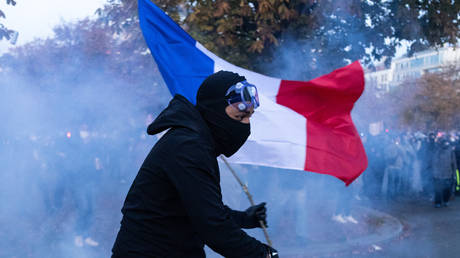
That assault hit right in the middle of sweeping student demonstrations, campus blockades, and street clashes across France. Calling it just another isolated campus crime misses what's actually happening inside French higher education right now. Honestly, when you look at the broader picture, administrators and school leaders are stuck in a brutal squeeze between angry students, a strained government, and rising fears about workplace safety.
What Actually Happened at Versailles-Saint-Quentin
Let's stick to what officials and credible outlets have actually confirmed so we don't chase rumors. On the evening of Friday, November 13, 2026, a vice president of the University of Versailles-Saint-Quentin-en-Yvelines (UVSQ), west of Paris, was attacked with a bladed weapon on campus. Reporting indicates he stepped into a hallway or office area, encountered a masked or hooded assailant, suffered wounds to his hand and the back of his head, and received medical care before being discharged on Saturday.
Authorities haven't publicly linked the stabbing directly to a specific protest group or confirmed a political motive. UVSQ President Loïc Josseran condemned the attack forcefully and asked people to respect his injured colleague's privacy while investigators worked. Minister Philippe Baptiste backed the university's leadership and staff, while noting that blockades at UVSQ were smaller than at some other institutions and urging classes to resume since universities were already roughly two-thirds through the first semester.
That detail about the semester matters. Two-thirds of the way through the fall term, students and faculty are staring down exams, coursework, and disrupted schedules, not an abstract debate.
Why Unrest in France Keeps Boiling Over on Campuses
Campus frustration didn't appear out of thin air in mid-November. By early to mid-November 2026, student and high school protests had been building for nearly two months, fueled by complaints over underfunding, cramped facilities, high living costs, and frustration with
Some basic numbers show how wide the pressure became:
- Record admissions demand: About 1.05 million applicants used Parcoursup this cycle, intensifying anger over scarce spots and opaque selection criteria.
- Government pledges vs. student demands: Prime Minister Sébastien Lecornu's government announced a plan to overhaul Parcoursup starting in 2027 and replace it by 2028, along with 15,000 extra higher education places—a fraction of the 250,000 places student groups wanted and far short of broader multi-billion-euro funding demands.
- Widespread disruptions: Early November tallies showed dozens of high schools and dozens of higher education institutions hit by blockades or disruptions, followed by major national demonstrations and clashes that led to hundreds of detentions over a single weekend.
Here's the catch that a lot of outside observers miss. Blockades in France rarely run like neat, top-down union campaigns. As political scientist Jacques de Maillard of UVSQ has analyzed regarding French youth and school protests, decentralized mobilizations without a single chain of command create constant friction for local administrators and prefects. When grievances are broad and leadership is diffuse, local officials become the closest targets of anger even when national policy sits in Paris.
The Trap Inside University Leadership
Being a university vice president or school head right now is basically a no-win job. You don't set national tuition or admissions architecture in a vacuum, yet you're the person standing in the hallway when tensions spike.
On one side, students and unions argue that ministers offer polite meetings and long-dated promises—like replacing an admissions system in 2028, after President Emmanuel Macron's second term ends—without fixing immediate bottlenecks. On the other side, officials in Paris have pushed for firmer disciplinary responses against blockades and refused to automatically validate semesters or shift major exams. On the exact same day as the UVSQ attack, November 13, more than 2,000 head teachers gathered across France voicing fears for their safety.
In my view, that middle position is where public trust fractures fastest. Administrators get blamed by hardline critics for letting campuses slide into disorder, and blamed by angry protesters for enforcing rules or keeping buildings open. Meanwhile, violent actors—whether driven by targeted grievances, opportunism, or wider unrest—take advantage of tense environments.
Misconceptions Worth Clearing Up
Whenever a dramatic story breaks during nationwide protests, bad assumptions spread fast. Let's clear up a few common ones:
- Every campus incident is automatically a confirmed protest attack. Investigators had not publicly established a motive for the UVSQ stabbing immediately after the attack, and authorities urged caution while the suspect remained at large. Separating confirmed facts from assumptions keeps analysis honest.
- All French campuses are shut down completely. Even during peak disruption weeks, blockades affected a subset of institutions, and officials stressed that conditions varied sharply from campus to campus—including at UVSQ.
- Government concessions ended the dispute. Announcing a future Parcoursup replacement calmed some voices slightly, yet key student groups called the offers inadequate and kept mobilizing.
What Students, Families, and Staff Should Do Right Now
If you're a student at a French university, a parent helping someone navigate study abroad, or someone working in higher ed, don't rely on viral clips or group chats for operational decisions.
- Check official portals daily: Watch your university's official email and student portal (
Espace Numérique de Travail, the standard digital workspace used by French universities and schools. ) for real updates on room changes, online switches, and exam dates. - Assume exams still count: Higher education leadership has signaled that semesters won't simply be waved through automatically because of blockades, so plan around formal assessment rules and ask your faculty office in writing if a session is cancelled.
- Document missed instruction early: Save official notices of blocked buildings or cancelled classes right away in case you need proof for grading or administrative appeals later.
- Give tense blockades space: Keep clear of physical blockades and street flashpoints, follow campus security and police instructions, and report suspicious behavior immediately rather than confronting anyone yourself.
A single stabbing in a quiet hallway doesn't explain every crack in French society, nor should it be used to paint millions of peaceful students with the same brush. Still, it shows how fragile campus calm can be when deep political and educational grievances collide with everyday institutional life.