Ink was still wet on the draft when the hand pulled back.
Across the mahogany table, breathing in the quiet, pressurized air of high-level diplomacy, Mark Carney felt the shift before he saw it. The terms had changed. Not by inches, but by miles. What was agreed upon in the dim hours of the morning had morphed, shifted under the weight of political convenience, into something unrecognizable. Something unfair.
He looked at the document. Then he looked across the room.
And then, Canada slammed the brakes on trade talks with the United States.
It happens like that sometimes. Not with a bang, but with a quiet withdrawal of consent. For decades, the border between these two nations has functioned less like a boundary and more like a shared driveway. Neighbors borrow sugar. Neighbors share a fence. You assume a baseline of trust because the alternative is too cold to contemplate.
Step inside a customs warehouse in Windsor or Detroit at three in the morning. The air smells of diesel exhaust, stale coffee, and raw ambition. Trucks idle by the hundred, their refrigerated trailers humming with fresh produce, automotive parts, and electronics destined for assembly lines that span two countries. A single bolt crosses the border four times before a car ever rolls off a showroom floor. That is the rhythm of integration. It is fragile. It is ancient in its habits.
And it relies entirely on the premise that a deal is a deal.
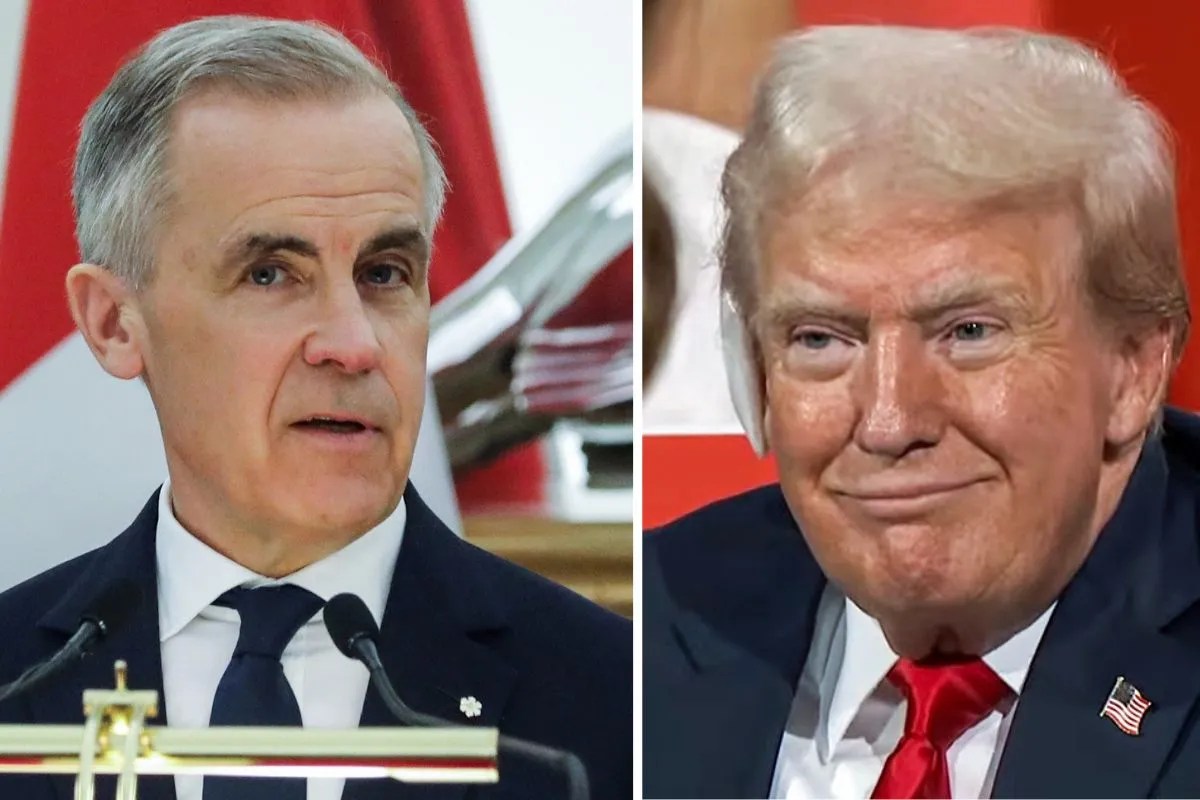
When Mark Carney stepped up to label the eleventh-hour revisions as unconscionable, he was not just speaking as an official guarding a ledger. He was voicing the exhaustion of a partner who realized the goalposts were being moved while the ball was already in the air.
Imagine sitting across from someone you have known your entire life. You shake hands on a compromise. You give up a little so they can gain a little, balancing the scales with deliberate care. You walk away feeling the sting of concession, but comforted by the stability of the outcome. Then, just as the public ceremony approaches, your counterpart slides a revised paper across the desk. New clauses. Stripped protections. Demands that render your initial compromise a total surrender.
Your stomach drops. That is the feeling in Ottawa right now.
Economics textbooks love to talk about tariffs, quotas, and gross domestic product as if they exist in a vacuum of pure mathematics. They treat nations as rational calculators moving pawns on a vast, flat board. But anyone who has ever stood on a factory floor in Ontario or watched a family farm in the prairies struggle through changing export rules knows the truth. Behind every percentage point sits a mortgage. Behind every broken agreement sits a human being wondering if they will have a job next Tuesday.
Markets hate uncertainty. They despise it with a quiet, burning hatred that manifests in falling stocks and frozen investments. But people hate disrespect even more.
Carney’s intervention wasn't merely a tactical maneuver. It was a line drawn in the dirt. By calling out the eleventh-hour pivot, he exposed the delicate anatomy of modern statecraft, where domestic political pressures often tempt leaders to tear up yesterday's promises for today's headlines.
Consider what happens next. The machinery of trade does not simply stop; it grinds, groans, and creates friction. Supply chains stretch until they snap. Executives in boardrooms from Toronto to New York stare at spreadsheets, recalculating risks that shouldn't have existed an hour ago. The cost of a spare part climbs. The price of a gallon of milk inches upward. These are the invisible taxes paid by ordinary citizens when political friction turns into trade paralysis.
Yet, there is a strange sort of clarity in a sudden stop.
For too long, the economic partnership between Washington and Ottawa coasted on momentum. Assumptions replaced active communication. We assumed the shared history, the shared language, and the shared continent would absorb any shock. We forgot that friendship between nations, much like friendship between people, requires active maintenance, mutual respect, and a refusal to take the other's patience for granted.
When negotiations halt abruptly, it forces a reckoning. It asks a fundamental question: Is this relationship built on mutual benefit, or is it an exercise in endurance where the bigger player dictates the terms until the smaller one breaks?
The silence coming out of Ottawa right now is heavy. It is the silence of a door closing to prevent a draft. It tells Washington that the era of quiet acquiescence is over. You cannot rewrite the rules at midnight and expect the other side to smile for the cameras at dawn.
Out on the bridge spanning the Detroit River, the trucks keep rolling for now, their headlights cutting through the dark, carrying cargo commissioned under yesterday's rules. But the drivers listen to the radio with a sharper focus. They know the weather is changing. They can smell the electricity in the air before the storm actually hits.
And somewhere in a quiet room, the papers remain unsigned, waiting for a return to reality.