The air changes first. It does not announce itself with sirens or flashing lights. It happens in the heavy stillness of an August afternoon, when the cicadas suddenly fall silent and the humidity presses against your collarbone like a warm, wet palm. If you have lived through a hurricane, you know that quiet. It is the breath before the blow.
Out on the open water of the Atlantic, miles away from the pastel-colored docks of Florida, the sleepy resort towns of Alabama, and the salt-sprayed bayous of Mississippi, something ancient and hungry is waking up.
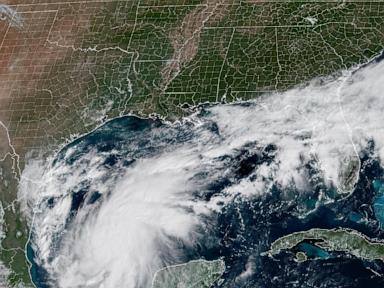
Meteorologists look at computer models and see swirling bands of wind shear, sea surface temperatures hovering above eighty-eight degrees, and barometric pressure dropping like a stone. They call it Hurricane Isaias. They track its coordinates with clinical precision, projecting tracks and cones of uncertainty onto glowing monitors in air-conditioned rooms in Miami.
Numbers. Percentages. Projected paths.
Down here, on the front porch, the math looks entirely different.
Consider a hypothetical resident named Arthur, sixty-four years old, whose knees ache whenever a low-pressure system parks itself over the Gulf. Arthur lives in a modest cinderblock home fifty yards from a brackish inlet in Mississippi. He has weathered Camille, Katrina, and a dozen lesser storms that didn't make the national news. When he hears that Isaias is strengthening—that warm water is acting as high-octane fuel for an atmospheric engine—he doesn't check the latest wind speed advisory on his phone. He looks up at the bruised purple of the western sky, smells the distinct metallic tang of approaching rain, and walks into his garage to check the oil in his generator.
Fear is rarely abstract. It smells like gasoline and plywood dust.
To understand why a storm intensifies on its march toward the American coastline, you have to understand the character of the water it feeds upon. The ocean right now is not a body of water; it is a boiler. Summer heat has baked the surface layers down to a depth of fifty feet or more. When a tropical cyclone tracks across water that warm, it does not just survive—it accelerates. The thermodynamic laws governing these storms are merciless. Warm moisture rises, condenses, releases latent heat, and pulls more air into the vortex.
It is a machine built of physics and raw energy, spinning toward land with the indifference of a freight train.
Forecasters at the National Hurricane Center issued warnings early: Isaias was projected to draw strength from these thermal reserves, threatening to upgrade from a stubborn tropical storm into a major hurricane before making landfall. For the coastal communities spanning from the Florida panhandle across the white sands of Alabama to the barrier islands of Mississippi, that projection transformed a distant weather anomaly into an immediate, breathing crisis.
Evacuation routes are clogged with memories. That is the hidden weight every coastal resident carries. When local officials whisper about mandatory evacuations, people do not just hear traffic jams on Interstate 10; they hear the ghosts of past storms. They remember sitting in gridlock for fourteen hours while the fuel gauge dropped toward empty and the sky turned the color of a bruised plum. They remember returning to find nothing left of their neighborhood except concrete slabs and stubborn mailboxes.
This is why the human element of meteorology matters so much more than the raw statistics. A storm surge of four to six feet is not just a statistic on a PowerPoint slide. It is a wall of dark, churning debris that picks up refrigerators, snaps utility poles like dry toothpicks, and pushes salt water into living rooms where family portraits hang on the drywall.
Listen to the rhythm of the wind when it finally hits the coastal fringe. It does not roar like a lion. It shrieks. It finds every poorly sealed window frame, every loose shingle, every micro-fracture in the human psyche.
As Isaias tracked closer to the coast, residents engaged in the familiar, desperate choreography of preparation. Masked neighbors helped each other lift heavy sheets of marine-grade plywood into place. Grocery store shelves emptied of bottled water within hours. Gas station pumps grew long, snaking queues of idling sedans and oversized pickup trucks, drivers trading nervous glances under flickering fluorescent lights.
The authorities urged patience, preparedness, and vigilance. But words like vigilance sound hollow when you are standing in a hardware store holding the last flashlight off the hook, wondering if the roof over your children's bedrooms will hold until dawn.
Science tells us that storms like Isaias are becoming more frequent and more ferocious, fueled by a warming planet that pumps higher baseline temperatures into our oceans. We can graph the carbon emissions. We can map the rising sea levels inch by stubborn inch. Yet, on the ground, the abstract crisis condenses into a very personal question: Will my home still be here tomorrow?
By late evening, the outer rainbands of the hurricane began to lash the outer banks and the Florida keys, sending squalls across coastal highways that turned palm trees into bending bows. The wind howled against streetlights, casting long, frantic shadows across empty asphalt.
Out on the water, the core of the storm tightened, drawing energy from the deep, warm currents, spiraling upward into the troposphere with terrifying symmetry.
Arthur sat in his living room in Mississippi, the battery-powered radio crackling with static-laced updates from the local emergency management office. The electricity had flickered out an hour ago, replaced by the yellow glow of a single kerosene lamp on the coffee table. Outside, the wind rattled the shutters with rhythmic, pounding fists. He did not look at the weather maps anymore. He listened to the house settle against the pressure, waiting for the eye to pass, knowing that after the relative calm of the center, the backside of the beast would return with twice the fury.
The storm will eventually make landfall. It will drop its torrential rain, tear down power grids, reshape coastlines, and slowly lose its breath as it grinds against the inland hills. The insurance adjusters will arrive. The federal aid packages will be debated in distant capital buildings. Piles of ruined drywall and waterlogged furniture will line the curbs like discarded bones.
Until then, there is only the waiting. The darkness. The rising tide. And the profound, humbling reminder of how fragile our carefully built lives really are when the sky decides to take the floor.