The world’s attention is a finite resource, and right now, it’s being drained by the high-stakes chess match between Tehran and Tel Aviv. If you’ve been watching the news lately, you’ve seen the shift. The focus has moved from the immediate, grinding human suffering in Gaza to the terrifying possibility of a regional ballistic missile war. It’s a pivot that suits almost every major political player except the people actually trapped in the strip.
Palestinian officials and envoys have started sounding a very specific alarm. They’re worried that Gaza has become a secondary theater—a "silent casualty" of a much larger, more explosive geopolitical game. When missiles fly between nations, the world forgets the slow-motion collapse of a city. That’s not just a tragedy; it’s a strategic disaster for the Palestinian cause.
The Geopolitical Sidetrack
For months, the international community was focused on one thing: a ceasefire. Protests filled cities from London to New York. Diplomats were haggling over every word of UN resolutions. But the moment Iran and Israel began trading direct fire, the conversation changed. Suddenly, the "Gaza problem" was folded into the "Iran problem."
This helps certain leaders. It allows the Israeli government to frame the conflict not as a localized fight over land and rights, but as a defense of Western civilization against an expansionist Iranian "octopus." When the narrative shifts to state-on-state warfare, the rules of engagement change. The humanitarian pressure that was building on the ground in Gaza dissipates. It gets replaced by military strategy and regional alliance building.
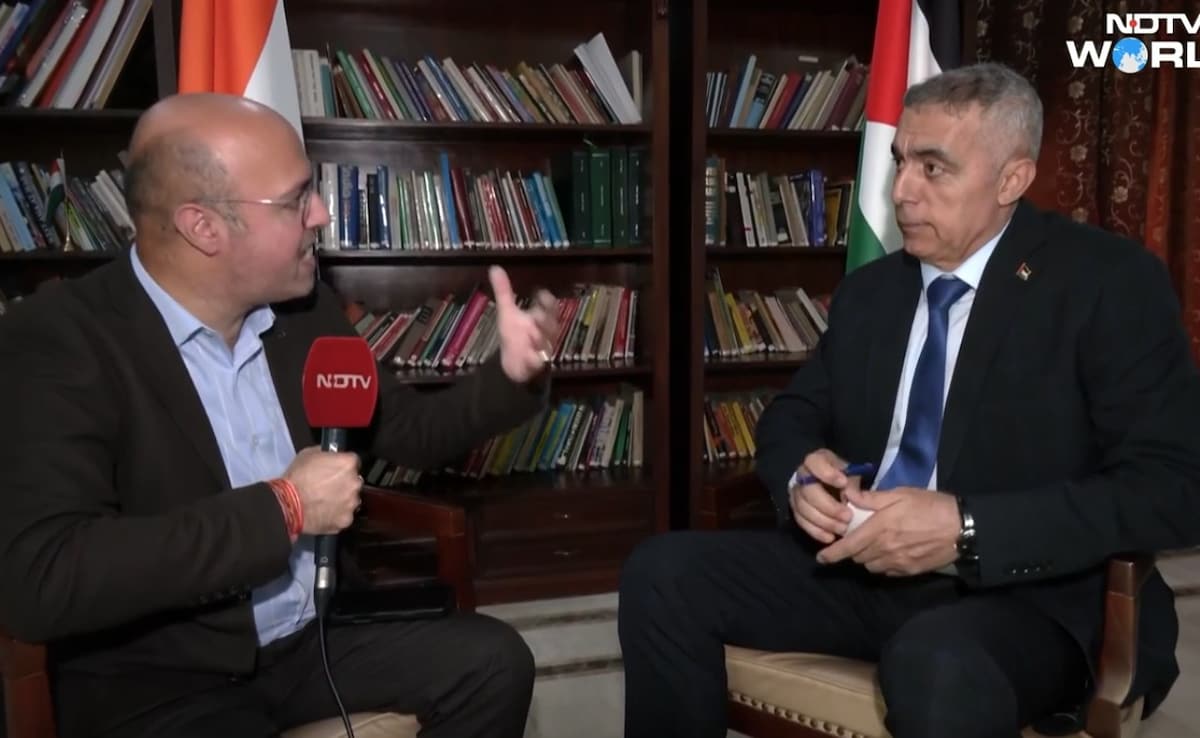
Palestinian Envoy to the UK, Husam Zomlot, and others have pointed out that this isn't accidental. If Gaza becomes a mere footnote to the Iran-Israel rivalry, the urgency for a political solution for Palestinians vanishes. You can’t solve a local crisis when everyone is busy trying to prevent World War III.
Why the Regional Narrative Fails Palestinians
When we talk about the "Axis of Resistance" or "Middle Eastern stability," we’re using the language of empires. This language is cold. It’s about balance of power, not bread and water.
The reality in Gaza right now is staggering. We’re talking about more than 33,000 dead, according to the Gaza Health Ministry. We’re talking about a famine that isn't just "imminent" but actually taking hold in the north. Yet, when the news cycle hits a cycle of drone strikes and Iron Dome interceptions over Jerusalem, the starvation in Rafah stops being the lead story.
I’ve seen this happen before in conflict zones. A larger neighbor gets involved, and the original grievance is swallowed whole. It’s basically a bait-and-switch. Iran uses the Palestinian cause to bolster its own revolutionary credentials and regional influence. Meanwhile, Israel uses the Iranian threat to justify prolonged military operations and to silence domestic and international critics.
In this scenario, Gaza is just the stage. The actors are elsewhere.
The Problem of Disappearing Diplomacy
Diplomatic energy is a zero-sum game. There are only so many hours in a day for the US State Department or the UN Security Council to deliberate. Every meeting spent discussing how to de-escalate the Iran-Israel "tit-for-tat" is a meeting where a Gaza ceasefire isn't the priority.
- The Ceasefire Stall: Negotiations in Cairo and Doha have hit repeated walls. Part of this is because the leverage has shifted. If regional war feels more "dangerous" than a localized conflict, the pressure on parties to settle in Gaza lessens.
- The Funding Gap: International aid is fickle. While the world debates military aid packages for state defense, the funding for UNRWA and other humanitarian agencies remains under a cloud of political suspicion and fatigue.
- The Normalization Trap: There’s a renewed push to bring Arab nations into a regional defense pact against Iran. This sounds great for stability, but it often requires those nations to put the Palestinian issue on the back burner to secure security ties with the West and Israel.
The Human Cost of Being an Afterthought
Let’s be direct. Being a "silent casualty" means dying without an audience. It means a hospital in Deir al-Balah runs out of fuel because the tanker was diverted or delayed due to "regional security concerns."
Gaza isn't a proxy. It’s a place with two million people. When we view it through the lens of Tehran, we stop seeing the people and start seeing "assets" or "threats." This dehumanization is the ultimate goal of high-level geopolitical posturing. If you're a civilian in a tent in Al-Mawasi, you don't care about the range of a Fattah-1 missile. You care about the next meal.
The envoy’s point—and it’s a sharp one—is that the international community is falling for the distraction. By treating Gaza as a subset of the Iran war, the world is giving up on a standalone solution for Palestine. It’s an admission that the rights of those people are less important than the stability of the oil markets or the security of regional borders.
How to Refocus the Conversation
If you’re tired of the way this is being framed, you aren't alone. The shift back to Gazan reality requires a conscious effort to separate the regional "noise" from the local "signal."
Don't let the headlines about regional escalation bury the reports on ground-level humanitarian needs. Use the data coming from organizations like OCHA (UN Office for the Coordination of Humanitarian Affairs) or B'Tselem. They track the actual numbers—the calories entering the strip, the number of functional water wells, the status of the remaining hospitals. That data is much harder to ignore than a political talking point about Iran.
Demand that policy discussions keep the "day after" in Gaza at the forefront. A regional peace deal that doesn't include a viable, sovereign future for Palestinians isn't a peace deal—it’s just a ceasefire between giants that leaves the small and the vulnerable to rot.
The next time you see a segment on the "Iran-Israel shadow war," ask yourself what’s happening in the shade. That’s where the real cost is being paid. Stop looking at the missiles and start looking back at the rubble. That’s where the work still needs to be done.
Push for immediate, transparent humanitarian corridors that aren't tied to regional political concessions. Support the NGOs that stay on the ground when the cameras move to the next "hot" border. This isn't about choosing a side in a regional war; it's about refusing to let a whole population be erased by a headline change.