Grease smells like almonds when a hot engine bakes a drop of oil onto an exhaust header. I know this because I spent my twenties crouching beside single-cylinder bikes on gravel shoulders outside Chengdu and Kunming, waiting for cooling fins to stop ticking while rain drummed against my helmet. Back then, the rule of thumb among young riders was simple and ruthless: more cubic centimeters meant more status, more highway pull, more proof that you had made it out of the crowd.
Speed.
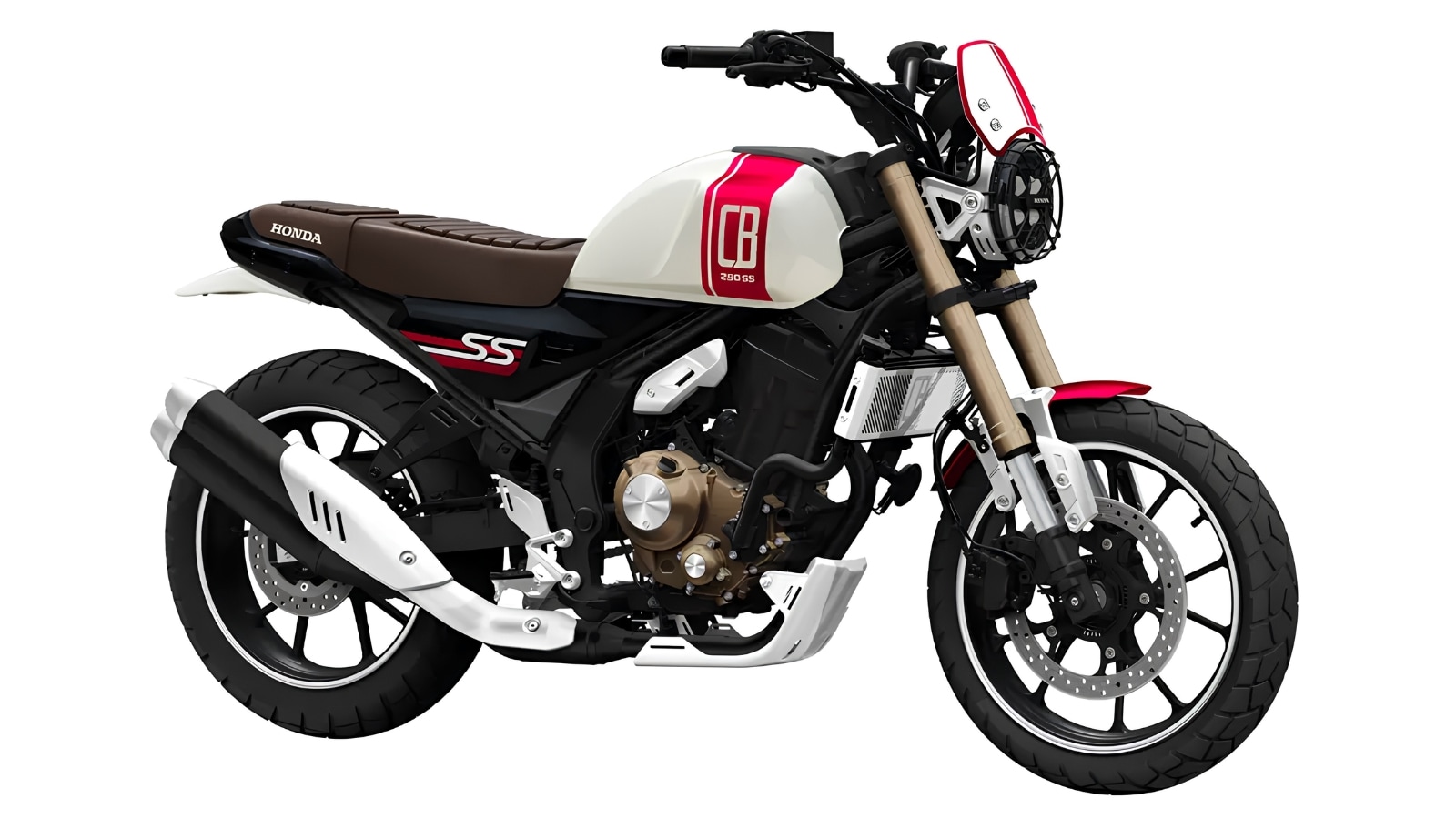
For years, a 250cc machine felt like a stepping stone people tolerated until they could afford something heavier, louder, and faster. Yet sitting in a crowded showroom in Guangzhou recently, watching twenty-somethings circle a compact, high-mounted-exhaust scrambler bearing the Honda CB250SS badge, that old hierarchy looked strangely fragile. Nobody was asking about triple-digit top speeds. They were kneeling down to look at the ribbed seat stitching, the exposed frame lines, and the upright handlebars that promised a way out of glass-and-concrete gridlock without demanding a second mortgage or a track license.
To understand what Honda is actually doing with this scrambler concept aimed at Gen Z riders in China, you have to look past the spec sheet. A 249cc engine sounds modest on paper. In practice, against the backdrop of a shifting youth culture that is rethinking work, mobility, and ownership, a quarter-liter bike can feel like a quiet rebellion.
When Commuting Stops Feeling Like Freedom
Consider a hypothetical rider—let's call her Lin—working an eleven-hour shift in software support in Hangzhou. This scenario is invented, though every piece of it comes from conversations I have had with young riders across second- and third-tier Chinese cities over the past few years.
Lin does not hate her job, exactly, yet she feels trapped inside a series of predictably scheduled boxes: the subway car at 7:45 a.m., the glowing monitor until dusk, the delivery app notification at 9:30 p.m. When the weekend finally arrives, the idea of fighting expressway traffic on a massive, high-strung sportbike feels less like an escape and more like another chore. Heavy machines punish mistakes in tight alleys. Big displacements drink fuel, cost more to insure and maintain, and turn a simple afternoon ride up a mountain tea road into an exercise in weight management.
Young riders today face a tension that older generations rarely felt in the same way. They grew up surrounded by hyper-efficient digital convenience—food arrives in twenty minutes, rides are summoned with a tap, and every mile can be tracked and optimized. Paradoxically, when everything is frictionless, life can start to feel weightless and indistinct.
A motorcycle introduces friction on purpose. You feel the crosswind on your chest. You feel the drop in air temperature as you climb from a river valley into pine-scented mist. If the bike is too intimidating or too expensive to run casually, that friction turns into anxiety. If the bike is too sterile or too sluggish, it bores you before the city limits fade in your mirrors.
A 249cc engine sits right at a fascinating crossroads. It is light enough to flick through crowded streets or turn around on a narrow farm track without panic, yet lively enough to pull cleanly out of corners on secondary roads. For a rider who wants spontaneity rather than bragging rights, small-displacement engineering stops looking like a compromise and starts looking like sanity.
Why a Scrambler Speaks a Different Language
Walk past a row of sleek, sharp-fanged sportbikes and you will notice something subtle: they look like they are already moving even when parked on their sidestands. Everything is angled forward, aggressive, and specialized. They are built for smooth asphalt and committed leans.
Now picture a scrambler. Historically, scramblers were born in the mid-twentieth century when riders stripped down street bikes—adding higher pipes, wider bars, and tougher tires—so they could blast from paved roads onto fire trails and dirt tracks without stopping to swap machines. The style wasn't born in a boardroom; it came from riders refusing to let a paved road be the only road.
When Honda dresses a modern 249cc engine in scrambler cues—upright ergonomics, rugged proportions, and a playful, all-purpose stance—it taps into a specific emotional hunger among Gen Z riders in China. Many young people here do not want a museum piece or a cosplay costume from the 1960s. They want something honest, adaptable, and photogenic without looking like a rolling billboard.
Let me be candid: part of the appeal is visual, and there is nothing shallow about admitting that. When you spend your week staring at flat screens, holding physical objects with real metal, textured grips, and mechanical character matters. A bike that looks just as natural parked outside a converted warehouse café as it does kicking up dust on a gravel overlook gives a rider permission to improvise.
At the same time, I have my doubts about how much off-road abuse any lightweight street-based scrambler should actually take. A high exhaust looks great and keeps the pipe clear of rocks, though it also sits closer to your right leg in stop-and-go traffic. Ground clearance and suspension travel always involve trade-offs on a scrambler concept derived from road-focused architecture. If a rider treats a light scrambler like a hard enduro machine over jagged boulders, something—either the sump, the rim, or the rider's confidence—will eventually complain.
China's Shifting Two-Wheel Reality
To see why this matters beyond one model name, step back and look at how two-wheeled culture in China has evolved. A decade ago, recreational motorcycling among young urbanites felt like a niche subculture—loud, expensive, and often viewed with suspicion in cities with strict motorcycle restrictions.
Then came a wave of growth. Domestic manufacturers flooded entry- and mid-level segments with affordable, feature-packed bikes, while global brands realized that young Chinese buyers were not merely waiting for hand-me-down designs from Europe or Japan. They were shaping trends on social platforms, organizing weekend group rides, and treating motorcycles as tools for mental reset.
In that shifting market, displacement wars eventually hit diminishing returns. A 600cc or 1,000cc machine might thrill on an open stretch, yet in dense traffic or on tight coastal switchbacks, you rarely use more than a fraction of what the engine can give. Meanwhile, fuel costs, licensing rules, and everyday practicality push smart riders toward machines that fit their actual lives rather than their fantasies.
By focusing a 249cc engine scrambler toward younger riders, Honda is betting on cultural relevance over raw numbers. Think of it like cooking with a well-seasoned cast-iron skillet rather than a commercial kitchen range: you don't need twelve burners to make a memorable meal, you need heat you can control and a pan that lasts. That comparison is a metaphor—engines don't cook, and steel isn't cast iron—but the spirit holds: the right tool for real-world rhythm beats excess every time.
Will a concept like the Honda CB250SS reach showrooms with every dramatic line intact, and at a price that feels accessible to someone starting their career? Concept machines exist to test temperature, spark conversation, and gauge appetite before tooling locks in. Sometimes production versions soften edges for cost or regulations; sometimes they surprise us by staying remarkably close to the sketch.
What You Actually Buy When You Twist the Throttle
People often ask whether a 250cc motorcycle is "enough" for real travel. The honest answer depends on what you mean by travel. If your idea of a trip is blasting four hundred kilometers on a straight toll road at high speed against a headwind, a small single will make you work for it and leave you tired. If your idea of a trip is taking the winding valley road, stopping for noodles in a town you hadn't planned to visit, and riding back at sunset with your shoulders dropped two inches lower than they were on Friday morning, then "enough" looks very different.
There is a quiet confidence in riding a machine you don't have to wrestle. You focus on the line through the corner, the patch of damp leaves near the curb, the smell of wet earth after a passing shower. You aren't trying to prove anything to the car next to you. You are simply present.
For Gen Z riders in China navigating a fast, demanding world, that sense of unhurried agency is worth more than another hundred cubic centimeters on a spec sheet. A scrambler doesn't demand that you conquer the horizon. It just invites you to see where the dirt path goes.
Evening settles fast over hillside roads in late autumn, turning asphalt slate-gray and bringing out the first cool breeze off the valley. Somewhere down a gravel turnoff, a small single-cylinder exhaust pops softly as the throttle closes, letting the quiet of the ridge rush back in.