The air in South Delhi usually tastes of dust and diesel, but lately, it carries a sharper, metallic edge. It is the scent of a long-distance dread. In a small apartment in Chittaranjan Park, an elderly man named Mr. Gupta—hypothetically representative of a million others—stares at a television screen. The ticker tape at the bottom of the news cycle is a frantic blur of red and black. Missiles arc over ancient skylines in the Levant. Interceptors bloom like lethal orchids in the night sky.
Mr. Gupta does not live in Tehran. He has never visited Tel Aviv. Yet, his hand trembles as he checks the price of gold on his phone. He wonders if the remittance his son sends from a tech firm in Dubai will still clear next month. He worries about the cost of the cooking oil in his pantry. This is the "great anxiety" the Indian government recently voiced, but translated into the quiet, desperate language of the kitchen table.
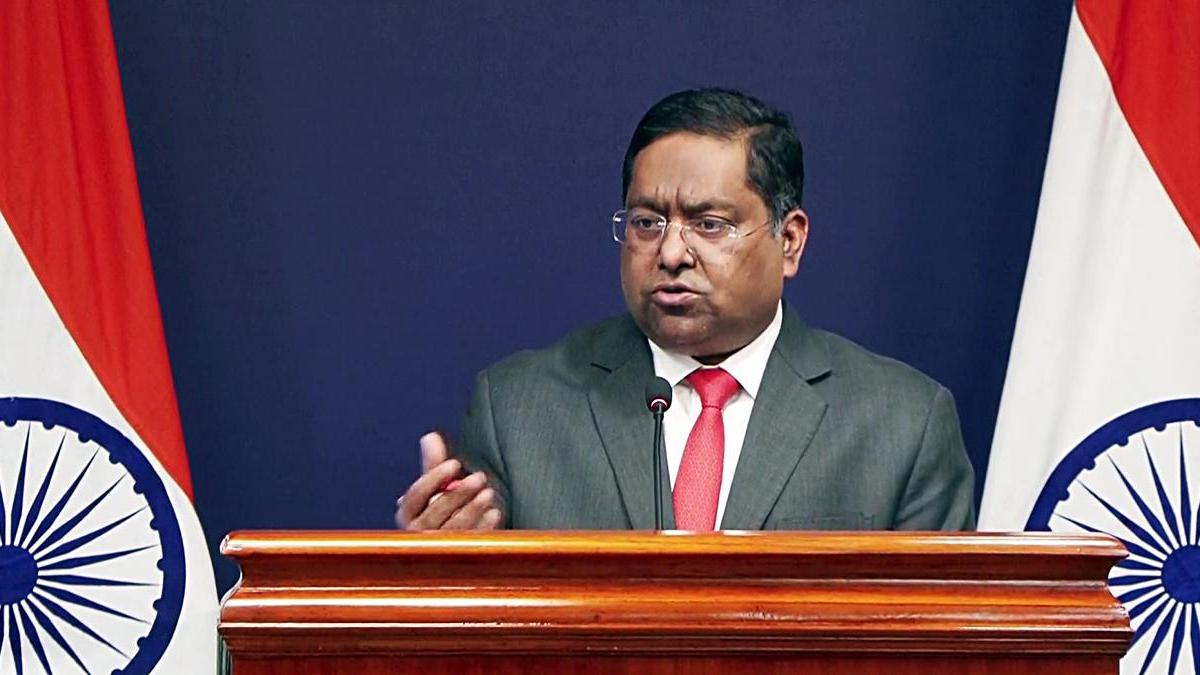
When the Ministry of External Affairs releases a statement about the "intensification of conflict in West Asia," it sounds like a dry piece of diplomatic prose. It isn't. It is a coded alarm bell. It is a recognition that the world has become so tightly wound that a spark in the desert can cause a blackout in a Mumbai suburb.
The invisible tether
India is tied to the Middle East by more than just proximity. Think of it as a subterranean nervous system. Over nine million Indians live and work in the Gulf. They are the scaffolding of those glittering desert cities, the doctors in the clinics, and the engineers on the rigs. When Israel and Iran move from a shadow war to a direct confrontation, that nervous system begins to pulse with white-hot pain.
Every missile launched is a potential disruption to the lifeblood of the Indian economy. We are the world’s third-largest consumer of crude oil. We import more than 80 percent of what we use. If the Strait of Hormuz—a narrow chokepoint through which much of the world’s energy flows—is squeezed, the ripple effect is instantaneous. The price of a taxi ride in Bengaluru goes up. The cost of transporting tomatoes from a farm in Maharashtra to a market in Delhi spikes.
Inflation is not just a graph in a business journal. It is a thief that steals from the plates of the poor.
A history of precarious balance
India has spent decades perfecting a diplomatic tightrope walk. On one side, there is a deep, strategic partnership with Israel, spanning defense, technology, and agriculture. On the other, there is a historical, civilizational bond with Iran, essential for energy security and access to Central Asia through the Chabahar port.
For years, New Delhi managed to keep these relationships in separate boxes. It was a masterpiece of "multi-alignment." But the boxes are breaking. When Iran launches a barrage and Israel vows a crushing response, the middle ground starts to crumble.
Consider the hypothetical plight of a merchant sailor on a tanker in the Arabian Sea. He is an Indian national, one of thousands who man the global shipping fleets. To him, the conflict isn't about grand ideologies or ancient grievances. It is about the terrifying silhouette of a drone on the horizon. It is about whether his ship will be the next one seized or struck. For India, this isn't a spectator sport. Our people are on the field.
The ghost of the 1990s
There is a collective memory in the Indian psyche that flinches at the sight of Middle Eastern instability. We remember 1990. We remember the massive airlift from Kuwait, where over 170,000 Indians had to be brought home in what remains the largest civilian evacuation in history.
That event shaped a generation. It taught us that "over there" is actually "right here."
The current anxiety is fueled by the fear that we might have to do it again, but on a scale that defies imagination. How do you evacuate millions if the entire region goes up in flames? How do you shield an economy that is finally finding its stride from a global energy shock that could derail it for a decade?
The weight of the words
"Great anxiety."
The phrase is chosen with surgical precision. It signals that the era of quiet observation is over. India is no longer just a bystander; it is an emerging power that requires a stable West Asia to fuel its own rise. We are no longer the "third world" country asking for peace; we are a global stakeholder demanding it.
But diplomacy is a fragile shield against the momentum of revenge. The logic of escalation is a spiral. Action invites reaction. Reaction demands a "proportionate" response, which is almost always perceived as an escalation by the other side.
In the middle of this spiral sits the Indian diaspora. They are the human collateral. They send home billions of dollars in remittances every year—money that builds schools in Kerala, pays for heart surgeries in Punjab, and sustains small businesses in Bihar. If the conflict widens, those pipes don't just leak. They burst.
The silent streets
Back in the apartment in Chittaranjan Park, Mr. Gupta turns off the television. The blue light fades, leaving him in the soft shadows of his living room. He looks at a framed photo of his son in Dubai, standing in front of a glass skyscraper that reflects a sun that never seems to set.
The anxiety isn't a loud, crashing sound. It is the silence that follows the news. It is the realization that our modern lives are built on a foundation of precarious peace, held together by the hope that cooler heads will prevail in rooms thousands of miles away.
We are all connected by a thousand invisible threads. When one is pulled in Tehran or Tel Aviv, the tension is felt in the heart of every Indian home. We are waiting for the next headline, hoping it is the one that tells us the spiral has stopped, while knowing deep down that the world rarely works that way.
The sun sets over the Yamuna river, casting long, distorted shadows that look remarkably like the ones falling over the Persian Gulf. We are watching the horizon, not for the dawn, but for the absence of fire.