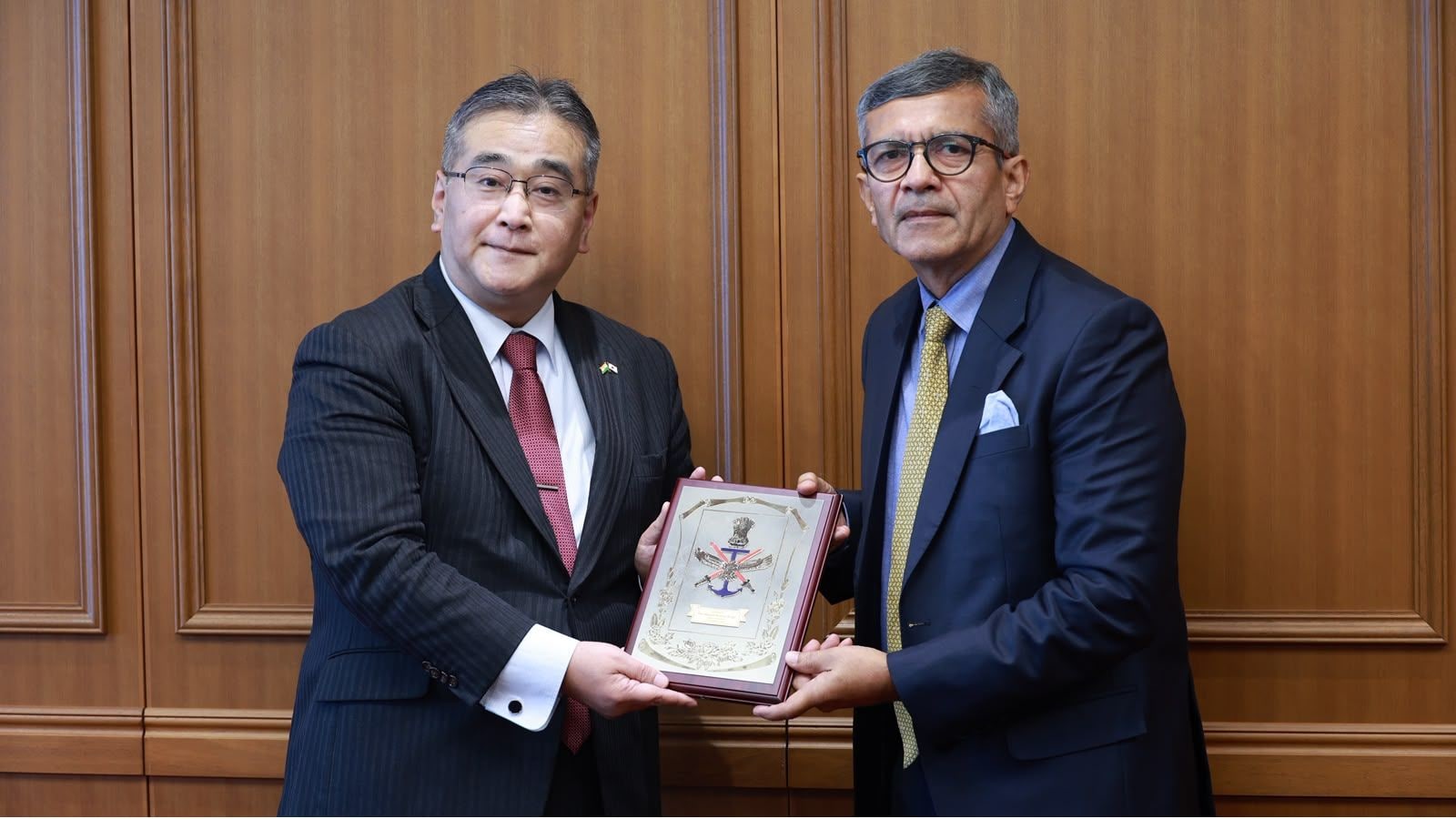
India and Japan are rapidly deepening their bilateral military ties to counter China's growing assertiveness in the Indo-Pacific region. This strategic alignment, formalised through high-level minister-level "2+2" dialogues, focuses on securing critical maritime trade routes, expanding joint military exercises, and co-developing defence technologies. By integrating their security frameworks, New Delhi and Tokyo aim to establish a credible deterrent against unilateral attempts to alter the regional status quo, particularly in the South and East China Seas.
The official communiqués from these high-level meetings frequently highlight shared democratic values and the vision of a free and open Indo-Pacific. However, the diplomatic pleasantries mask a much more complex, urgent, and sometimes friction-filled reality.
Moving Beyond Rhetoric to Hard Military Realities
For years, the partnership between New Delhi and Tokyo was defined by economic aid and cultural exchange. Japan built India's metro systems; India exported raw materials. That era is over. Today, the relationship is driven by a shared, urgent vulnerability regarding maritime choke points and territorial integrity.
The strategic anxiety is mutual. Japan, an island nation, relies almost entirely on sea lines of communication for its energy and food imports. A blockade or conflict in the South China Sea would strangle its economy. India, meanwhile, watches the Indian Ocean with growing concern as Chinese naval vessels and submarine deployments become routine.
This shared threat has pushed both nations to move past symbolic diplomacy. They have established a solid foundation of operational cooperation.
Operationalising the Alliance
The true test of any military partnership lies in how well the two forces can operate together. Over the past decade, the Indian Armed Forces and the Japan Self-Defense Forces (JSDF) have steadily increased the complexity of their joint maneuvers.
- Exercise Malabar: Originally a bilateral US-India naval exercise, Malabar permanently expanded to include Japan. It now serves as a premier forum for high-end anti-submarine warfare training.
- Dharma Guardian and Veer Guardian: These exercises bring together land and air forces, respectively. They focus on tactical coordination and interoperability in diverse environments, from urban counter-terrorism to aerial combat.
- The Acquisition and Cross-Servicing Agreement (ACSA): Signed in 2020, this logistics agreement allows both militaries to access each other's bases for supplies, fuel, and maintenance. This effectively extends the operational reach of the Indian Navy into the Western Pacific and the JSDF into the Indian Ocean.
The Industrial Hurdle of Defence Co-Development
While operational coordination has progressed rapidly, the industrial side of the partnership remains stalled. The ambition to co-develop and co-produce military hardware has consistently run into bureaucratic and structural roadblocks.
Japan’s historical pacifism, enshrined in Article 9 of its constitution, led to a self-imposed ban on arms exports for decades. Although Tokyo eased these restrictions in 2014 and updated its implementation guidelines more recently, its defence industry is not built for export competition. Japanese hardware is highly sophisticated but prohibitively expensive.
India, on the other hand, operates under the "Make in India" initiative. New Delhi demands technology transfers and local manufacturing for its defence acquisitions. It wants to build capabilities domestically, not just buy off-the-shelf equipment.
+---------------------------+-----------------------------------+-----------------------------------+
| Feature                   | India's Strategic Goal            | Japan's Strategic Goal            |
+---------------------------+-----------------------------------+-----------------------------------+
| Defence Procurement       | Technology transfer, domestic mfg | Exporting high-end components     |
| Main Maritime Focus       | Indian Ocean, Malacca Strait      | East China Sea, Taiwan Strait     |
| Relations with Russia     | Deep historical and military ties | Aligned with Western sanctions     |
+---------------------------+-----------------------------------+-----------------------------------+
The failed negotiations over the ShinMaywa US-2 amphibious aircraft serve as a stark example of this divide. For nearly a decade, the two countries discussed a deal for India to acquire these search-and-rescue planes. The talks ultimately collapsed over pricing disputes and Japan's reluctance to transfer sensitive manufacturing technology to Indian shipyards.
If New Delhi and Tokyo cannot find a way to align India's manufacturing ambitions with Japan's advanced engineering capabilities, their defence partnership will remain structurally limited.
Navigating Divergent Geopolitical Priorities
The partnership must also survive significant differences in how both nations view the global order. They are not treaty allies, and they do not view every geopolitical challenge through the same lens.
The most glaring divergence is Russia.
Following the escalation of the conflict in Ukraine, Japan aligned itself with the G7, imposing strict sanctions on Moscow and actively working to isolate the Russian economy. India took a different path. Relying on Russia for over half of its military hardware imports and seeking discounted crude oil, New Delhi maintained its diplomatic ties with Moscow, abstaining from key UN resolutions condemning the invasion.
"The strategic partnership between India and Japan is built on a convergence of interests regarding China, but it is not a blank check for total geopolitical alignment."
Similarly, while both nations participate in the Quadrilateral Security Dialogue (the Quad) alongside the United States and Australia, they view the group's purpose differently. Tokyo sees the Quad as a vital pillar of a rules-based order heavily tied to US leadership. New Delhi prefers to view it as a flexible cooperative mechanism, wary of turning the group into a formal, anti-China military alliance that could provoke a direct confrontation along its Himalayan border.
The Technology Frontier and Maritime Domain Awareness
To bypass the bottleneck of heavy platform acquisition, the two nations are shifting their focus toward software, space, and intelligence sharing. This is where the partnership has the potential to yield immediate, practical results.
The key is Maritime Domain Awareness (MDA). Tracking the movement of surface vessels and submarines across the vast stretches of the Indo-Pacific is too large a task for any single country.
Underwater Domain Awareness
The Indian Ocean's unique thermal profiles make submarine detection notoriously difficult. Japan possesses some of the world's most advanced acoustic tracking systems and diesel-electric submarine technologies. By sharing hydrographic data and coordinate tracking, the two nations can create an underwater monitoring network stretching from the Persian Gulf to the Sea of Japan.
Space and Cyber Security
Both nations are vulnerable to grey-zone tactics—coercive actions that fall just below the threshold of open military conflict, such as cyberattacks on critical infrastructure or the use of maritime militias. Cooperative agreements now extend to sharing satellite imagery, secure communications, and cyber-threat intelligence. This digital integration allows for faster decision-making when responding to maritime incursions.
The Looming Reality of the Taiwan Strait
The ultimate test of the India-Japan partnership may lie in a contingency involving Taiwan.
For Japan, a conflict over Taiwan is an existential threat. The westernmost islands of Japan sit just over 100 kilometres from Taiwan's coast. Tokyo has openly stated that a Taiwan emergency is a Japanese emergency.
For India, the calculation is more complex. While New Delhi opposes any unilateral change to the status quo by force, it has historically avoided direct involvement in East Asian territorial disputes. In the event of a conflict, India would face immense pressure from the United States and Japan to assist, at least logistically.
How India prepares for this scenario will define the future of the partnership. Whether through passive assistance, such as allowing US and Japanese forces to use Indian bases under the ACSA agreement, or by placing diplomatic pressure on China's western flank, New Delhi's actions will decide if the "free and open Indo-Pacific" is a viable strategy or merely a diplomatic talking point.
The alignment between India and Japan is not driven by sentimentality. It is a pragmatic response to a rapidly shifting balance of power in Asia. While bureaucratic hurdles and differing foreign policies will continue to test the relationship, the sheer scale of the shared security challenge ensures that Tokyo and New Delhi have no choice but to keep drawing closer together.