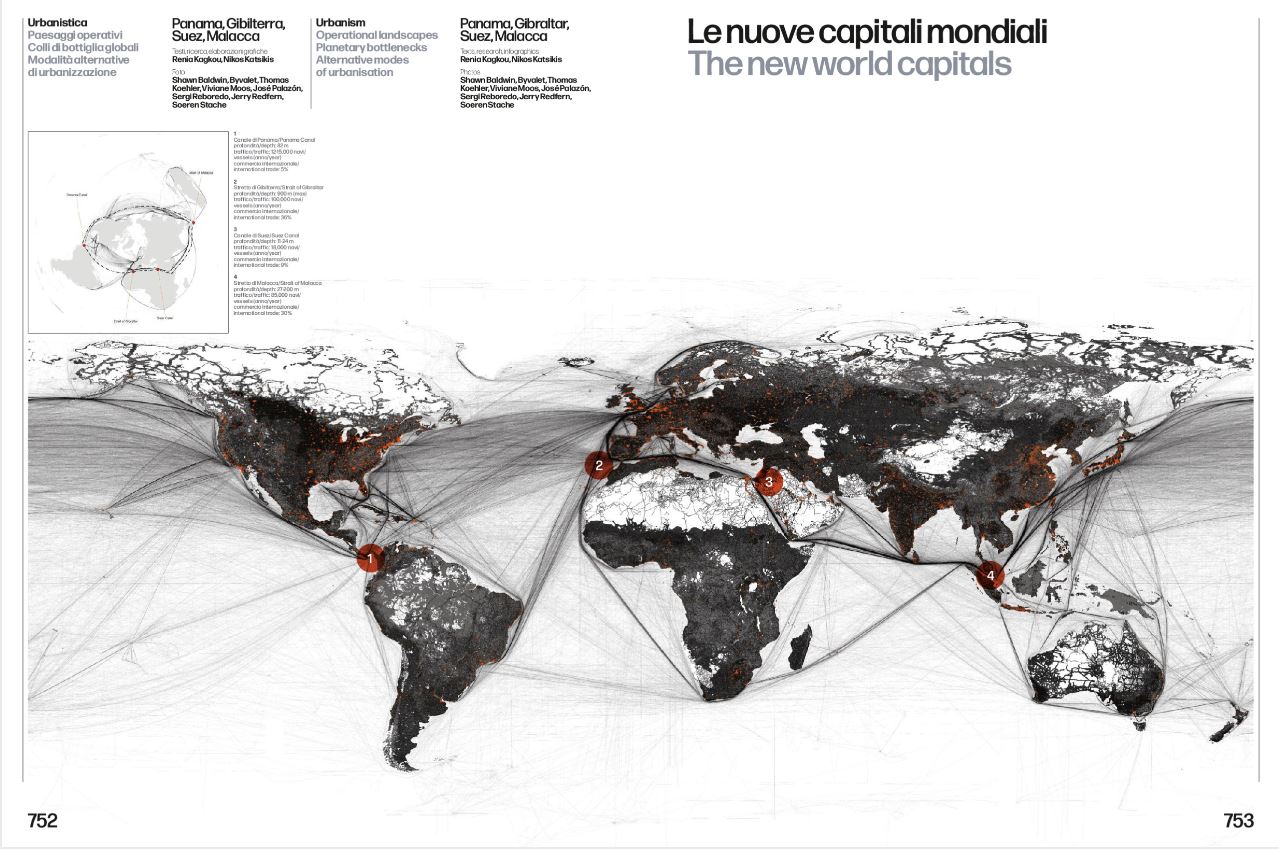
The current suspension of commercial aviation corridors across the Middle East represents more than a series of flight cancellations; it is a systemic failure of the "Hub-and-Spoke" transit model that has defined global travel for three decades. When regional conflict necessitates the sudden closure of FIRs (Flight Information Regions), the resulting disruption follows a predictable, non-linear decay of operational efficiency. The immediate impact is not merely a delay but a total reconfiguration of the global fuel-burn-to-payload ratio.
The Mechanics of Airspace Elasticity
Airspace is a finite resource governed by international law and physical geography. When sovereign nations like Iran, Iraq, or Jordan close their skies, the remaining corridors experience a "compression effect." This creates three distinct operational bottlenecks:
- Lateral Deviation Stress: Flights between Europe and Southeast Asia must deviate north through Turkish and Central Asian airspace or south around the Arabian Peninsula. These detours add between 90 and 150 minutes of flight time, necessitating higher fuel reserves and reducing the maximum allowable passenger or cargo weight to maintain safety margins.
- ATC Saturation: Neighboring regions—specifically the Ankara and Nicosia FIRs—suddenly face a 300% to 500% increase in traffic density. This leads to "flow management" delays, where aircraft are held on the ground thousands of miles away because the physical capacity of the safe corridors is met.
- Crew Duty Expirations: The aviation industry operates on rigid legal limits for how long a pilot can remain on duty. A two-hour detour often pushes a crew past their legal "timeout," forcing unscheduled stops in secondary cities that lack the infrastructure to re-accommodate 400 passengers.
The Economic Cost Function of Forced Re-Routing
The financial burden of these disruptions is rarely absorbed by the carrier alone; it is distributed across the entire travel ecosystem through a series of price and supply shocks. To understand the scale of the crisis, one must analyze the variables in the fuel consumption equation.
An ultra-long-haul widebody aircraft, such as a Boeing 777-300ER, burns approximately 7,500 to 8,500 kg of fuel per hour. A 120-minute detour translates to an additional 15 to 17 metric tons of Jet A-1 fuel. At current market rates, this adds roughly $12,000 to $15,000 in direct operating costs per flight. When scaled across a fleet of 100 aircraft operating daily rotations, the burn rate exceeds $1.5 million in unplanned daily expenditure.
This cost function triggers a secondary crisis in the "Involuntary Rerouting" (INVOL) protocols. When a hub like Dubai or Doha becomes a bottleneck, the cost of re-protecting a passenger on a competitor’s flight—often the only available option—can be 4x the original ticket price. This is not "lost revenue"; it is "negative yield," where a carrier pays a competitor to fulfill a contract they can no longer honor due to force majeure.
The Three Pillars of Stranded Passenger Distribution
The "scramble" described by mainstream media is actually a failure of re-accommodation algorithms. Modern airlines use automated systems to rebook passengers, but these systems are designed for localized weather events, not continental-scale closures. The breakdown occurs across three specific pillars:
- Pillar I: Inventory Evaporation. During a regional conflict, the first 48 hours see a total disappearance of "Y-Class" (standard economy) seats across all carriers in the periphery. Since airlines prioritize passengers by fare class and loyalty status, low-frequency leisure travelers are effectively pushed to the back of a queue that grows faster than it can be cleared.
- Pillar II: Visa and Sovereignty Constraints. Passengers stranded in transit hubs like Istanbul or Cairo frequently face "land-side" barriers. If a passenger holds a passport that requires a pre-arranged visa for the transit country, they are legally confined to the terminal. This "Terminal Entrapment" creates a humanitarian logistics problem that the airline's ground staff is not equipped to solve, shifting the burden to airport authorities and local embassies.
- Pillar III: The Information Asymmetry Gap. Airlines prioritize operational recovery (moving the physical aircraft) over communication recovery. Passengers often receive "Flight Cancelled" notifications hours before the ground staff receives instructions on where to send them. This gap creates the physical chaos seen in departure halls, as the human element of the system operates on a 4-hour lag compared to the flight operations center.
Analyzing the "Hub-Risk" Profile
The Middle East's dominance in aviation is built on the geographic advantage of the "Mid-Point." From Dubai, Qatar, or Abu Dhabi, 80% of the world’s population is reachable within an 8-hour flight. However, this model assumes regional stability. The current crisis exposes the "Single Point of Failure" inherent in this geography.
A traveler flying from London to Sydney via a Middle Eastern hub is making a bet on the stability of multiple volatile FIRs. When these skies close, the alternative—a direct flight or a hub-transfer in East Asia—is often already fully booked. The result is a total cessation of movement for certain segments of the market. This reveals a critical flaw in current travel insurance products: "Political Unrest" or "War" are often listed as exclusions, leaving the passenger to navigate the financial fallout of $3,000 last-minute one-way tickets on their own.
Strategic Response for High-Stake Transit
For the corporate or time-sensitive traveler, the standard response of "waiting for the airline to call" is a losing strategy. The objective is to exit the affected region's influence entirely, rather than trying to find a hole in the closed airspace.
- Reverse-Route Extraction: Instead of trying to push through the conflict zone to reach a final destination, the most effective move is often to fly "backward" to a major global gateway (e.g., London, Frankfurt, or Singapore) and re-initiate the journey via a different hemisphere (the Trans-Pacific or North Polar routes).
- Interline Agreement Exploitation: Passengers should check the "Interline Agreements" of their carrier. Often, a carrier will have a partnership with a railway or a secondary airline that isn't showing up on standard search engines.
- The "Lesser Hub" Strategy: In a crisis, flagship hubs (DXB, IST, DOH) become overwhelmed. Secondary hubs like Muscat or Kuwait City may have lower passenger volumes and more available ground staff to handle manual re-bookings.
The long-term implication for the aviation industry is a shift away from the "Super-Hub" dependency. We are likely to see an increase in demand for ultra-long-haul aircraft (like the A350-1000ULR) that can bypass the Middle Eastern airspace entirely, connecting Europe and Australia directly. While more expensive to operate, these routes offer "Geopolitical Certainty," a commodity that is currently in short supply.
The current chaos is not a temporary glitch; it is a stress test that the hub-and-spoke system is currently failing. Travelers and businesses must quantify their "Airspace Risk" with the same rigor they apply to currency fluctuations or supply chain disruptions. The era of assuming the sky is a neutral, always-open highway has ended. The strategic priority now shifts to "Route Redundancy"—ensuring that no single regional conflict can sever the connection between two global markets.