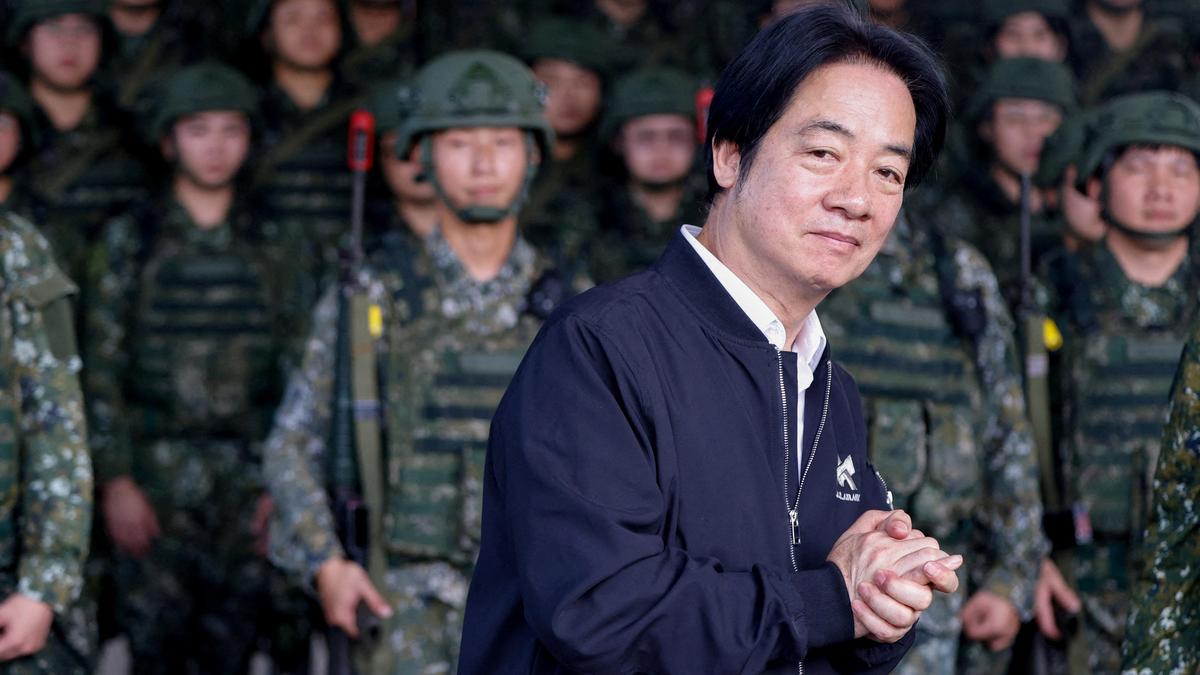
The cancellation of a presidential visit to Africa by the Taipei administration is not a localized scheduling conflict; it is a measurable data point in a sophisticated strategy of diplomatic containment. In the zero-sum competition for international recognition, the "One China" framework functions as a barrier to entry for Taiwanese statecraft, where the cost of engagement for third-party nations is scaled against the economic or security penalties imposed by Beijing. By deconstructing the mechanics of this canceled trip, we can map the structural pressures defining the current cross-strait equilibrium.
The Architecture of Diplomatic Isolation
The primary mechanism of containment operates through a logic of escalating opportunity costs. For the few remaining sovereign states that maintain formal ties with Taipei, the decision to host a head of state is a high-stakes calculation of sovereign risk.
- The Infrastructure Leverage Ratio: Beijing often links diplomatic alignment to the financing of critical infrastructure. When a host country considers a visit from Taipei, they face the immediate threat of "red-lining"—the suspension of credit lines or the withdrawal of state-owned enterprise (SOE) investment.
- The Consensus Constraint: The "One China" principle is enforced as a non-negotiable prerequisite for participation in multilateral organizations (WHO, ICAO, Interpol). Host nations in Africa, many of whom rely on these organizations for regional stability, view a high-profile visit from the Taiwanese president as a violation of this consensus, risking their standing within the African Union.
- The Trade Asymmetry: China’s status as Africa’s largest trading partner creates a massive gravitational pull. The threat of trade sanctions or the redirection of commodity procurement (copper, cobalt, oil) acts as a powerful deterrent against symbolic gestures of Taiwanese recognition.
Quantifying the Pressure Points
The specific cancellation of this African itinerary highlights three distinct pillars of Chinese influence that force a strategic retreat by Taipei.
Pillar I: The Economic Squeeze
The decision-making process for the host nation is rarely about ideology; it is about the balance sheet. China utilizes "Checkbook Diplomacy 2.0," which has evolved from simple grants to complex debt-equity swaps. If a nation is heavily indebted to Chinese lenders, their foreign policy is effectively collateralized. A presidential visit from Taiwan represents a breach of the unspoken terms of that debt. The cost of the visit, in terms of potential debt acceleration or the freezing of new tranches, becomes prohibitively high.
Pillar II: Security and Intelligence Coordination
In many African jurisdictions, China provides the backbone of domestic security infrastructure, ranging from "Safe City" surveillance tech to military training programs. This creates a deep-rooted institutional dependence. When Beijing signals its disapproval of a Taiwanese diplomatic mission, it isn't just a memo from an ambassador; it is a signal that could impact the operational continuity of the host nation's internal security apparatus.
Pillar III: The Symbolic Exclusion Zone
Taipei’s strategy relies on "meaningful participation" in the international community to maintain its de facto independence. Each canceled trip shrinks the geographic and political space in which Taiwan can operate as a sovereign peer. This creates a feedback loop: as Taiwan’s travel options decrease, its perceived international status erodes, which in turn makes it harder to secure future invitations.
The Operational Logic of Taipei’s Withdrawal
The cancellation itself is a defensive maneuver designed to preserve the remaining diplomatic capital. Proceeding with a visit that results in a public snub or a last-minute closure of airspace would be a catastrophic loss of face. By "choosing" to cancel based on cited external pressure, the administration accomplishes two things:
- International Victimization Narrative: It frames the situation as a case of bullying by a superpower, which plays well in Western capitals and helps build informal support among democratic allies who do not officially recognize Taiwan.
- Risk Mitigation: It prevents a scenario where the host nation might switch recognition to Beijing mid-trip, a tactic previously seen in other regions.
The Strategic Bottleneck
The fundamental challenge for Taiwan is the lack of a counter-offer that matches the scale of China’s Belt and Road Initiative (BRI). While Taiwan can offer high-tech cooperation, semiconductor expertise, and democratic values, these are often "soft" benefits that do not solve the immediate "hard" needs of developing economies—namely, massive infrastructure and liquidity.
The bottleneck is not a lack of will, but a lack of scalable leverage. Taiwan’s diplomatic budget is a fraction of the resources Beijing can deploy through its "United Front" operations. This creates an asymmetric conflict where Taiwan must win every engagement to stay relevant, while Beijing only needs to succeed in a handful of strategic blockades to achieve total isolation.
The Long-Term Trajectory of the Diplomatic Zero-Sum Game
The trend line suggests a continued narrowing of Taiwan’s formal diplomatic footprint. This is part of a broader "lawfare" strategy by Beijing to redefine UN Resolution 2758 as a total prohibition on any Taiwanese presence in the international arena, even in non-sovereign capacities.
The strategy of "Steadfast Diplomacy" pursued by the current administration in Taipei is increasingly focused on non-traditional partners—the US, Japan, and the EU—where the relationship is defined by trade and shared security interests rather than formal recognition. This shift represents a move from "sovereignty-based" diplomacy to "function-based" diplomacy.
The strategic play for Taipei is to pivot away from the high-cost, high-risk pursuit of formal state visits in regions where China holds significant economic sway. Instead, the focus must shift to deepening the "Silicon Shield"—integrating Taiwan so deeply into the global supply chain that formal diplomatic recognition becomes a secondary concern to the economic survival of the international order. The cancellation of an African trip is a tactical loss, but the real theater of war is the integration of Taiwanese technology into the global defense and industrial base, a space where Beijing’s "One China" pressure is significantly less effective.
The administration must now prioritize "digital sovereignty" and the creation of "virtual" diplomatic channels that are immune to physical blockades or host-nation coercion. This involves a radical decentralization of its international engagement, moving from official head-of-state visits to robust, mid-level technical and trade delegations that operate below the threshold of Beijing’s immediate veto.