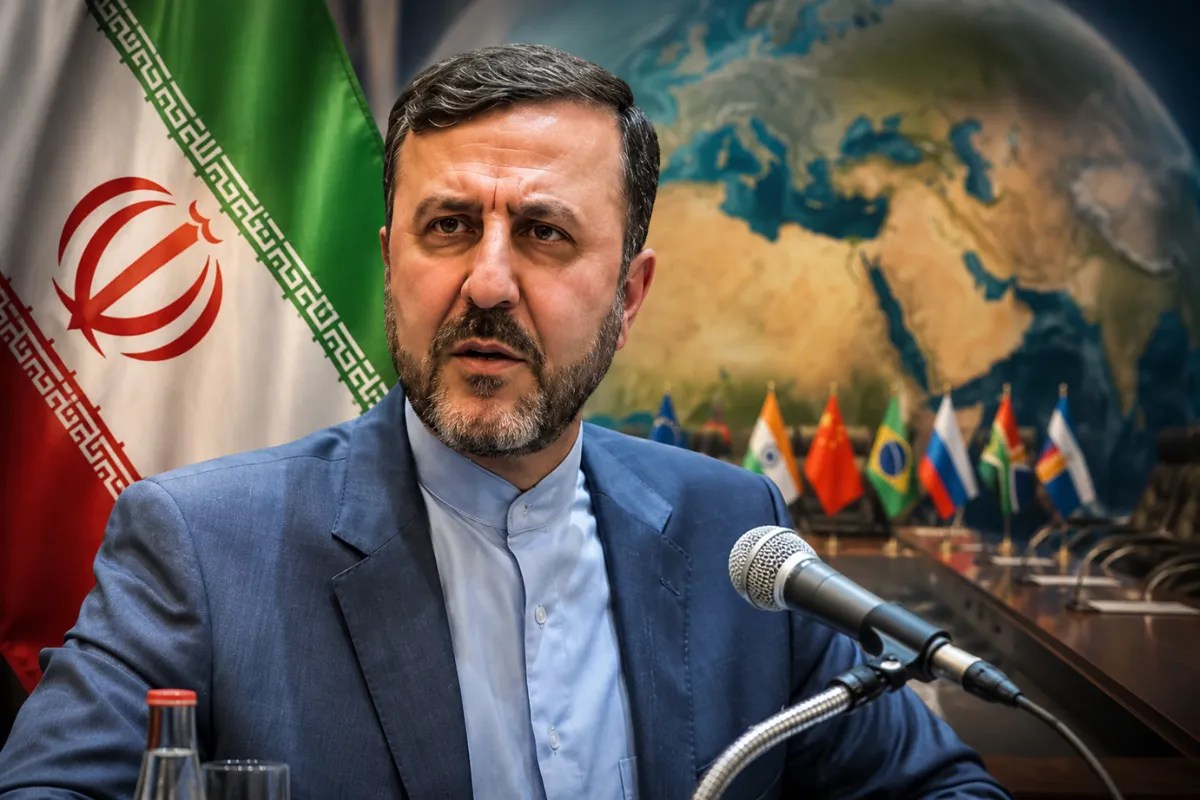
The ambition to forge a new diplomatic path in West Asia is hitting a wall of institutional resistance. While Iran signals its readiness to welcome India's mediation efforts in the region, the broader multilateral machinery—specifically within the BRICS grouping—is fracturing under the weight of conflicting national interests. This deadlock exists because individual member states are actively vetoing consensus language on regional security to protect their own strategic relationships. India finds itself caught between an assertive Tehran looking for non-Western partners and a divided economic bloc unable to agree on a unified security blueprint.
The core issue stretches far beyond standard diplomatic pleasantries. It involves a hard-nosed calculation by Tehran to diversify its alliances away from a purely Beijing-centric axis, viewing New Delhi as a credible, independent bridge to the global order. However, this strategic alignment is struggling to gain traction within transnational forums where consensus is a prerequisite for action. In related developments, take a look at: The Siege of Philippine Democracy and the Violent Fracture within the Senate.
The Friction Inside the Transnational Bloc
Multilateral declarations often mask intense behind-the-scenes friction. The recent push for a comprehensive, joint statement on West Asian stability within the expanded BRICS framework revealed deep internal contradictions that standard diplomatic reporting routinely ignores.
When India proposed a framework emphasizing maritime security, counter-terrorism, and respect for established trade corridors, it expected a routine endorsement. Instead, the initiative ran directly into a diplomatic wall. NPR has analyzed this critical topic in extensive detail.
A specific member state, acting to shield its own complex web of bilateral understandings and energy dependencies, systematically blocked the consensus language. This was not a minor disagreement over phrasing. It was a deliberate effort to prevent the bloc from emerging as a cohesive political counterweight in West Asian affairs.
This internal veto reveals the fundamental vulnerability of expanding political groups. By opening the door to new members, the bloc has introduced a chaotic mix of competing foreign policy goals. What was meant to be a unified platform for the Global South has instead become a arena where regional rivals cancel out each other's influence. New Delhi is learning that achieving consensus among a diverse group of autocracies and democracies is a structural nightmare.
Tehran Subtext for Welcoming New Delhi
Iran's public enthusiasm for an Indian diplomatic role is a calculated tactical move. Tehran is dealing with severe economic isolation and a volatile security environment, and it desperately needs to avoid becoming entirely dependent on Chinese economic patronage.
Strategic diversification drives this policy shift. By inviting Indian engagement, Iran aims to leverage New Delhi’s strong relations with both Western capitals and key Arab states, particularly the United Arab Emirates and Saudi Arabia.
- Iran gains a partner that possesses genuine leverage in Washington, potentially opening indirect channels of communication that bypass traditional deadlocks.
- India secures a critical geographical gateway to Central Asia through the development of transit infrastructure, bypassing hostile land routes.
- Both nations share a deep operational interest in securing Arabian Sea shipping lanes from non-state actors and piracy, despite their differing definitions of regional stability.
This relationship is built on necessity, not shared ideology. Iranian negotiators are fully aware that India maintains a crucial strategic partnership with Israel. Rather than viewing this as a disqualifying factor, Tehran increasingly sees it as an asset. A mediator with no access to Tel Aviv is useless in the current West Asian landscape. India's unique position allows it to speak to all major factions, making it one of the few nations capable of delivering credible messages across deeply polarized frontlines.
The Connectivity Dilemma and Chahbahar Port
The real test of this relationship is found in concrete infrastructure, specifically the Chahbahar port project. For over a decade, this maritime hub has been praised as India's gateway to the West, yet its development has been repeatedly stalled by the threat of secondary American sanctions.
The signature of a long-term operational lease marked a major bureaucratic milestone. However, the operational reality on the ground remains highly precarious. Indian state-backed enterprises must navigate a complex regulatory minefield, balancing the pursuit of national strategic goals against the risk of being cut off from the global financial system.
+-------------------------------------------------------+
|              THE CONNECTIVITY STALEMATE               |
+-------------------------------------------------------+
|  India's Goal: Secure Central Asian transit routes   |
|  Iran's Goal: Break Western economic isolation        |
|  The Barrier: US secondary financial sanctions        |
+-------------------------------------------------------+
This infrastructure project highlights the limits of strategic autonomy. New Delhi wants to fast-track the transport corridor to counter China's massive investments in Pakistan's Gwadar port, located just a short distance down the coast. Yet, every major investment decision in Chahbahar requires careful consultation with treasury officials in Washington. This creates an ongoing cycle of delay and frustration for Tehran, which views Indian hesitation as a lack of strategic resolve.
Regional Autonomy Meets Global Power Alignments
The diplomatic gridlock inside the BRICS framework reflects a much larger global reality. It shows that regional security issues cannot be isolated from the overarching competition between major world powers.
When a single nation stalls a joint declaration on West Asian peace, it is rarely acting alone. It is almost always operating within a broader strategy designed to keep the region dependent on traditional security arrangements or to preserve a specific balance of power that benefits external patrons.
This dynamic directly challenges India's traditional foreign policy approach. For decades, New Delhi relied on non-alignment and maintaining positive relations with all sides. That strategy is becoming obsolete in an era defined by hard choices and rigid alliances.
If India wants to be recognized as a serious security provider in West Asia, it must be willing to expend real political capital. This means pushing past the bureaucratic inertia of broken multilateral forums and focusing on direct, results-oriented bilateral agreements.
The current diplomatic stalemate is a clear sign that relying on large, diverse blocs to project influence is a losing strategy. True diplomatic leverage is built through precise, transactional partnerships that can withstand external pressure. As long as New Delhi allows its regional initiatives to be held hostage by the veto power of competing bloc members, its ambitions to act as a peacemaker in West Asia will remain confined to official press releases. Success depends entirely on India's willingness to bypass dysfunctional forums and deal directly with the harsh realities of regional power politics.