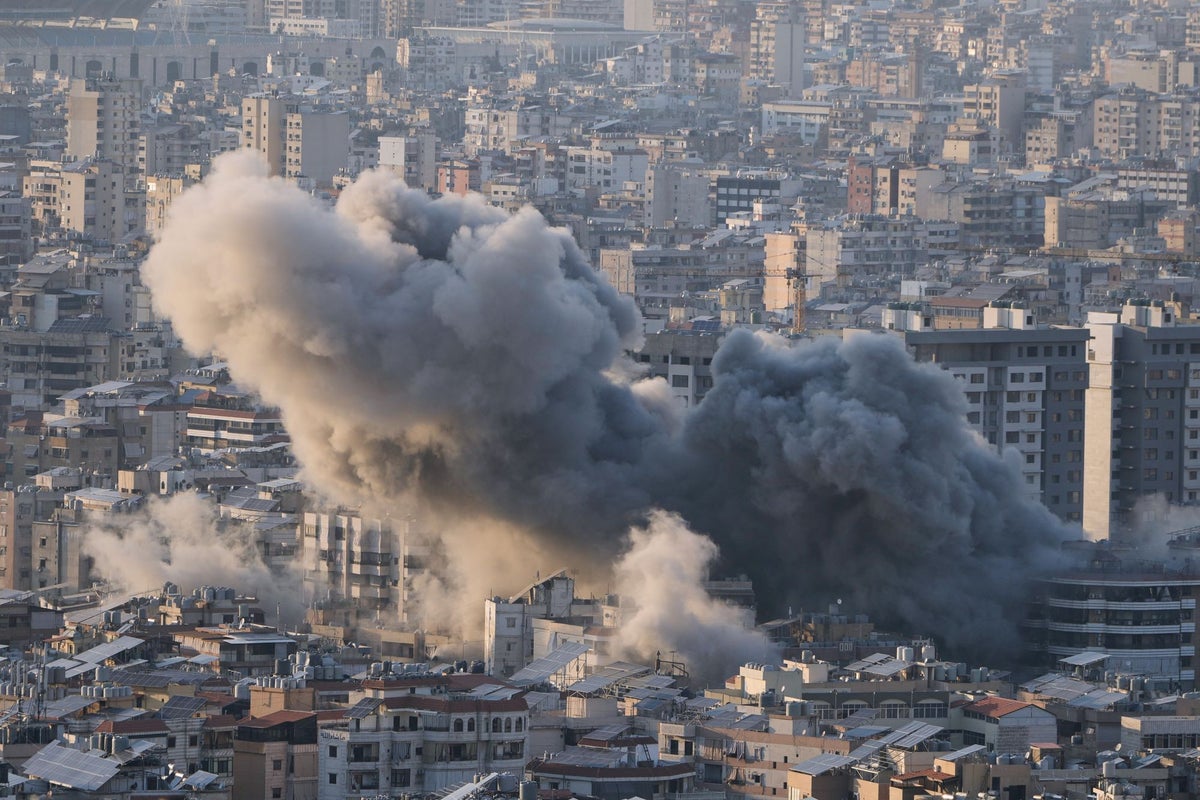
The reported figure of 140 US service members injured in recent regional escalations represents more than a static tally of personnel readiness; it is a leading indicator of a shift in the kinetic threshold of modern proxy warfare. To understand the strategic implications of these casualties, one must move beyond the raw numbers and analyze the Mechanics of Injury Delivery, the Operational Burden of Force Protection, and the Escalation Calculus governing the current theater. The fundamental tension lies in the mismatch between high-technology defense systems and the low-cost, high-frequency "mosquito" tactics employed by regional actors.
The Taxonomy of Modern Combat Trauma
The casualties reported by the Pentagon are not uniform in their impact on mission readiness. To analyze the true cost to the force, we must categorize these injuries through a structured clinical and operational framework.
1. The Traumatic Brain Injury (TBI) Delta
A significant portion of the 140 injuries involves "non-visible" trauma, specifically Mild Traumatic Brain Injury (mTBI) resulting from blast overpressure. The physics of modern standoff weapons—specifically Explosive Formed Penetrators (EFPs) and One-Way Attack (OWA) drones—create a pressure wave that travels faster than sound, causing micro-cellular damage to neural pathways even without direct shrapnel contact.
The Tactical Cost of TBI is high:
- Delayed Presentation: Symptoms often manifest 24 to 48 hours post-impact, creating a lag in casualty reporting that obscures the immediate success of an enemy strike.
- Rotation Logic: Unlike a shrapnel wound that might heal, repeated blast exposure has a cumulative effect, necessitating the removal of experienced personnel from the theater to prevent chronic encephalopathy.
2. Physical Trauma and Shrapnel Kinetics
Direct injuries from drone strikes and rocket fire represent the kinetic success of the adversary. The 140 injuries indicate a breach of the Protective Bubble (the radius within which anti-air systems are effective). Each injury signifies an failure in the "Left of Launch" or "Interdiction" phases of defense.
The Efficiency Gap in Counter-Drone Operations
The 140 injuries highlight a critical economic and technical asymmetry. To evaluate the sustainability of current US deployment, one must calculate the Cost-Per-Interception Ratio.
The Interceptor Paradox
The US military frequently employs high-cost interceptors—such as the SM-2 or Patriot missiles—to down drones that cost as little as $2,000 to $20,000. This creates a Negative Economic Feedback Loop.
- Manufacturing Lag: It takes months or years to replace a sophisticated interceptor missile, while an adversary can mass-produce low-tech drones in weeks.
- Saturation Thresholds: If an adversary launches ten drones at a cost of $100,000, and the US fires ten interceptors at a cost of $20 million, the adversary has achieved a strategic victory regardless of whether the drones hit their target. The 140 injuries suggest that saturation points are being reached, allowing a percentage of munitions to penetrate the shield.
The Electronic Warfare (EW) Bottleneck
Modern defense relies heavily on jamming and signal disruption. The injuries reported suggest that adversaries are iterating their technology to include:
- Optical Navigation: Drones that do not rely on GPS and are therefore immune to traditional jamming.
- Low-Observable Flight Paths: Utilizing terrain masking and low altitudes to bypass radar detection.
Logistics and the Operational Strain of Medical Evacuation
The reported number of injuries places a specific logistical burden on the MEDEVAC (Medical Evacuation) Chain. Each of the 140 service members requires a specific set of resources that ripple through the theater’s logistical backbone.
The CASEVAC Ratio
In a high-intensity conflict, the ratio of wounded to killed (WIA vs. KIA) is a measure of both medical efficacy and the lethality of the enemy. A high WIA count relative to KIA indicates that while US body armor and vehicle hardening are effective at preventing death, they are less effective at preventing debilitating injury. This creates a Long-Tail Medical Burden:
- Transport Assets: Moving 140 injured personnel out of a hostile environment requires dedicated airframes (C-17s, C-130s) that are then unavailable for troop rotations or resupply.
- Specialized Care: TBI requires neurologists, not just trauma surgeons. The US must deploy highly specialized medical teams to forward bases, increasing the footprint and number of potential targets.
The Escalation Calculus and Deterrence Failure
The Pentagon’s disclosure of these figures serves as a metric for the failure of deterrence. In traditional military theory, a superpower's presence is meant to prevent kinetic action through the threat of overwhelming retaliation. The 140 injuries prove that the threat of retaliation is no longer a sufficient deterrent against non-state or proxy actors.
The Threshold of Retaliation
There is a specific Casualty Threshold that triggers a change in US policy. Historically, low-level injuries are absorbed as "the cost of doing business" in a unstable region. However, as the number climbs toward 150 and beyond, the political pressure for a "proportional response" increases.
The logic follows a predictable sequence:
- Stage 1: Absorption. Minor injuries are downplayed to avoid escalating a wider regional conflict.
- Stage 2: Signaling. Increased deployment of defensive assets (THAAD, Patriot batteries) and publicizing casualty numbers to prepare the domestic audience for potential action.
- Stage 3: Kinetic Rebalancing. Targeted strikes on launch sites and command centers to reset the deterrence baseline.
The 140 injuries indicate that the US is currently in late Stage 2. The strategy is moving from pure defense to Active Interdiction.
Infrastructure Vulnerability and the Perimeter Problem
The concentration of these injuries at specific sites (such as Tower 22 or Al-Asad Airbase) reveals a structural vulnerability in US base design. Modern bases were built to withstand mortar fire and small arms. They were not designed for the age of Precision Loitering Munitions.
The Hardening Deficit
To mitigate future casualties, the US must shift its infrastructure strategy:
- Buried Command Centers: Moving personnel underground to neutralize the impact of top-down drone strikes.
- Disaggregated Presence: Instead of large, easy-to-target bases, moving toward smaller, mobile hubs. This increases logistical complexity but decreases the "Target Rich Environment" available to the enemy.
The current injury count suggests that "Point Defense" (defending a specific spot) is currently less effective than "Area Denial" (preventing the enemy from ever getting within range).
Strategic Forecast and the Path to Force Protection
The trajectory of these 140 injuries suggests that the current defensive posture is reactive and unsustainable. To prevent this number from doubling or tripling, the strategic play must shift toward Asymmetric Suppression.
Immediate Strategic Requirements:
- Deployment of Directed Energy Weapons: The transition from kinetic interceptors (missiles) to laser or high-powered microwave (HPM) systems is non-negotiable. These systems offer a "zero-cost" per shot and can handle drone swarms that currently overwhelm traditional defenses.
- Redefining the Red Line: The US must clearly articulate that TBI counts as a "significant injury" equivalent to kinetic trauma. By categorizing TBI as a secondary concern, the US signals to adversaries that blast overpressure attacks are "safe" provocations that will not trigger a massive response.
- Regional De-risking: Reducing the number of static, vulnerable personnel in range of proxy munitions while increasing standoff strike capabilities (long-range bombers and naval assets).
The 140 injuries are not just a medical statistic; they are a clear signal that the era of uncontested airspace in the Middle East has ended. The US must now adapt its entire force protection doctrine to a theater where every soldier is constantly within the "kill box" of an inexpensive, precision-guided drone.