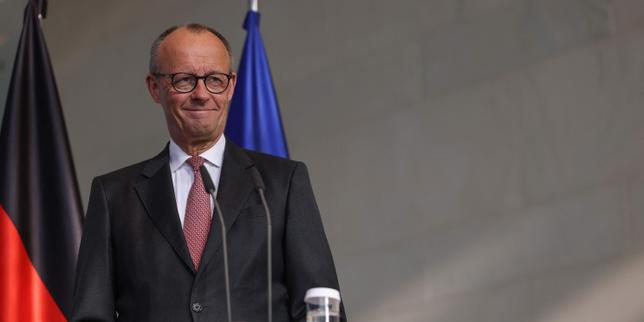
When Germany’s conservative Christian Democratic Union (CDU) took power under Chancellor Friedrich Merz, small and medium-sized business owners breathed a collective sigh of relief. After years of navigating the chaotic economic policies of the previous coalition, the corporate community expected a savior. Merz was, after all, an ex-BlackRock corporate heavy hitter and a self-proclaimed champion of the free market.
Fast forward to 2026, and that optimism has completely soured.
The German Mittelstand—the backbone of the national economy, consisting of millions of family-owned, highly specialized enterprises—is staging a quiet revolt against the Chancellor. What was supposed to be a golden era for German business has devolved into a bitter political breakup. Business owners don't just feel ignored; they feel betrayed by one of their own.
The Broken Promise of the Economic Turnaround
The core of the issue is simple. Business owners feel the administration's promised economic turnaround, or Wirtschaftswende, is totally stuck in neutral. Christoph Ahlhaus, head of the BVMW mittelstand association, sent a blistering letter directly to the Chancellery outlining what he termed "blank horror" among his members regarding the government's direction.
When the government recently trimmed its growth forecast down to a meager 1%, it confirmed what factory owners in Swabia and Westphalia already knew. The economic engine isn't firing.
German Economic Indicators (2026 Projections)
- Initial GDP Growth Expectation: 1.3%
- Revised GDP Growth Forecast: 1.0%
- Key Mittelstand Grievances: Red tape, energy costs, labor shortages
Entrepreneurs are exhausted by endless high-level PR summits and placebo discussion panels that yield zero practical policy changes. While the government hosts lavish photo opportunities with corporate CEOs, the local manufacturer employing two hundred people is still drowning under mountains of bureaucratic paperwork.
Energy Gridlock and the Competitiveness Trap
You can't talk about German manufacturing without talking about electricity. While the administration claims it wants to lower costs, industrial electricity prices in Germany remain among the highest in Europe.
Merz has traveled abroad, signing memorandums of understanding from India to Washington, trying to position Germany as a global powerhouse. Back home, family businesses are struggling to justify keeping their production lines inside the country.
The green energy transition is another major friction point. Most Mittelstand owners agree that green energy matters, but they need baseload power that doesn't disappear when the sun goes down or the wind stops blowing. The current policy framework heavily penalizes traditional manufacturers before viable, cheap infrastructure is ready to take over. It forces a choice between moving production abroad or watching profit margins evaporate.
A Growing Culture of Labor Shortages
Walk into any family-run machine tool shop in Baden-Württemberg and ask the owner what keeps them up at night. It isn't just energy. It's the fact that they can't find engineers, technicians, or apprentices.
Despite the government rolling back certain social welfare programs to incentivize employment, the demographic math just doesn't work anymore. Two current taxpayers cannot sustainably fund one retiree over the long term. The Mittelstand wants aggressive tax reforms that let workers keep more of their hard-earned money, boosting the incentive to work full-time or take on extra hours. Instead, they see an administration tweaking existing welfare rules at the margins while the core labor market shrinks.
Political Bureaucracy and Friendly Fire
What makes this situation particularly stinging for local entrepreneurs is that the political hits are coming from their supposed allies. The Mittelstand association went so far as to openly criticize Gitta Connemann, the head of the CDU’s own business wing (MIT), signaling a massive internal rift. When business organizations start calling out the leadership of conservative business committees, the standard political consensus is officially broken.
The corporate community expects aggressive deregulation. Instead, they feel the current grand coalition structure between the CDU and the social democrats has watered down every meaningful reform. To keep political peace in Berlin, the Chancellery compromises on economic policies, and the family businesses pay the price.
Real Steps for the German Mittelstand
If you run a medium-sized business in Germany today, waiting around for Berlin to fix the regulatory landscape is a losing strategy. Companies that are successfully weathering this political stagnation are focusing entirely on internal resilience.
- Accelerate Selective Automation: If finding qualified labor is impossible under current immigration and domestic policies, standard processes must be automated. Forward-thinking firms are shifting capital from physical expansion into software integration to lower their per-employee overhead.
- Decentralize Energy Supply: Waiting for state-subsidized energy relief is a gamble. Companies are increasingly investing in localized corporate microgrids, rooftop solar networks, and private storage solutions to shield themselves from grid volatility.
- Diversify Supply and Markets Internationally: If domestic operating costs remain punishingly high, scaling outside the eurozone isn't just an option; it's a necessity for survival. Building direct joint ventures in emerging markets can hedge against domestic stagnation.
The era of trusting a pro-business chancellor simply because of their corporate resume is over. Germany's industrial heartland is waking up to the reality that political promises rarely translate into operational relief.
German Chancellor Friedrich Merz Addresses Entrepreneurs' Day in Dusseldorf
This video provides direct coverage of Chancellor Friedrich Merz speaking to German business leaders, showcasing the exact political rhetoric and policy defense that is currently causing tension with the Mittelstand.
.png)