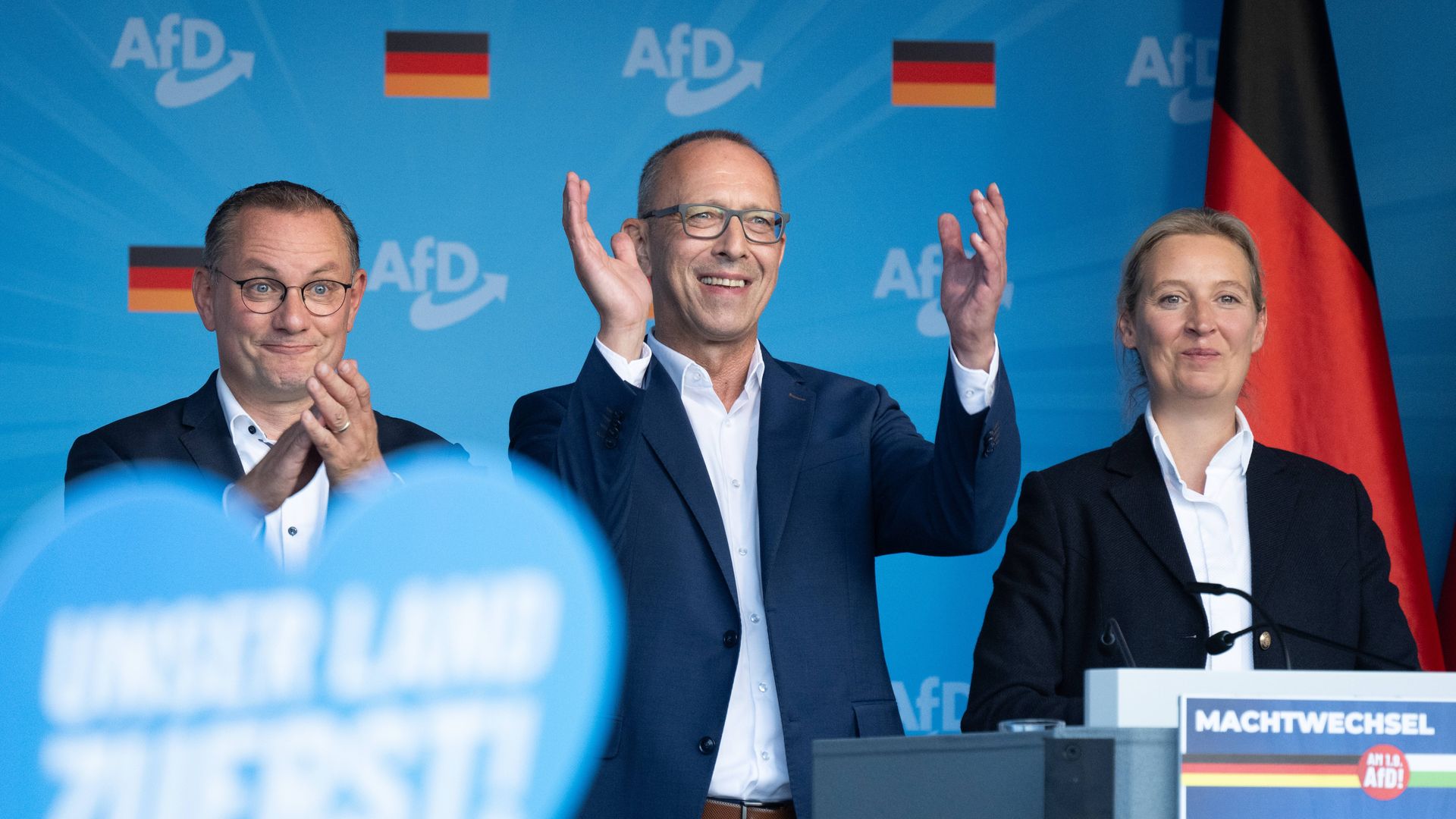
The mainstream media is obsessed with the ghost of 1933. Every time the Alternative for Germany (AfD) mentions "remigration" or "Russian school exchanges," journalists reach for the same dusty playbook. They scream about the end of democracy. They warn of a return to totalitarianism. They treat these policy shifts as a sudden, inexplicable fever dream.
They are missing the point entirely. In other developments, take a look at: Geopolitical Arbitrage and the Hormuz Kinetic Constraint.
The AfD isn't just a political party anymore; it is a hostile takeover bid for the German state, framed as a restructuring of a failing legacy brand. While the press dorks out over the ethics of deporting dual citizens, they fail to see the cold, hard logic of the "Economic Realism" the far right is actually selling. This isn't just about xenophobia. It’s about a brutal, calculated attempt to pivot Germany’s geopolitical and demographic liabilities into what they perceive as assets.
The Remigration Myth and the Labor Fallacy
The "lazy consensus" dictates that mass deportation is an economic suicide note. Economists at the DIW Berlin will tell you that Germany needs 400,000 immigrants a year just to keep the lights on. They point to the aging population and the massive "Fachkräftemangel" (skilled labor shortage). Associated Press has provided coverage on this critical subject in great detail.
But the AfD’s counter-logic is more sophisticated than "foreigners bad." Their argument—which I’ve watched gain traction in boardroom whispers from Saxony to Stuttgart—is that the current model of immigration is a net-negative asset.
When the AfD talks about "remigration," they aren't just targeting the "unintegrated." They are making a bet on a high-productivity, low-population model. They argue that the German welfare state cannot survive the overhead of a large, low-wage immigrant class. They want to swap human labor for hyper-automation and AI-driven manufacturing.
I’ve seen dozens of German Mittelstand companies struggle with the "Integration Industrial Complex." They spend millions on language training and social integration only for workers to be poached or for the bureaucracy to deport them anyway. The AfD is promising to end that friction by simply removing the variable. Is it morally bankrupt? Many would say yes. Is it a logical response to a broken administrative system? To a growing segment of the German electorate, absolutely.
The Russian Pivot Is Not a Love Affair It Is a Resource Play
The "school exchanges with Russia" headline gets played for shock value. "Look! They like Putin!"
Stop. The AfD doesn’t care about Russian literature or the "soul of the East." This is about the Nord Stream 2 ghost.
Germany’s industrial backbone—the BASF plants, the car manufacturers, the chemical giants—was built on a single, fragile pillar: cheap Russian gas. When that pipeline was severed, Germany’s business model died. The current government’s pivot to expensive US LNG and erratic renewables is a "green" transition that many industry insiders know is actually a deindustrialization plan in disguise.
The AfD is the only party willing to say the quiet part out loud: Germany cannot be a global industrial leader without a pipeline to the East. The school exchanges and the diplomatic overtures are just the marketing department's way of prepping the ground for a return to the status quo ante.
This is a geopolitical hedging strategy. While the Greens and the FDP double down on the Transatlantic alliance, the AfD is positioning Germany as the bridge between the West and a resurgent, resource-rich Eurasia. They are betting that, in a decade, the German voter will care more about their heating bill and their factory job than they do about the sovereignty of Ukraine. It’s a cynical, mercantilist worldview that treats international law as a variable, not a constant.
The Illusion of the "Unconstitutional" Barrier
The biggest mistake the "sensible center" makes is believing the German Basic Law (Grundgesetz) is an impenetrable shield. I’ve spoken with legal scholars who are terrified of the "Salami Slicing" tactic. You don't need to burn the Reichstag to change a country; you just need to change the administrative regulations.
The AfD isn't looking to overthrow the constitution. They are looking to reinterpret it.
- The Asylum Loophole: They don't need to abolish the right to asylum. They just need to define "safe third countries" as every country on the map.
- The Dual Citizenship Clawback: They are already floating legal theories on how to revoke citizenship for "crimes against the state" or "failure to integrate."
This isn't a glitch in the system. It’s a feature. The German state is incredibly efficient at executing orders. If the orders change, the machinery will keep humming. The bureaucracy that currently manages refugee arrivals will, with a few software updates and new directives, manage refugee departures.
The Demographic Death Spiral Nobody Wants to Solve
Let’s be brutally honest. The reason the AfD is winning is that the "democratic" parties have no answer for the German demographic collapse.
The CDU wants to manage the decline. The SPD wants to tax the remaining workers to pay for the pensioners. The Greens want to replace the population with a global melting pot.
The AfD is the only party selling a "Great Reset" of German identity. They are betting on a return to a 19th-century natalist policy combined with 21st-century border technology. They are promising a high-trust, homogenous society as a cure for the loneliness and fragmentation of the modern digital age.
It is a fantasy, of course. You can't just wish a birth rate into existence, and you can't build a 21st-century economy while alienating your largest trading partners. But in a market where every other brand is offering "controlled decline," the brand offering "radical restoration" is going to win market share every single time.
Why the "De-Platforming" Strategy Failed
For years, the German media tried to "cordon sanitaire" the AfD. They ignored them. They mocked them. They called them "Nazis" and assumed that would be the end of it.
It backfired.
By treating the AfD as an outside contagion rather than a symptom of a systemic failure, the establishment allowed the party to own the "truth-teller" brand. Every time a mainstream journalist "debunks" an AfD claim about migrant crime or energy costs, they do so with such obvious condescension that they drive the wavering voter right into the party’s arms.
I’ve analyzed the engagement metrics. The AfD doesn't need the evening news. They have built a parallel media ecosystem on TikTok and Telegram that is faster, funnier, and more aggressive than anything the public broadcasters can produce. They aren't playing the game of "political debate." They are playing the game of "algorithmic dominance."
The Brutal Reality of the German Voter
People keep asking, "How can they vote for this?"
The answer is simple: The average voter in Thuringia or Saxony doesn't see "remigration" as a human rights violation. They see it as a cleaning service. They don't see "Russian exchanges" as treason. They see it as a discount on their gas bill.
The competitor article treats these policies as "pledges" to be scrutinized. They aren't pledges. They are product features for a specific demographic that feels it has been liquidated by the globalist merger of the last thirty years.
Germany is currently a company with massive debt, an aging workforce, and a product line that is becoming obsolete. The AfD is the "vulture capitalist" firm coming in to strip the assets, fire the middle management, and try to relaunch a "classic" version of the brand.
It might work. It might blow up the entire European Union. But stop pretending they are just "far-right extremists" with no plan. They have a plan. It’s written in the language of logistics and power, not just hate.
The real question isn't whether the AfD is dangerous. The question is why the "center" thinks a failing status quo is a viable defense. If you want to beat a hostile takeover, you don't just complain to the SEC. You offer a better valuation to the shareholders. Right now, the German establishment is offering nothing but "more of the same, but slower."
In the market of ideas, "slower decline" always loses to "radical change," no matter how dark that change might be.
Stop waiting for the "Constitutional Court" to save the day. The court can define the rules of the game, but it cannot force people to play. The AfD has already moved the goalposts to a different stadium. If you’re still arguing about the rules in the old one, you’ve already lost.