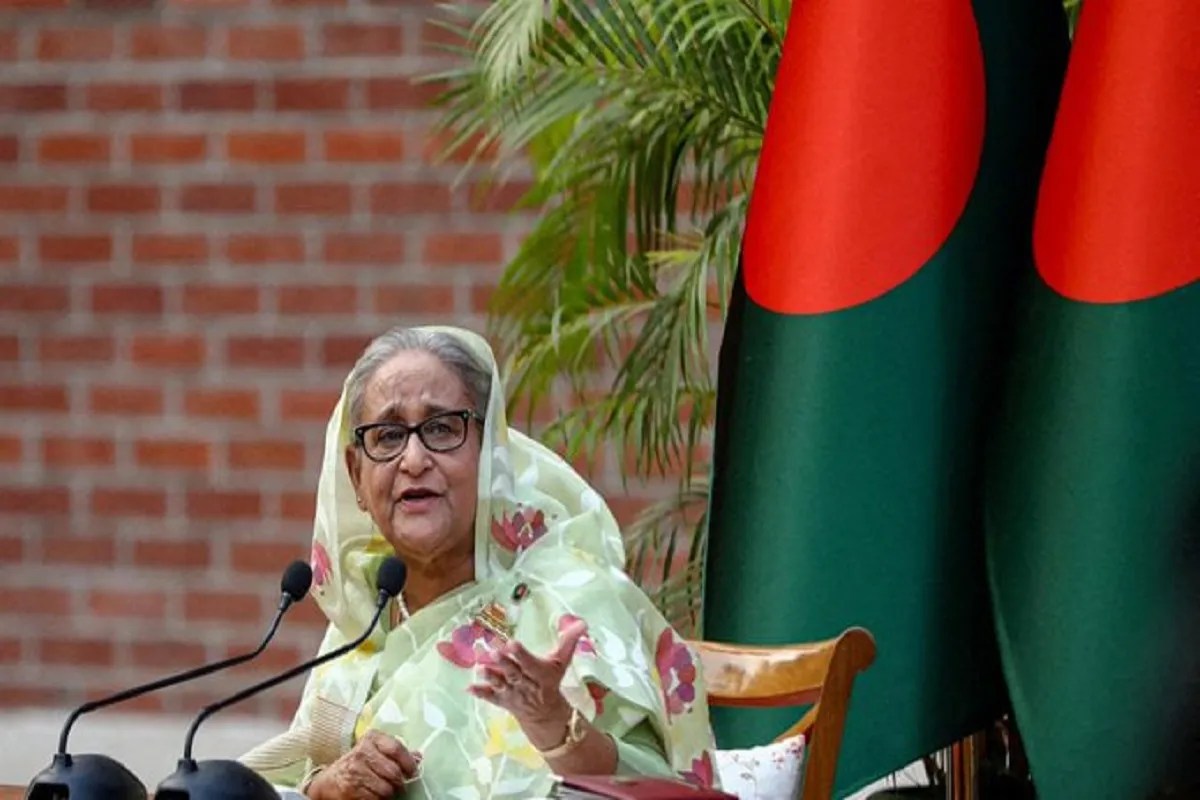
The afternoon air in New Delhi carried the heavy, metallic scent of an impending monsoon, the kind that dampens the spirit before it even touches the skin. In a quiet, heavily guarded enclave far from the chaotic media circuses, a woman sat by a window, watching the familiar dust settle on an unfamiliar sill.
Sheikh Hasina knew this room. She knew the silence of exile.
Decades ago, tragedy had forced her into these very streets, turning her into a ghost with a political lineage. History, it seemed, possessed a cruel sense of rhythm. It repeated itself not as farce, but as a relentless tide. Once again, she was the ousted leader without a country, watching her homeland from behind thick glass and diplomatic shields. But the distance between New Delhi and Dhaka was no longer measured in miles. It was measured in the sharp, unforgiving rhetoric currently echoing through the chambers of the interim government in Bangladesh.
Consider the recent statements coming out of Dhaka. The newly empowered administration, steered by figures who had long languished in the shadows of Hasina's iron-fisted tenure, is not merely talking about legal accountability. They are drafting an indictment of an entire era. When officials from the interim setup speak of her inevitable return, they do not speak with the measured cadence of judicial process. They speak with the heavy, unyielding certainty of victors writing a reckoning.
For the people on the ground in Bangladesh, the streets tell a different, more fractured story. Walk through the bustling alleys of old Dhaka, past the tea stalls where the scent of cardamom mingles with exhaust fumes, and you will find a population suspended in a fragile truce. The students who bled on the asphalt during the July uprising—young men and women with bright eyes and bandaged limbs—are still waiting for the promised dawn. They talk in hushed tones about justice, about the hundreds who fell to security forces, about the accountability that must stretch all the way to the top.
Yet, anxiety hums beneath the surface like an electric current. Everyone knows that Hasina’s return, voluntary or forced, is not just a legal matter. It is a tectonic event.
The interim government finds itself walking a razor's edge. To demand her extradition from India is to poke a sleeping regional giant. To let her remain in exile untouched is to betray the blood of the revolution that brought them to power.
This is where the invisible stakes become painfully clear.
India finds itself trapped in a geopolitical chess match of its own making. For years, New Delhi invested heavily in Hasina. She was a reliable partner, a secular bulwark against radical elements, and a strategic anchor on its eastern flank. Her downfall was sudden, violent, and deeply unsettling for the foreign policy establishment in South Block. Harboring her is a humanitarian duty and a nod to past loyalty; handing her over or ignoring Dhaka's formal fury risks alienating a newly nationalistic, fiercely independent Bangladeshi populace that currently views its giant neighbor with deep suspicion.
Every diplomatic cable sent across the border carries a hidden weight. Every public statement from Dhaka's new leaders is calibrated to test New Delhi's patience.
Imagine a hypothetical diplomat sitting in a sterile conference room in the Ministry of External Affairs, staring at a map that suddenly looks less like geography and more like a minefield. That is the reality of the situation. The stakes are not abstract policy points on a white paper. They are trade routes choked by uncertainty, minority communities holding their collective breath, and a bilateral relationship built over fifty years threatening to fray at the seams.
The rhetoric from the interim government has escalated deliberately. They frame her return not as a political squabble, but as a moral imperative. They argue that closure is impossible while the architect of the crackdown remains sheltered abroad. They point to international legal frameworks, extradition treaties, and the undeniable documentation of state-sponsored excess during those final, bloody weeks of her rule.
But law is rarely pure when politics breathes down its neck.
If Hasina were to board a flight back to Dhaka tomorrow, the descent would not be quiet. The tarmac would either be a staging ground for mass jubilation from her remaining loyalists—still a potent, if cowed, political force—or a theater of unprecedented civil unrest. The interim administration knows this. They know that putting a former prime minister on trial is a delicate surgery. Cut too deep, and the patient bleeds out into chaos. Cut too shallow, and the infection of impunity remains.
This is why the recent statements from Dhaka are designed to keep the pressure white-hot. They are testing the limits of international law and regional diplomacy. They are signaling to the world that the old rules no longer apply, that the slate has been wiped clean by the sacrifice of a generation.
Back in her New Delhi sanctuary, the deposed leader watches the news crawl across the screen. The faces have changed. The banners in the streets of Dhaka bear new names, new slogans, new demands. But the fundamental tension remains eternal: the eternal clash between those who held power and those who finally tore it from their hands.
The border remains porous, the rhetoric remains sharp, and somewhere in the darkening sky over the subcontinent, the storm continues to gather, waiting for someone to finally strike the match.