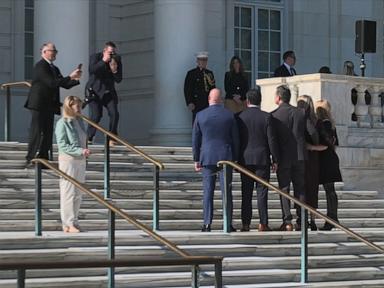
The marble floor of the Mississippi State Capitol holds a chill that never quite leaves, even when the July humidity presses against the tall windows like a wet wool blanket. Walk down the corridors of Jackson, and your footsteps echo off portraits of stern men in dark frock coats—men who built an empire on cotton, codified silence into law, and designed a political machine meant to run forever without a single gear slipping.
For a century and a half, that machine held. If you enjoyed this post, you might want to read: this related article.
Then came a Tuesday night in November 2026. By the time the final precinct tallies rolled in from the piney woods and the Delta flatlands, Scott Colom had done what political scientists, cynics, and generations of weary voters whispered was impossible. He won a United States Senate seat in Mississippi.
One hundred and forty-five years. For another perspective on this event, refer to the latest update from USA Today.
Say the number out loud and let it sit on your tongue. One hundred and forty-five years is not merely a statistic for a trivia night or a footnote in a high school civics textbook. It is six generations of mothers rocking babies on wooden porches, wondering if the state they loved would ever fully love them back. It is the entire lifespan of modern America, stretched between the collapse of Reconstruction and a modern ballot box.
To understand what happened when Scott Colom’s victory became undeniable, you have to stop looking at electoral maps shaded in red and blue. Maps are cold. Maps lie by omission. Instead, you have to step back into the smoke and dust of 1881, to the last time a Black man from Mississippi walked into the United States Senate.
The Man Who Walked Out the Door
His name was Blanche Kelso Bruce.
Born into slavery in Virginia, Bruce arrived in Mississippi during the turbulent promise of Reconstruction, amassed land in Bolivar County, and in 1875 took his oath in the Senate chamber in Washington. He was poised, articulate, and fiercely protective of the fragile rights newly won by formerly enslaved people. He fought for the desegregation of the Army, defended Native American sovereignty, and pleaded with his colleagues to protect Black voters from the rising tide of paramilitary terror sweeping the South.
On March 3, 1881, Bruce’s term ended. He packed his papers, walked out of the Capitol, and closed the door behind him.
Nobody knew then that the lock would rust shut for nearly a century and a half.
Within a decade, Mississippi’s white political establishment convened the Constitutional Convention of 1890 with an explicit, unapologetic mission—to strip Black citizens of the ballot without technically violating the Fifteenth Amendment. Poll taxes, literacy tests, arbitrary residency rules, and the looming threat of racial violence turned the franchise into a mirage. By the turn of the twentieth century, a state with a Black majority had effectively erased Black representation from federal office.
History, in Mississippi, does not pass. It accumulates.
I remember sitting in a cramped living room in Lowndes County years ago, listening to an elderly woman describe her first attempt to register to vote in 1964. She kept her faded receipt inside a family Bible, right next to dried magnolia petals and obituary programs. She told me how her hands shook so badly at the courthouse counter that she dropped her pen twice, while the registrar stared at her without blinking. "They didn't have to hit you," she said softly, smoothing her skirt. "They just had to make you feel like you were trespassing in your own house."
That feeling—of being a guest in a home your ancestors built—is the invisible weight that hung over every statewide election in Mississippi for decades. Even after the Voting Rights Act of 1965 tore down the formal barriers, a silent ceiling remained intact. Black candidates won local offices, congressional districts drawn along racial lines, and legislative seats. Yet the top of the ticket—Governor, Lieutenant Governor, United States Senator—remained an unbroken wall.
A Prosecutor in the Pines
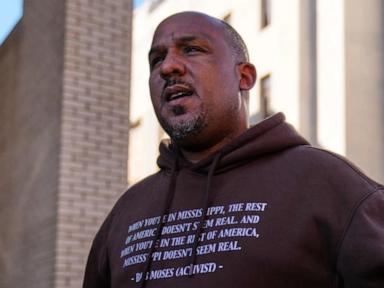
Scott Colom did not arrive on the political stage as a firebrand shouting from the barricades. If you met him at a coffee shop in Columbus, where he served as District Attorney for the Sixteenth Circuit Court District, you might mistake him for a soft-spoken professor or a neighbor checking on your roof after a storm.
His path to the Senate began not with grand ideological manifestos, but with the gritty, unglamorous work of local justice. When Colom first ran for District Attorney in 2015, defeating a long-tenured incumbent, he stepped into a rural circuit encompassing Clay, Lowndes, Noxubee, and Oktibbeha counties. It was a place where everyone knew everyone else’s last name, where court dockets overflowed with poverty-driven offenses, and where trust in the legal system had eroded to dust.
Colom approached prosecution like a surgeon rather than a executioner. Think of a traditional district attorney's office as a factory conveyor belt—every case goes in one end, gets stamped with a felony conviction, and drops out the other side into an overcrowded prison. Colom jammed a crowbar into the gears. He expanded drug courts, prioritized violent offenders while diverting nonviolent addicts into treatment, and stared down entrenched habits inside rural courthouses.
He won re-election twice. Even voters who disagreed with him on national politics admitted, sometimes grudgingly over sweet tea at local diners, that the man was fair. He showed up to high school football games. He listened to grieving families without checking his watch. He understood a fundamental truth about Southern politics that national consultants routinely miss—people do not vote for a party platform first. They vote for someone they believe sees them as human beings.
Still, running for District Attorney in northeast Mississippi is a world away from running statewide for the United States Senate.
The Anatomy of an Impossible Climb
Let us consider a hypothetical voter—call him Marcus, a fifty-two-year-old maintenance supervisor at a manufacturing plant near Tupelo. Marcus wakes up at four-thirty every morning, packs a lunch, and drives past three shuttered rural clinics on his way to work. He is tired. He has watched politicians from both parties fly into Jackson, deliver rehearsed speeches about Mississippi’s potential, and fly back out before the asphalt cools.
For decades, the conventional wisdom in Washington was that a Democrat—and particularly a Black Democrat—could not build a winning coalition in Mississippi. The math, pundits insisted, simply was not there. Turnout in the Delta would never climb high enough. Suburban voters around Jackson and the Gulf Coast would never cross party lines. Rural white voters were locked in cement.
Every four or six years, candidates tested that conventional wisdom and crashed against the wall. Donations dried up in September because national committees refused to spend money on what they deemed a lost cause. Local organizers burned out, knocking on doors in hundred-degree heat only to watch election night end before nine o'clock.
Colom’s campaign dismantled that fatalism piece by piece, county by county, porch by porch.
Rather than retreating into safe enclaves, he leaned into the friction. He traveled to counties where Democrats rarely bothered to print yard signs. He talked about rural hospitals closing their emergency rooms, leaving pregnant women to drive ninety miles in labor. He talked about infrastructure funds rotting in bureaucratic limbo while bridges rusted over creeks. He spoke about public schools starved of resources and young graduates packing U-Hauls for Atlanta, Nashville, and Dallas because they could not see a future at home.
Slowly, an alchemy began to happen. In the Delta, where generational memory runs deep as the river mud, organizers felt a pulse they had not felt since the historic surge of 2008. In the Golden Triangle—Columbus, Starkville, West Point—voters who had watched Colom govern up close vouched for him to cousins and coworkers across the state. And in the suburbs of Madison and DeSoto counties, younger voters and independents weary of endless culture-war theater found themselves drawn to a candidate who sounded like an adult in a room full of shouting children.
What Was Really on the Ballot
When people outside Mississippi look at this race, they tend to reduce it to a headline about race and party control in Washington. They ask how it shifts committee chairmanships or filibuster math. Those questions matter, certainly, in the marble corridors of Capitol Hill.
Down here, the stakes were quieter and infinitely heavier.
To live in Mississippi is to carry a complicated inheritance. You love the music that rose from the soil, the fierce hospitality of neighbors who bring casseroles before you even ask for help, the pine forests glowing amber at dusk. At the same time, you carry the exhaustion of watching your home finish last in nearly every metric that measures human flourishing—infant mortality, life expectancy, household income, educational funding.
For 145 years, the absence of a Black senator from the state with the highest percentage of Black residents in the nation was a living contradiction. It sent an unspoken message to every child sitting in a classroom in Greenville, Meridian, or Hattiesburg: You can belong to this place, you can work its land and fight its wars, but the highest seat at the table belongs to someone else.
Representation does not magically pave a crumbling road or balance a family’s grocery budget overnight. Nobody understands that better than the people who stood in line for hours in the November chill to cast their ballots. A Senate seat is not a magic wand.
What it is, however, is proof that the lock is broken.
When the networks finally projected Scott Colom as the winner, the roar that went up in his election-night watch party was not the polished applause of a corporate banquet. It sounded like a dam giving way. Grown men wept with their hands over their faces. Grandmothers gripped the shoulders of their grandchildren, pointing toward the television screens as if making sure the image would not vanish if they blinked.
Somewhere in that room, someone held up a worn paperback biography of Blanche Kelso Bruce.
One hundred and forty-five years after Bruce walked out of the Senate chamber into the gathering dark of Jim Crow, another son of Mississippi had finally claimed the seat beside him in history. Outside the hotel windows, the night air was cool and clear, and for the first time in living memory, the silence of the state’s past had been answered.