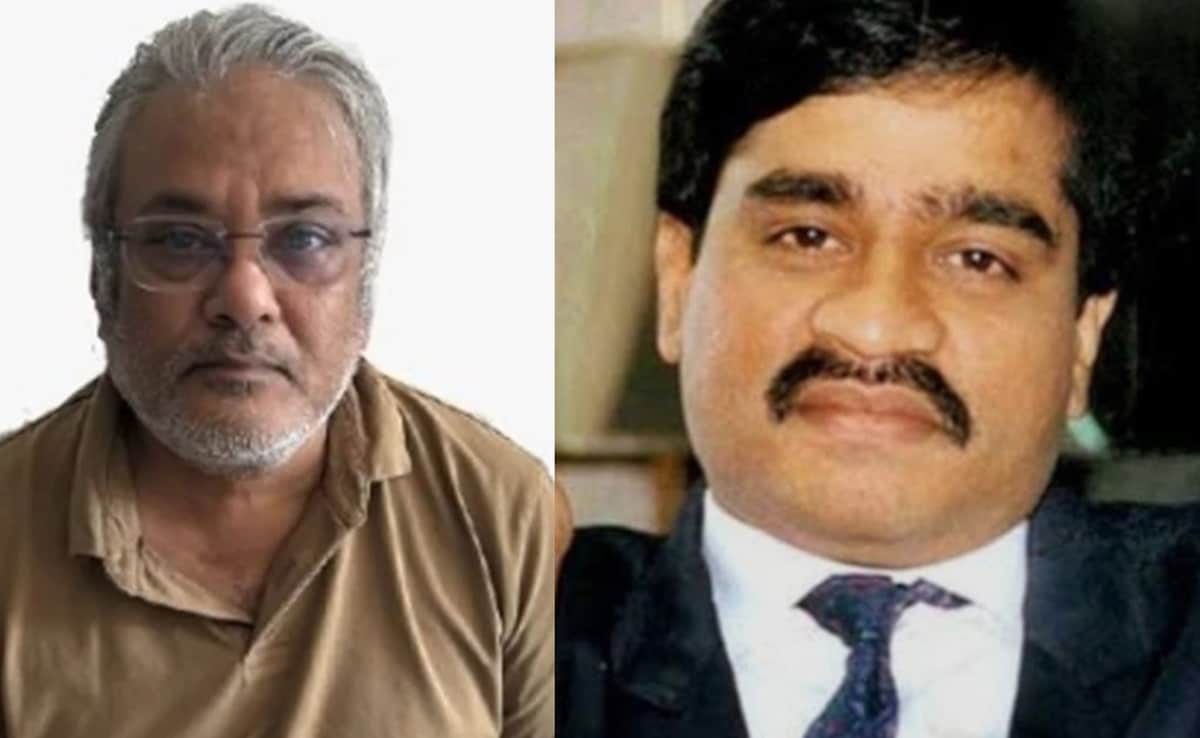
The air in Mumbai’s Crawford Market doesn’t just smell like spices and exhaust. It smells like history. It is a thick, humid weight that carries the echoes of a thousand backroom deals and the ghosts of men who once ruled these streets with a whisper. For decades, names like Dawood Ibrahim were not just entries in police files; they were atmospheric conditions. You lived under them. You breathed them.
Salim Dola was one of those names that floated in the periphery, a shadow cast by a much larger mountain.
To the Narcotics Control Bureau (NCB), Dola was a high-value target in a transnational drug syndicate. To the streets, he was a vital gear in the "D-Company" machine, a man who knew how to move things across borders without leaving a fingerprint. But his story isn’t just about a criminal record or a set of handcuffs. It is a story about the slow, grinding machinery of international justice and the moment the past finally catches up with a man who thought he had outrun it.
The Architect of the Invisible
Imagine a map of the world. Not the one with colorful borders and capital cities, but the one traced in neon lines of supply and demand. In this hidden geography, the ports of Dubai, the silent warehouses of Mumbai, and the high-rises of London are all connected by a single, pulsing vein: the narcotics trade.
Salim Dola wasn't a street-corner pusher. He was a logistics expert. His specialty was mephedrone, often called "Meow Meow" on the street, a synthetic stimulant that has torn through the fabric of Mumbai’s youth over the last decade. It is cheap. It is devastating. And for men like Dola, it was a gold mine.
In 2018, the NCB intercepted a massive shipment of mephedrone. The paper trail was non-existent. The witnesses were terrified. Yet, through the painstaking reconstruction of burner phones and bank accounts, one name kept surfacing like a buoy in a dark sea. Dola. He wasn't in India, of course. Men of his stature rarely are. He was a ghost operating out of the shadows of the United Arab Emirates, protected by distance and the bureaucratic molasses of international extradition.
The Illusion of Safety
There is a specific kind of arrogance that comes with living in a gilded cage. For years, the aides of the Dawood syndicate operated under the assumption that if they stayed outside of Indian soil, they were untouchable. They became "businessmen." They wore expensive watches and sat in air-conditioned offices, watching the chaos they seeded back home from a safe, five-star distance.
But the world changed.
The diplomatic weather between India and the UAE, once stagnant, began to shift. Security agencies stopped trading just pleasantries and started trading data. The "Red Corner Notice" issued by Interpol—a document that sounds like something out of a spy novel but is actually a dry, terrifyingly effective piece of paperwork—began to glow.
Dola's life became a game of shrinking rooms. You can have all the money in the world, but if you cannot cross a border without a light flashing red in an immigration booth, you are a prisoner of your own success.
The Midnight Flight
The actual extradition of a high-profile fugitive is rarely a cinematic event. There are no explosions. There are no witty one-liners. Instead, there is the sterile, fluorescent light of an airport terminal at 3:00 AM. There is the heavy, rhythmic thud of boots on tarmac.
When Salim Dola was handed over to Indian authorities and flown back to Mumbai, it represented more than just an arrest. It was a breach in the hull. For the families in the chawls of Dongri and the suburbs of Mumbai who have lost children to the mephedrone epidemic, Dola’s return is a quiet, cold comfort. It is the realization that the "untouchables" are, in fact, quite fragile.
Consider the hypothetical path of a single gram of the drugs Dola is accused of trafficking. It starts in a clandestine lab, moves through a series of anonymous couriers, crosses a sea in a shipping container, and ends up in the pocket of a nineteen-year-old in a Mumbai alleyway. The nineteen-year-old sees the end of his life. Dola, until now, saw only the profit. The disconnect between the source and the consequence is what allows these syndicates to thrive.
The narrative of the "underworld" is often romanticized in cinema, portrayed as a series of stylish shootouts and codes of honor. The reality is far grimmer. It is a business of erosion. It erodes lives, it erodes families, and it erodes the integrity of the institutions meant to protect us.
The Weight of the Evidence
The NCB’s case against Dola isn't built on a single "smoking gun." It is a mosaic. They have tracked the movement of funds that defy logical business explanation. They have linked him to the 2018 mephedrone bust that acted as the catalyst for his downfall.
The defense will likely point to the lack of direct physical evidence. That is the hallmark of the modern cartel leader: plausible deniability. They don't touch the product. They touch the phone. They touch the keyboard. They touch the person who touches the person.
But the Indian legal system has grown weary of this shell game. The charges under the Narcotic Drugs and Psychotropic Substances (NDPS) Act are some of the most stringent in the country. In these courts, the burden of proof often feels like a mountain, and Dola is now standing at the very base of it.
The Silence After the Storm
Now, Salim Dola sits in a cell.
The air is different here. It doesn't smell like the spices of the market or the sea breezes of Dubai. It smells of damp stone and old paper. The man who once orchestrated the movement of millions across continents is now confined to a space of a few square feet.
His extradition is a message sent in a bottle, intended for those still hiding in the glittering skylines of foreign cities. The message is simple: the distance is not as great as you think. The shadows are not as deep as they used to be.
Outside the prison walls, Mumbai continues its frantic, breathless pace. The trains rattle toward Churchgate, the street vendors shout over the din of traffic, and the sun sets over the Arabian Sea, turning the water the color of a bruised plum. The city has a way of absorbing its tragedies and its triumphs alike, burying them under the next day’s news.
But for a moment, the ghost has a face. The shadow has a name. And the long, winding road that began in the back alleys of the underworld has finally ended in the cold, hard reality of a court of law.
The mountain has started to move.