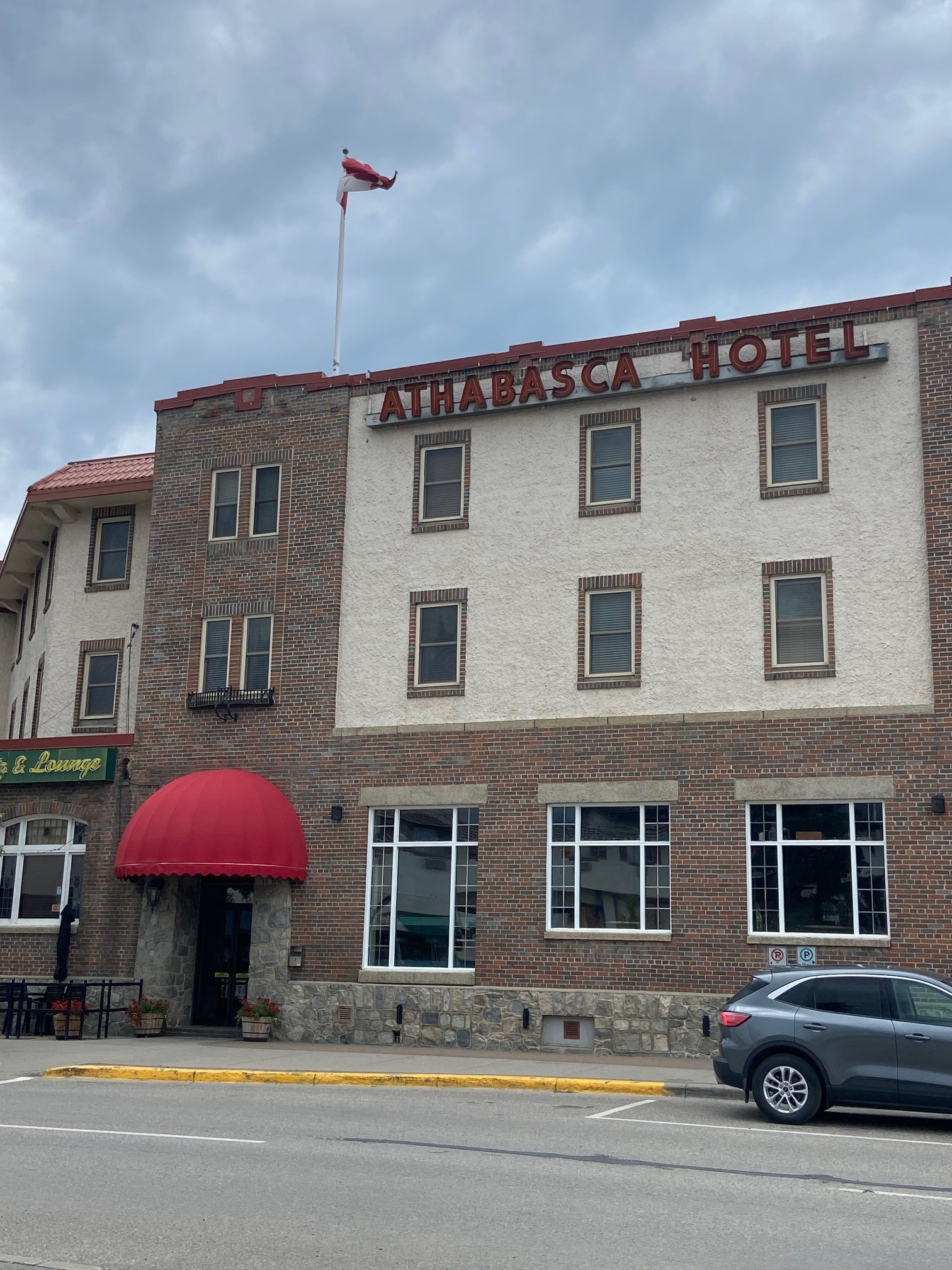
The floorboards of the Athabasca Hotel do not lie. If you stand near the grand lobby staircase of this ninety-eight-year-old monolith on the corner of Patricia Street and Miette Avenue, you can hear them moan underfoot, carrying the weight of a million muddy hiking boots, railway lanterns, and late-night whispers.
For nearly a century, the hotel—known to every local simply as "the Atha-B"—has stood as the stubborn, beating heart of Jasper, Alberta. It survived the brutal winters, the rise and fall of the railway era, and, most recently, the terrifying 2024 wildfire that devoured nearly a third of this mountain town. When the ashes settled and the smoke cleared, the Atha-B was still standing. But survival is a quiet, expensive battle. Behind its handsome brick facade, the old giant was tired.
To understand the Atha-B, you must understand how it was born. In 1928, the Calgary Brewing and Malting Company built the three-story brick fortress. They didn't build it out of a grand vision for luxury hospitality. They built it because provincial laws of the era dictated that if you wanted to run a taproom to sell your beer, you were legally required to build a hotel on top of it.
The result was a structural paradox: beautiful, high-ceilinged bones of wood and stone, built primarily to host thirsty loggers, hunters, and railway workers who didn’t care about modern amenities. They wanted cold beer and a bed. Because of this, the hotel was built with communal, shared bathrooms at the end of the hallways. Fast forward to the present day, and twenty-three of the hotel's sixty-one rooms still lacked private plumbing. Guests in 2026 were still padding down the hallway in their bathrobes, hoping the shared shower was free—a nostalgic nod to the past, perhaps, but a hard sell in a world of modern travel.
Enter Karyn Decore and Nicole Arquero.
The two Edmonton sisters are second-generation hoteliers who grew up with the mountain air of Jasper in their lungs. They watched the town struggle to catch its breath after the 2024 fires. When the Bassani family, who had lovingly steered the Atha-B since 1972, decided it was time to pass the torch, the sisters didn't just see a business transaction. They saw a rescue mission.
Through Decore Hotels, they purchased the landmark and immediately committed a massive $4.5 million to a dramatic, eight-month modernization project.
But how do you fix a building's soul without breaking it?
Consider the sheer physical challenge of retrofitting a structure built in 1928. There are no elevators. Guests with mobility issues or heavy luggage have spent decades hauling themselves up the sweeping wooden staircases. There is no central air conditioning. When summer heatwaves hit the Rockies, the air inside the rooms could grow heavy and stifling.
The sisters' plan is a delicate surgical strike. They are tearing into the walls to install the building’s first-ever elevator and a rooftop climate control system. The twenty-three plumbing-free rooms are finally getting private, modern bathrooms.
It is easy to look at a $4.5 million price tag and see only numbers on a balance sheet. But the real stakes of this renovation are human.
In mountain tourist towns, there is a quiet crisis that rarely makes the travel brochures: staff housing. As housing prices skyrocket and short-term rentals swallow local neighborhoods, the people who actually run the hotels, pour the beer, and clean the rooms are being priced out of existence.
Alongside the hotel purchase, Decore and Arquero quietly bought six parcels of land directly behind the property on Geikie Street. Instead of turning it into high-priced tourist chalets, they are constructing a 100-unit staff housing complex. It is a massive, multi-million-dollar bet on the people who make the hotel work.
The staff noticed. When the sale went through, the sisters offered jobs to every single existing employee. Ninety-eight percent of them chose to stay.
Among them is Murray Pigeon. He started working at the Athabasca back in 2001, sweeping floors and greeting guests. By 2020, he was running the place as General Manager. Under the new ownership, he remains at the helm, ensuring that the institutional memory of the hotel isn't painted over with generic corporate gloss.
There is a distinct danger when modern developers buy historic properties. Too often, they strip away the eccentricity. They replace hand-carved wooden banisters with cold steel. They throw out the quirky, slightly dusty taxidermy that has watched over the lobby for generations. They make everything look like a sterile, neutral-toned Scandinavian airport lounge.
But the sisters are determined to avoid this trap. The taxidermy stays. The high, soaring ceilings and intricate woodwork will be highlighted, not hidden. The long-term design vision is to lean heavily into the building's late-1920s origins, blending retro, classic Art Deco lines with the rugged, pine-scented atmosphere of the Canadian Rockies.
It is a promise to keep the ghost in the floorboards alive, even as they finally bring the plumbing into the twenty-first century.
As the construction crews move in, the old hotel stands ready for its next act. Soon, the hum of the new elevator will mingle with the familiar clatter of the downstairs pub. The guests who walk through the doors next summer will find a space that feels entirely new, yet deeply, comfortingly familiar.
The Atha-B is not just surviving the aftermath of a wildfire or the relentless march of time. It is being rebuilt to ensure that ninety-eight years from now, a new generation of travelers will stand in the lobby, listen to the floorboards, and feel the history of the mountains rising up to meet them.