The Smoke in the Forest
A child climbs a tree. It is late December in a village called Meliandou, tucked deep into the forested region of Guinea. The air smells of charred brush and damp earth. The boy is two years old, small, curious, and fascinated by the hollow trunk of a large tree near his home. Inside that darkness lives a colony of small, velvety free-tailed bats.
He plays. He breathes the dust of the hollow trunk. He goes home to his mother.
Within days, the boy develops a fever. His skin burns to the touch. He vomits, his body wracked by an invisible enemy that no one in this remote corner of West Africa has ever encountered before. On December 28, 2013, the child dies.
His name was Emile Ouamouno.
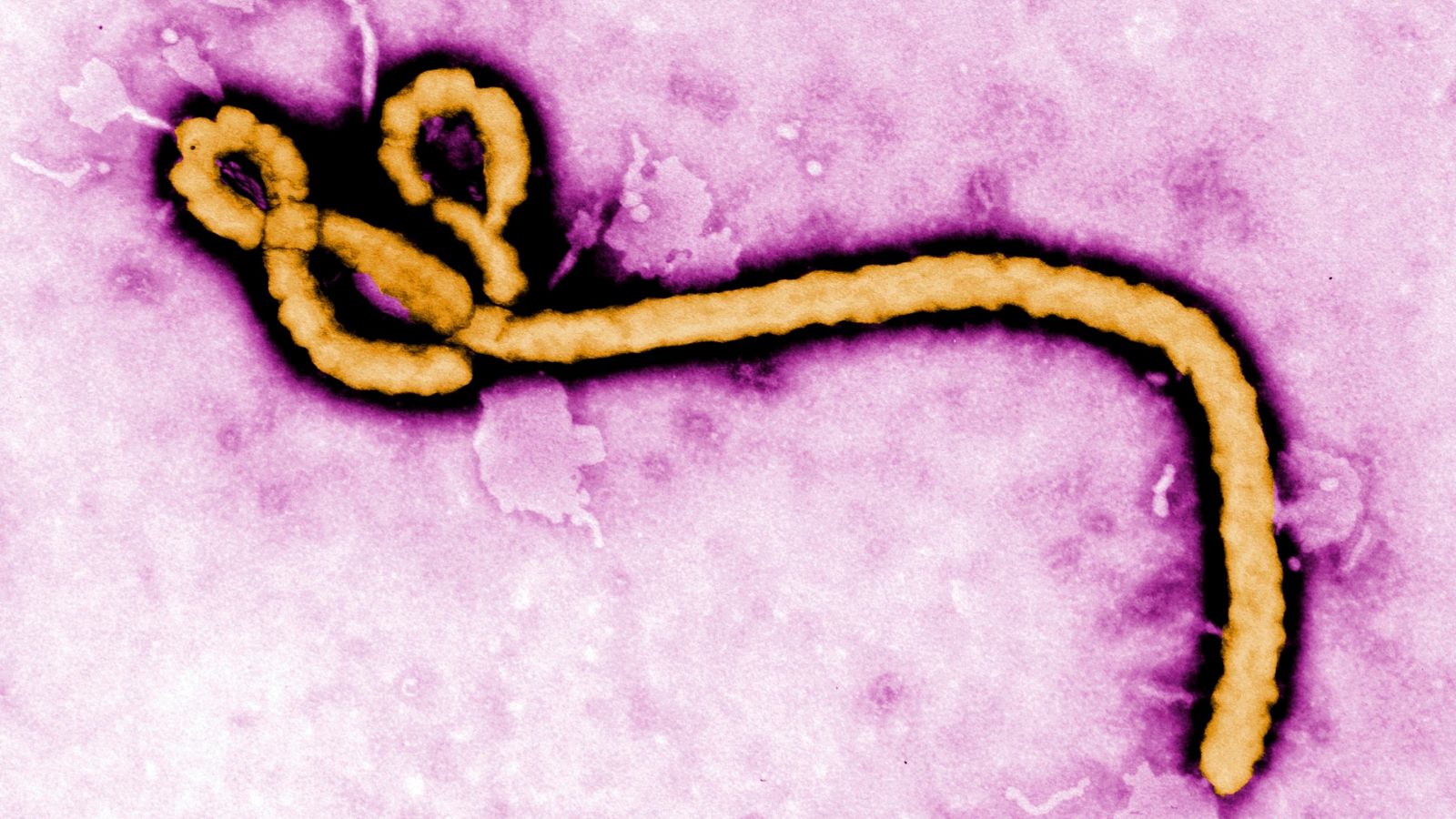
History would later record him as Patient Zero, the starting point of the most devastating Ebola outbreak the world had ever seen. But in the weeks and months that followed his death, there were no headlines. There were no international teams of epidemiologists descending from helicopters in biohazard suits. There was only silence, a vast, terrifying silence that stretched across borders, through dense forests, and into crowded cities while a killer moved unchecked.
We often think of disasters as sudden explosions. A hurricane hits. An earthquake shatters a city. But the greatest public health catastrophe of our generation did not begin with a bang. It began with a whisper in a remote village, and it grew because the world was looking the other way.
The Mirage of Security
By the time the global medical community officially recognized that Ebola was tearing through West Africa, the calendar had turned to late March. Three months had passed since Emile died. Three months.
In the world of infectious disease, three months is an eternity.
Imagine a fire burning in the basement of a wooden house. For ninety days, the smoke stays hidden behind drywall, traveling up the ventilation shafts, quietly scorching the support beams. From the outside, the house looks perfectly normal. The neighbors walk by. The lights stay on. Then, suddenly, the roof collapses.
That is what happened in early 2014. Health agencies were operating under a false premise. They assumed that because no official cases had been reported, the virus was not there. They mistook the absence of evidence for evidence of absence.
But the virus was busy. It did not care about administrative boundaries or official reporting channels. It traveled on the backs of motorbikes. It walked along muddy footpaths. It crossed the open, unguarded borders between Guinea, Liberia, and Sierra Leone in the pockets of grieving relatives who had traveled to attend funerals.
To understand why this happened, you have to understand the geography of the region. Meliandou sits at a geographical crossroads. It is a place where three nations touch, separated not by walls or customs checkpoints, but by lines on a map that mean very little to the people who live there. Families span both sides of the rivers. Traders move back and forth every day to sell cassava and palm oil.
When Emile’s mother fell ill and died days after her son, her relatives came to mourn. They washed her body according to sacred tradition, a final act of love and respect. In doing so, they touched the highly contagious fluids that the virus uses to leap from one host to the next. Then, carrying the invisible seed of the disease, those relatives went home. Some went to neighboring villages. Some crossed into Sierra Leone. Others boarded bush taxis heading toward Liberia.
The virus was hitchhiking on human grief.
The Diagnostic Blind Spot
Why did it take so long to notice? The answer is as simple as it is tragic: nobody was looking for it.
Before 2014, Ebola was widely considered a central and eastern African problem. It belonged to the Democratic Republic of Congo, to Uganda, to Sudan. It belonged to the deep interior of the continent, thousands of miles away. West Africa had never seen an outbreak like this. Medical textbooks did not list it as a local threat. Local clinics were not stocked with protective gear or diagnostic kits for viral hemorrhagic fevers.
When patients started showing up at small village clinics with fevers, vomiting, and diarrhea, the local nurses and doctors reached for the tools they had. They diagnosed malaria. They diagnosed Lassa fever. They treated people for cholera.
These were logical guesses. Malaria kills hundreds of thousands of people in the region every year. It looks exactly like the early stages of Ebola. A patient arrives sweaty, weak, and shivering. You give them antimalarial medication. If they die, it is a tragedy, but it is a familiar tragedy.
This was the diagnostic blind spot that allowed the virus to spread unchecked for months. Every misdiagnosis was a shield that hid the monster. Every traditional burial that went unmonitored became a super-spreader event.
Consider the terrifying math of an unchecked contagion. One person infects two. Those two infect four. Those four infect eight. In the early stages, the numbers look small, almost negligible. Eight cases in a district of thousands doesn't register on a national radar. But exponential growth is a patient beast. It builds momentum in the dark, doubling and redoubling until the numbers explode past the point of control.
By February, the virus had reached Macenta, Guéckédou, and Kissidougou. These were not isolated hamlets; they were bustling urban hubs. The fire had left the basement and was now licking at the rafters.
The Human Cost of Delay
It is easy to look back at statistics and see a failure of bureaucracy. It is easy to blame international agencies for being slow, or local governments for lacking resources. But when you sit with the reality of those unmonitored months, the story becomes intensely personal.
Think of a nurse working in a poorly funded clinic in rural Guinea. She has no running water. She has no electricity. She has a box of latex gloves that she has to wash and reuse because there are no replacements coming. She treats a patient who is bleeding, believing it is an advanced case of a common local disease. She contracts the virus. She goes home to her children. Within a week, her entire family is gone.
This was not a hypothetical scenario. It happened repeatedly. The very people who stood on the front lines to protect their communities became the vectors of transmission because they were denied the truth of what they were fighting. They were fighting a ghost with their bare hands.
The delay in detection created a profound crisis of trust. When international teams finally arrived in late March and April, wearing terrifying, faceless yellow suits and carrying spray tanks filled with chlorine, the local populations did not see saviors. They saw outsiders who arrived only after people started dying in massive numbers. Rumors spread like wildfire. Some believed the foreigners had brought the disease. Others thought the isolation centers were places where people were taken to die alone, stripped of their dignity and their family's comfort.
If the world had caught the outbreak in January, when it was confined to a single family in Meliandou, the response would have been entirely different. It would have been a localized medical intervention. Instead, by the time the alarm was sounded, the virus had already established deep roots in three capital cities. It had become a humanitarian war.
The Long Shadow
The true toll of those lost months cannot be measured solely by the final body count of more than 11,000 lives. The damage cut deeper, tearing into the social fabric of entire nations.
Schools closed for a year, leaving a generation of children stranded. Health systems collapsed entirely, meaning that people died of preventable childbirth complications, treatable infections, and chronic conditions because the hospitals were either overwhelmed or feared as zones of death. Economies ground to a halt as borders slammed shut and markets emptied.
The lesson of the ghost patient of Meliandou is that modern health security is only as strong as its most remote outpost. We live in an interconnected world where a flight can take someone from a forest clearing in West Africa to a major metropolis in Europe or North America in less than twenty-four hours. The idea that an outbreak in a distant corner of the globe can be ignored is a dangerous illusion.
We must build systems that listen to the whispers before they become screams. That means investing in local clinics, training village health workers to recognize unusual patterns, and ensuring that the tools to diagnose rare diseases are available everywhere, not just in wealthy capitals.
The hollow tree in Meliandou is gone now, cut down by villagers who learned too late what had nested inside its trunk. The village has returned to a quiet routine, the red dirt roads still dust-choked in the dry season, the forest still pressing in from all sides. But the silence there feels different now. It is no longer the silence of peace. It is the silence of a scar, a permanent reminder of the months when the world looked away, and a virus walked among us, invisible and unstopped.