The coffee is always cold by the time the klaxon screams.
Major Elena Vance knew the sound in her bones before her neocortex could translate the auditory violence into action. Two sharp, staccato bursts. The red hazard lights flashing against the brutalist concrete walls of the command bunker. Outside, the sub-zero wind off the Baltic coast was tearing whitecaps across the dark sea, but inside, the air smelled of stale ozone, panic, and burning cheap roast.
Sixteen seconds. That was the average time it took for a pilot to go from a plastic chair in the ready room to a pressurized cockpit sitting on twenty tons of refined kerosene and guided ordinance.
"We have an inbound vector," the tactical officer muttered, his voice flat, drained of inflection by the sheer repetition of high-stakes dread. "Bearing zero-four-four. Speed consistent with a low-altitude cruise platform. No transponder."
In the high-stakes theater of modern airspace defense, silence is never peaceful. It is predatory. Every blip on a glass screen is an existential question mark wrapped in carbon fiber and turbojet noise. Since the geopolitical ice shelf fractured a few years ago, nobody looks at a stray radar trace and assumes it’s a flock of geese. They assume it’s a messenger of ruin. They assume it’s the beginning of the end.
Within minutes, two multi-million-dollar interceptors were punching holes in the heavy, bruised clouds overhead, their afterburners painting the night with furious orange streaks.
We live under an anxious sky.
It is easy to forget, sitting behind glowing monitors in climate-controlled living rooms, how thin the glass is between ordinary Tuesday afternoons and absolute catastrophe. The machines guarding our borders do not sleep, they do not hesitate, and above all, they do not have a sense of humor. They are programmed with a singular, unbending logic: identify, track, neutralize. Ambiguity is the enemy. Uncertainty is an invitation for disaster.
Consider what happens inside the cockpit when the radar locks onto a phantom.
Captain Marcus Holt gripped the flight stick of his fighter jet so hard his knuckles turned the color of limestone. His heads-up display was a constellation of green alphanumeric warnings. The HUD told him altitude, speed, closing rate, and time to intercept. It did not tell him that his three-year-old daughter had lost her favorite stuffed rabbit that morning, or that his lower back was throbbing from six hours of pre-flight checks.
The machine only cared about the physics of interception.
"Visual contact in ten seconds," he transmitted, his voice rasped through his oxygen mask.
Below them, the dark swells of the sea churned anonymously. The radar had handed off the tracking data to the jet’s infrared search and track sensors. The target was small, moving erratically, defying the predictable aerodynamics of a man-made drone or a loitering munition. Drones fly with purpose. They carve straight lines through the atmosphere, driven by algorithms and satellite coordinates.
This thing was dancing. It was stuttering across the sky like a leaf caught in a downdraft.
Holt broke through the cloud ceiling, banking hard to port to get a visual on the intruder. His stomach slammed against his ribs as the G-forces compressed his blood downward. He squinted through the canopy, wiping a streak of condensation from the inner glass.
And then he saw it.
There were no carbon-fiber wings. No stubby nose cone housing an explosive payload. No blinking anti-collision lights required by international aviation law.
Instead, there was chaos.
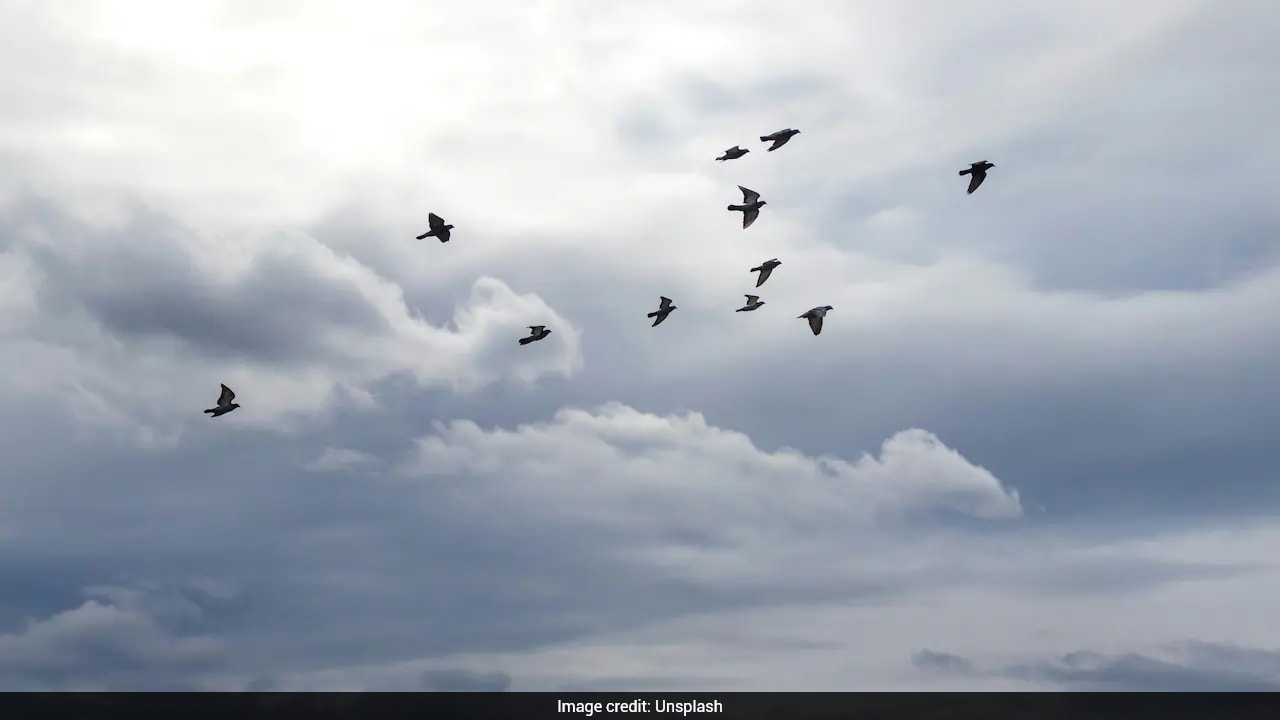
A dense, pulsing cloud of living matter. Thousands of thrushes, caught in a sudden thermal inversion, were rolling and folding over themselves like dark smoke against the grey dawn. They were migrating south, pushed off their ancestral highway by an unseasonably vicious autumn gale. To a radar array designed to sweep the curvature of the earth for fast-moving metallic threats, a tight formation of heavy-chested birds looks remarkably like a low-RCS cruise missile cruising at ninety knots.
Holt blinked. He checked his instruments, then looked back out at the sky.
The terrifying leviathan of modern warfare had just spent millions of dollars of taxpayer fuel to chase a flock of thrushes.
"Control, this is Leader," Holt said, a strange, breathless laugh escaping through his intercom. "Abort intercept. I repeat, abort. We are looking at... feathers."
A heavy silence hung over the tactical channel for three agonizing seconds before the controller replied. "Copy, Leader. Return to base."
The irony is as sharp as broken glass.
We have engineered systems so exquisitely sensitive that they can detect the heartbeat of a sparrow across a county line, yet we remain astonishingly blind to the psychological weight we inflict upon ourselves in the process. We have built an entire civilization on high alert. We pay for it with our taxes, our peace of mind, and our collective sanity. Every time a flock of birds takes flight or a weather balloon drifts off course, the machinery of war spins up its gears, reminding us just how close we are to pulling a trigger we can never unpull.
This is the hidden cost of living in an era of automated paranoia.
We talk endlessly about deterrence, defense budgets, and algorithmic supremacy. We marvel at the wizardry of phased-array radars and neural-net threat assessments. But we rarely talk about the sheer exhaustion of being a species that must constantly prepare to destroy itself over a misunderstanding.
Think about the radar operators who spend twelve-hour shifts staring at screens, waiting for the flicker that changes everything. Think about the pilots sitting in cold cockpits, wondering if this scramble is the one where they don't turn back around. They are the human friction points in a machine that wants to run entirely on cold, mathematical certainty.
When the jets turned back toward the runway that morning, the sea was still cold, and the wind was still howling. The birds continued their journey southward, indifferent to the international airspace violations they had inadvertently committed, guided entirely by an ancient internal compass that predated radar by millions of years.
They didn't know about NATO. They didn't know about borders, or treaties, or cruise missiles, or the fragile peace holding a continent together by a frayed thread. They just knew the wind, the cold, and the long road home.
And down on the ground, as the mechanics stepped out to marshal the returning jets through the freezing drizzle, nobody cheered. There were no medals handed out for successfully defending the coastline against a flock of thrushes. There was only the quiet, heavy realization of how easily the world could tilt on its axis, and how often we mistake the simple, breathing pulse of the earth for the heartbeat of an enemy.