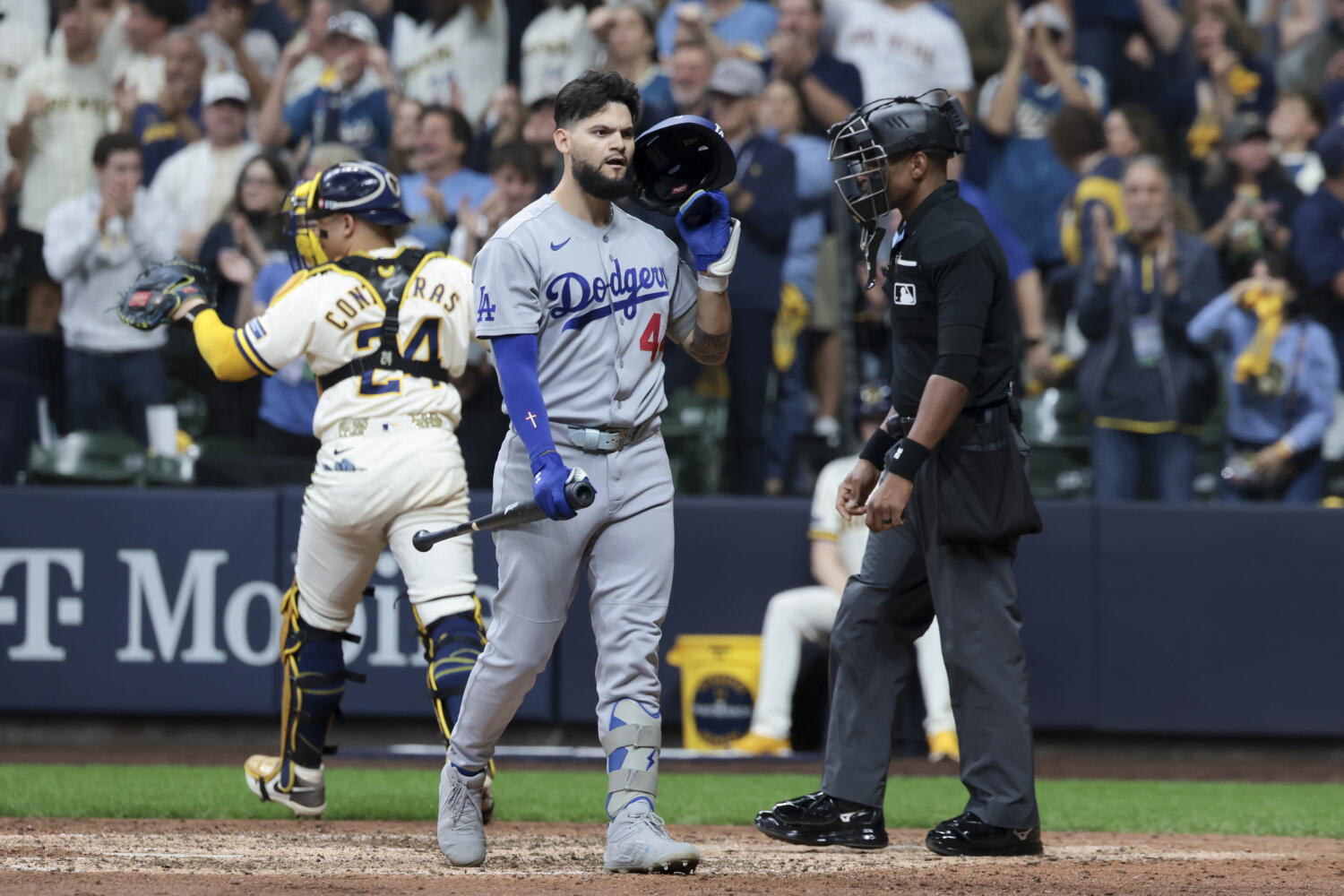
October in Los Angeles smells like salt air, expensive gasoline, and the faint, sweet panic of a city holding its breath. The stadium lights cut through the marine layer like surgical knives, and fifty thousand people in blue are standing, screaming, begging the gods of October for a miracle they feel entitled to yet terrified of losing.
For the last two years, this ritual ended in ticker tape and champagne. The Los Angeles Dodgers built a machine so expensive, so star-studded, and so ruthlessly efficient that baseball felt almost inevitable for them. October was just a coronation waiting to happen. Dynasties are supposed to look easy. They are supposed to roll forward with the unstoppable momentum of an avalanche.
Then the math caught up.
Baseball is a game designed to break hearts with arithmetic. You can assemble the greatest collection of raw talent the sport has seen since the golden age of the Bronx, but when the shadows lengthen across the infield and the velocity ticks up to ninety-nine miles per hour, the game shrinks. It narrows down to ninety feet of dirt and a twenty-two-foot square of white rubber.
And right there, in that suffocating space, lies the fatal flaw that could choke out a three-peat before it even draws breath.
Runners in scoring position. Two simple words that sound like bookkeeping. RISP. To the casual fan, it is just another acronym flashed on the scoreboard alongside batting averages and pitch counts. To a manager pacing the dugout with a chewed-up lineup card, it is a ghost that haunts the clubhouse.
Consider the anatomy of a wasted inning.
Imagine a Tuesday night in late September. The crowd is humming. A leadoff double rattles off the wall in left-center, a ringing, violent sound that makes the pulse jump. The next batter works a gritty, seven-pitch walk. Suddenly, you have runners on first and second with nobody out. The win probability chart spikes. The television announcers begin talking about crooked numbers and breaking the game open. The air is thick with expectation.
Now, watch what happens next.
The third hitter steps in, a slugger earning more than the GDP of a small island nation. The pitcher, staring down the barrel of a multi-million-dollar heart attack, reaches back for something extra. A splitter drops off the table. A slider kisses the outside black. Strike one. Swing and a miss on a high fastball. Strike two. Then, a feeble ground ball to the shortstop—not hard enough to break a double play, but just clever enough to force the lead runner at third. One out.
The next guy up skies a lazy fly ball to shallow right field. Too shallow to tag. Two outs.
The cleanup hitter, the man hired specifically to deliver when the neon lights are flashing brightest, works the count full. The pitcher shakes off the catcher twice, winds up, and fires a fastball dead-center of the zone. A sound rings out—crack!—but it is an out, soaring deep into the glove of the center fielder as he backpedals against the wall.
Inning over. Two men stranded. Zero runs.
Multiply that single inning by a hundred. That is the silent crisis threatening to derail the Dodgers' historic march toward a third consecutive title.
Baseball historians love to talk about pitching depth and bullpen management. Front offices spend millions on spin rates and launch angles. But when the calendar turns to the postseason, the analytics department's glossy spreadsheets are shredded by a cold, historical truth: championships are won by the team that can punch a hole through the wall when the bases are cluttered.
The Dodgers have power coming out of their ears. They can hit baseballs into the upper deck with a flick of the wrists. They can draw walks until the opposing bullpen looks like a revolving door of exhausted arms. But power is a blunt instrument. When you face elite pitching in October—aces who do not beat themselves, who throw triple-digit heat with wipeout breaking balls buried in the dirt—brute force stops working.
That is when efficiency takes over. That is when you need a sacrifice fly to right field on an 0-2 count. That is when you need a gritty, ugly, ground ball up the middle with a drawn-in infield. That is when you need to stop swinging for the fences and simply put the barrel on the leather.
Over the course of a grueling one-hundred-and-sixty-two-game marathon, batting averages with runners in scoring position can fluctuate wildly. Good teams get lucky; bad teams get exposed. But for a juggernaut with championship-or-bust expectations, inconsistency with ducks on the pond ceases to be bad luck. It becomes a systemic vulnerability.
When you leave seven, eight, nine runners on base against a team like the Atlanta Braves or the Philadelphia Phillies in a five-game series, you are playing with matches in a room full of gasoline. You give elite opponents oxygen. You let them hang around. And in October, letting a dangerous team hang around is the fastest way to pack your lockers.
The pressure compounds itself. Every time a star hitter steps to the plate with two men on and fails to deliver, the invisible backpack gets heavier. You can see it in the drop of a shoulder as a player tosses his batting gloves into the dugout. You can hear
The Ghost on Second Base That Could Cost the Dodgers Everything
sports
Baseball is a game of geometry, mathematics, and profound, agonizing silence.
Sit behind home plate on a warm October evening in Los Angeles, and you will hear the exact moment a championship dreams fractures. It does not sound like a thunderclap. It sounds like a sharp, metallic ping of a bat meeting a baseball, followed immediately by the collective intake of breath from fifty thousand people. Then, the silence.
The ball races toward the gap. The runner on first base is flying, spikes chewing up the dirt, rounding second, digging for third. The outfielder gloves it on one hop, wheels, and unleashes a throw. Safe at third. Or worse: an out at the plate because the runner didn't have enough green grass between them and home to complete the journey. The inning ends. The scoreboard remains frustratingly static.
This is the phantom haunting the back offices of Dodger Stadium right now. We talk endlessly about pitching rotations, about the staggering weight of nine-figure payrolls, about the sheer, terrifying depth of a roster built to conquer empires. But championships are rarely lost on grand catastrophes. They are lost in the microscopic margins of the game. They are lost with runners in scoring position.
Consider what happens next in the cold calculus of a pennant race.
When a team loads the bases with one out, the air in the dugout thickens. Batters step into the batter's box carrying the invisible weight of an entire city. Every pitch is a duel of psychological attrition. Do you swing at the slider biting viciously at your ankles, or do you take it, praying for ball four, knowing that a strikeout leaves a literal fortune in stranded runners dying on the basepaths?
For the Los Angeles Dodgers, the pursuit of a three-peat—that elusive, mythical back-to-back-to-back crown that separates great teams from immortal ones—runs straight through this psychological minefield. The modern baseball fan loves home runs. We adore the majestic, high-arc missile that clears the pavilion by twenty feet. But baseball's cruelest irony is that home runs are solo acts. They require no cooperation. They are monuments to individual brilliance.
Clutch hitting, however, is a team sport in its purest, most agonizing form. It requires moving the runner over. It requires the sacrifice fly. It requires fouling off tough two-strike pitches until the pitcher's arm begins to burn. It requires a quiet, selfless discipline that flies in the face of modern launch-angle obsession.
To understand why a potential three-peat is currently dangling by a thread, you have to look past the September standings and into the dugout psychology of RISP—Runners in Scoring Position.
Imagine a veteran hitter standing at the plate in the seventh inning of a one-run playoff game. There is a man on second, another on third. The opposing manager walks slowly to the mound, whispering to his pitcher, setting up the defense. The infield is drawn in. The outfielders take two steps back. Every blade of grass is accounted for.
In that moment, the hitter isn't fighting the pitcher. He is fighting his own instincts. He wants to be the hero. He wants to launch the ball into orbit. But the geometry of the situation demands something entirely counterintuitive: a soft ground ball to the right side, or a deep fly ball that surrenders an out for the sake of a run. It requires ego death.
When a lineup struggles with RISP, it is rarely a lack of talent. The Dodgers possess more raw offensive firepower than almost any roster assembled in the history of the sport. It is a contagion of pressing. It is the invisible pressure of expectation. Every player steps to the plate feeling as though he personally must carry the entire franchise on his shoulders. The bat feels heavy. The zone shrinks. The split-second decision-making required to hit a ninety-five-mph fastball becomes clouded by the desperate desire to deliver.
Baseball history is littered with the corpses of superteams that forgot how to manufacture a dirty, ugly run. They fell in love with the sound of the ball leaving the yard, forgetting that championships are won on the dirty canvas of the infield dirt, where runs are scraped together with broken-bat singles, productive outs, and relentless pressure.
If the Dodgers are going to secure their place in history alongside the legendary dynasties of the past, a tactical shift must happen in the minds of their hitters. It is not about swinging harder. It is about shrinking the focus. It is about recognizing that a single up the middle with two ducks on the pond is worth more than a majestic, empty fly-out to deep center field.
The autumn air in Los Angeles is beginning to crisp. The stakes are rising with every single pitch. Down in the clubhouse, the whiteboard will be covered in analytics, heat maps, and spray charts.
The numbers will tell the story of every strikeout and every missed opportunity. But when the lights glare and the stadium shakes, the analytics fade away. There is only the pitcher, the catcher, the white sphere, and the man standing in the batter's box with the weight of history resting squarely on his shoulders.
The ghost on second base is waiting. How the Dodgers answer him will write the final chapter of their legacy.