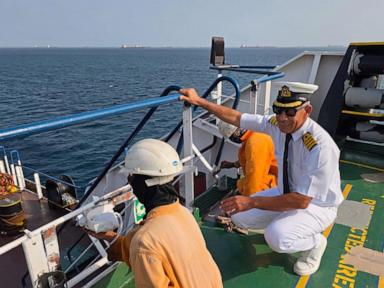
The steel plates of a cargo ship hum with a low-frequency vibration that you don't just hear; you feel it in your marrow. It is the sound of global commerce, the steady heartbeat of a world that demands its goods delivered on time, regardless of the cost. But on a humid Tuesday in the Gulf of Oman, that heartbeat skipped.
Imagine a deckhand on a merchant vessel. We will call him Elias. He is tired, smelling of salt and diesel, thinking about a phone call home. Then, the horizon changes. The grey silhouette of a U.S. Navy destroyer cuts through the haze, and suddenly, the routine of maritime transport dissolves into the high-stakes theater of international brinkmanship.
The headlines called it a seizure. The reality was a surgical strike on a supply chain that fuels more than just engines.
The Weight of the Invisible Cargo
When the U.S. military boarded the Iranian-flagged vessel, they weren't looking for grain or electronics. They were hunting for the components of a shadow war. For years, the waters between the Arabian Peninsula and the Iranian coast have acted as a liquid highway for the transport of illicit weaponry.
This wasn't a random stop-and-frisk. It was the culmination of weeks of satellite tracking, signal intelligence, and the kind of quiet patience that only a superpower can afford. The vessel in question was suspected of carrying advanced conventional weapons—missile components, drone parts, and explosive triggers—destined for Houthi rebels in Yemen.
Think of the complexity. A single missile guidance system is small enough to fit in a suitcase. Hidden beneath thousands of tons of legitimate cargo, finding it is like searching for a specific grain of sand in a desert during a gale.
The U.S. Central Command (CENTCOM) doesn't move without certainty. When the boarding teams—often Navy SEALs or Coast Guard Tactical Law Enforcement Teams—fast-rope onto a moving deck, they are entering a sovereign territory that is technically a piece of Iran floating on the water. The tension is thick enough to choke on. One wrong move, one nervous finger on a trigger, and a law enforcement action becomes an act of war.
The Architecture of a Shadow Fleet
Iran has spent decades perfecting the art of the maritime shell game. To understand why this seizure matters, you have to understand the "Ghost Fleet." These are ships that change their names like people change clothes. They turn off their AIS (Automatic Identification System) transponders, disappearing from digital maps and reappearing hundreds of miles away under a different flag.
It is a game of masks.
A ship might leave a port in the Persian Gulf flying the flag of Panama. Halfway across the Indian Ocean, it paints over its name, swaps its digital identity, and raises the flag of Liberia. This isn't just about avoiding taxes. It is about obscuring the origin of weapons that eventually find their way into the hands of militias, used to strike at commercial tankers or civilian infrastructure.
By seizing this specific vessel, the U.S. military did more than take a few crates of hardware off the board. They sent a message to the financiers and the logistics officers sitting in comfortable offices in Tehran. They told them that the masks are failing.
The Cost of the Shifting Tide
The ripple effects of a single boarding operation at sea reach far beyond the immediate vicinity of the ship.
Consider the insurance markets in London. When a ship is seized, the "war risk" premiums for every vessel traversing the Strait of Hormuz spike. Shipping companies, already operating on thin margins, pass those costs down. That extra fifty cents you pay for a gallon of milk or a plastic toy? Part of that is the "conflict tax" born from the instability of these narrow waterways.
But the human cost is the one we rarely discuss.
The crews on these ships are often not Iranian nationals or ideological soldiers. They are sailors from the Philippines, India, or Eastern Europe, caught in a geopolitical pincer movement. When the Navy boards, these men are caught in the middle. They are witnesses to a conflict they didn't sign up for, working on vessels that have been turned into floating armories without their consent.
The U.S. military's decision to interdict is a calculated risk. It balances the need to stop the flow of lethal technology against the risk of escalating a regional cold war into a hot one. Every crate of detonators seized is one less explosion in a Yemeni marketplace or on a Saudi oil refinery.
The Silent Echo of the Boarding Party
The operation itself is a masterclass in controlled chaos. The roar of the Seahawk helicopters, the shouting of commands in multiple languages, the metallic clatter of boots on a rusted deck. It is a moment of absolute clarity in a world of gray zones.
Once the ship is secured, the work of the forensic teams begins. They don't just look for the weapons; they look for the paper trail. Every serial number on a circuit board, every shipping manifest, every digital logbook is a piece of a puzzle that traces back to the factories and the funding.
This isn't just a story about a ship. It is a story about the end of an era where the oceans were wide enough to hide in.
Technology has shrunk the world. Drones with thermal imaging, satellites that can read a license plate from orbit, and AI-driven pattern recognition mean that the "Ghost Fleet" is running out of shadows. The seizure of the Iranian-flagged cargo ship is a demonstration of that new reality. It is a warning that the "invisible" cargo is now very much in sight.
As the sun sets over the Gulf, the seized vessel is towed toward a neutral port. The Navy destroyer remains, a silent sentinel in the dark. The sailors on nearby merchant ships watch the lights on the horizon, knowing that the rules of the sea have changed. The ocean is no longer a lawless frontier; it is a monitored grid.
The heartbeat of the world's commerce continues, but it is a guarded pulse. Every container, every hull, and every flag is now subject to the cold, hard scrutiny of a world that can no longer afford to look away.