A red card in international soccer used to be absolute. You commit a dangerous tackle, you sit out the next game. That was the rule for nearly a century of World Cup history until U.S. striker Folarin Balogun saw red against Bosnia-Herzegovina. What followed turned a standard sports suspension into a geopolitical firestorm involving a sitting American president, a defensive FIFA chief, and furious European lawmakers demanding a full-scale investigation.
If you think sports and politics don't mix, you aren't paying attention. The drama surrounding FIFA President Gianni Infantino and U.S. President Donald Trump has exposed a massive fracture in how global sports are governed. European Union politicians are calling the move a perversion of justice. They're trying to figure out if the world's most powerful soccer executive warped his own rulebook because a head of state asked him to. For another view, see: this related article.
The Phone Call That Changed the World Cup Rules
Let's look at the facts of what went down. On July 1, 2026, Folarin Balogun was ejected from the U.S. match against Bosnia-Herzegovina after an illegal challenge on a defender. Under standard FIFA disciplinary codes, an automatic one-match ban applies. That meant Balogun was supposed to watch the critical Round of 16 match against Belgium from the stands.
Then the phones started ringing. Further insight regarding this has been shared by The Athletic.
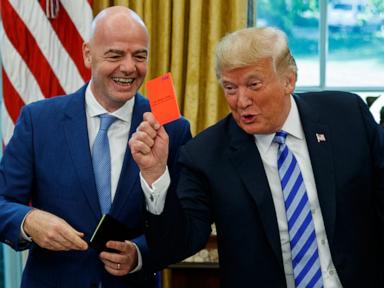
Donald Trump openly admitted that he called Infantino directly to complain about the referee's decision, calling the red card a "horrible" call. Trump publicly took credit for pushing FIFA to review the play, stating he didn't believe it was a foul.
What happened next stunned the soccer world. On Sunday, July 5, just a day before the U.S.-Belgium kickoff in Seattle, a FIFA disciplinary judge officially wiped away Balogun's suspension. Instead of a mandatory ban, the striker was given one year of probation. He was cleared to play.
Timeline of a Soccer Crisis:
- July 1: Balogun receives a straight red card against Bosnia-Herzegovina.
- July 2-4: Trump lobbies Infantino over the phone for a rule review.
- July 5: FIFA lifts the suspension, converting it to a probation period.
- July 6: UEFA and Belgium protest; FIFA appeals judge throws out the challenge hours before kickoff.
Infantino quickly defended the decision on social media, claiming that FIFA's judicial bodies operate with total independence. He noted that he told Trump the case would be decided in due course by the competent authorities. But European football leaders aren't buying the "independent process" line for a second.
European Lawmakers Step In
The backlash in Europe was instant and coordinated. Dozens of members of the European Parliament (MEPs) have banded together to demand an investigation into Infantino's conduct. Led by lawmakers Barry Andrews, Lara Wolters, and Niels Fuglsang, a group of 35 European politicians signed a joint letter pushing national football associations to force the FIFA Ethics Committee into action.
The lawmakers didn't hold back. They called the mid-tournament rule change a disgrace. They pointed out that allowing political pressure to dictate player eligibility destroys the fundamental sense of fairness that sports depend on.
This isn't just about a single red card. The European politicians are tying this incident to a broader pattern of what they view as Infantino surrendering to the wishes of the Trump administration. The letter specifically highlights other questionable moves, including FIFA's decision to establish an annual FIFA Peace Prize and swiftly award it to Trump.
UEFA, the governing body of European soccer, publicly blasted the decision as an incomprehensible breach of soccer's rule of law. The Belgian soccer federation tried to legally block the ruling, but a FIFA appeals judge dismissed their challenge less than eight hours before the game started, claiming Belgium had no legal standing to appeal a disciplinary decision involving an American player.
Why This Ruined the Credibility of the Game
The immediate on-field result of this political wheeling and dealing didn't even favor the Americans. Despite Balogun being cleared to start, Belgium ended up hammering the United States 4-1 in Seattle, courtesy of a dominant performance and two goals from Charles De Ketelaere.
But the damage to the sport's credibility is done. When rules can be bent because a president makes a phone call, the entire structure of international sports governance collapses. Fans and teams need to know that the rulebook applies equally to everyone, whether you play for a tiny nation or the World Cup host country.
The Court of Arbitration for Sport (CAS) remains on standby for urgent World Cup cases, and Belgium has made it clear they are keeping all legal options open regarding the eligibility of the match. If the European Parliament successfully pressures FIFA’s Ethics Committee, Infantino could face the most severe threat to his presidency since he took over the organization.
If you want to keep up with how this investigation develops, watch how the national football associations in countries like France, Germany, and the Netherlands respond to the MEPs' letter. Their willingness to back an ethical probe will determine if Infantino is forced to answer for the phone call, or if FIFA will continue to operate above its own laws.