The air inside a draft lottery room doesn’t smell like victory. It smells like cheap hotel coffee and the collective, cold sweat of billionaires. Behind those closed doors, the trajectory of a decade isn't decided by a power play or a diving save. It is decided by a series of numbered plastic spheres dancing in a clear acrylic drum.
For a fan, the lottery is a fleeting televised moment. For a General Manager, it is the difference between a legacy and a pink slip. It is a strange, cruel alchemy where the reward for being the worst is the hope of becoming the greatest.
The Edmonton Inheritance
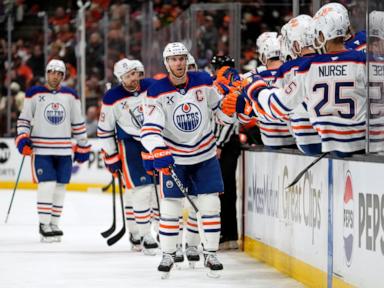
Consider the city of Edmonton. In the mid-2010s, the Oilers weren't just a struggling hockey team; they were a civic crisis. Year after year, the winter grew longer, and the losses piled up like snowdrifts. But the lottery machine became their silent, most consistent benefactor.
Between 2010 and 2015, the Oilers secured the first overall pick four times. It felt like a glitch in the universe. Most teams wait a generation for a generational talent. Edmonton collected them like trading cards. Taylor Hall, Ryan Nugent-Hopkins, and Nail Yakupov arrived with the weight of a franchise on their shoulders.
Then came 2015.
The Buffalo Sabres had stripped their roster to the bone, essentially engineering a season of failure to guarantee a shot at a savior named Connor McDavid. They had the best odds. They had the most to gain. But when the machine spat out the combination, it wasn't the blue and gold of Buffalo that rose to the top. It was Edmonton. Again.
The scream heard in Alberta that night wasn't just about a player. It was the sound of a curse lifting. McDavid wasn't just a "prospect." He was a kinetic force that turned a basement dweller into a perennial contender. The math says the Oilers were lucky. The narrative says they were the beneficiaries of a cosmic apology.
The Long Island Heist
The New York Islanders have a history that reads like a Shakespearean tragedy, filled with bursts of glory followed by decades of mismanagement and arena uncertainty. But in 2009, the lottery machine gave them a lifeline they didn't even know they could grasp.
John Tavares was the consensus prize. He was the "Can't Miss" kid.
The Islanders weren't just bad; they were drifting. They needed a center of gravity. When the ping pong balls settled, the Islanders jumped up to grab the first overall pick. In that moment, the franchise's identity shifted. It’s easy to look back at statistics and goals, but the real impact was the atmospheric change in the locker room.
A single lottery win acts as a permission slip for a fan base to care again. It’s the difference between an empty arena and a sold-out Saturday night. The Islanders leveraged that luck into a decade of relevance, proving that while you can't buy happiness, you can occasionally have it randomly assigned to you by a mechanical blower.
Chicago and the Sudden Sunset of a Dynasty
The Chicago Blackhawks are the most fascinating case study in lottery luck because they didn't just use it to build a team—they used it to save a sport in an entire city.
By 2007, the Blackhawks were an afterthought in Chicago. The games weren't even televised locally. The "Madhouse on Madison" was more of a library. Then, despite having only an 8.1% chance of winning, the Blackhawks struck gold. They moved up to the first spot and took Patrick Kane.
That one ball, that one percentage point, sparked three Stanley Cups.
But the lottery is a fickle god. Fast forward to 2023. The Blackhawks were once again at a crossroads, their dynasty long dead, their reputation tarnished by off-ice scandals, and their roster a hollow shell. Enter Connor Bedard.
The odds were against them. The hockey world held its breath, many hoping the prize would go anywhere but Chicago. But when the envelope opened, the Blackhawks logo was staring back. It was a heist in broad daylight. In an instant, the "rebuild" wasn't a five-year slog anymore. It was an overnight transformation.
The Invisible Stakes of the Bounce
We talk about these teams as "winners," but that word feels too simple.
Imagine you are a scout who has spent 300 nights a year in cold rinks from Moose Jaw to Moscow. You’ve seen every shift, analyzed every stride. Your job depends on the team getting better. Then, your fate is handed over to a machine that doesn't care about your scouting reports.
There is a profound, quiet terror in that.
The lottery creates a binary reality. On one side, you have the Oilers of 2015 or the Blackhawks of 2023—franchises that wake up the next morning with a billion-dollar valuation increase. On the other side, you have the teams that "lost" the lottery.
The Buffalo Sabres or the Arizona Coyotes (now relocated to Utah) often found themselves doing everything "right" to secure the best odds, only to watch the prize slip through their fingers. For those teams, the lottery isn't a windfall. It’s a funeral. It’s the realization that another year of the fans’ lives will be spent waiting for a miracle that isn't coming.
The Ghost in the Machine
Critics argue the lottery rewards failure. They say it encourages "tanking," the deliberate act of fielding a sub-par team to increase the odds of a high pick. But that ignores the human element of the players actually on the ice.
A player doesn't tank. A player is fighting for his next contract, his health, and his pride. The tanking happens in the front office, in the cold calculations of spreadsheets and salary cap maneuvers.
The lottery was designed to stop this. It was meant to introduce enough uncertainty to make losing on purpose a bad bet. Instead, it has turned the bottom of the NHL standings into a high-stakes casino.
Consider the New Jersey Devils in 2017 and 2019. They weren't the worst team. They weren't even the second worst. But the balls bounced their way twice, gifting them Nico Hischier and Jack Hughes. They bypassed the years of suffering that other teams endured. They cut the line.
Is it fair? No. But sport has never been about fairness; it’s about the narrow margins between disaster and destiny.
The Weight of the First Overall
We often forget what happens to the kid who is picked.
We see the jersey, the hat, and the smile on stage. We don't see the eighteen-year-old lying awake in a hotel room, realizing he is now the economic engine for an entire city. If he fails, the arena stays empty. If he fails, the coach gets fired. If he fails, the "luck" of the lottery becomes a millstone around his neck.
For every Connor McDavid, there is the ghost of a pick that didn't pan out—the pressure of being the "Lottery Winner" crushing the very talent that got them there.
The draft lottery is the only place in professional sports where the most important victory of the season happens while the players are at home on their couches. It is a moment of pure, unadulterated theatre. It is the one time a year when the smartest men in the room have absolutely no control over their own lives.
The machine starts. The balls begin to spin.
In that rattle and hum, you can hear the heartbeat of a dozen cities. One fan base is about to be told their long, dark tunnel has an exit. Another is about to be told they haven't suffered enough.
In the end, the NHL lottery isn't about hockey. It’s about the terrifying, beautiful truth that sometimes, no matter how hard you work or how much you plan, your entire future comes down to a piece of plastic catching a gust of air at exactly the right moment.
The balls stop. The envelope is sealed. The world changes.