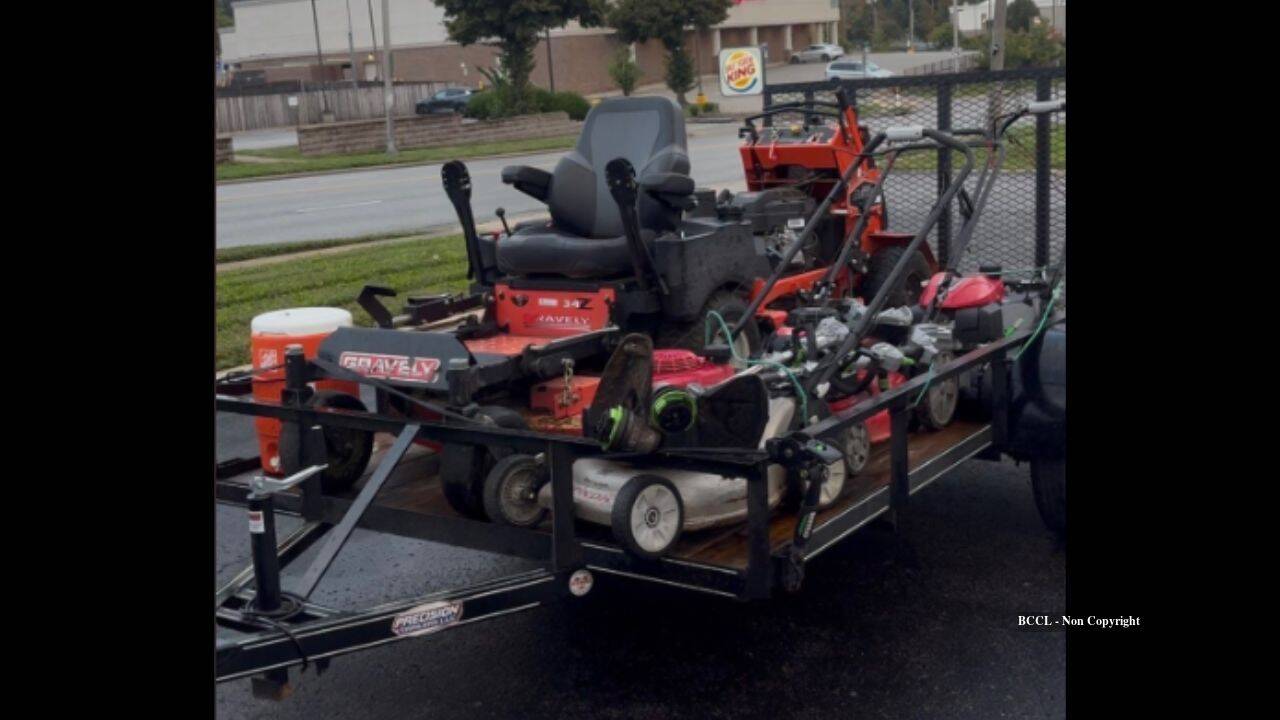
Everybody loves a viral feel-good story. A 14-year-old kid in Kansas starts a lawn care business, gets his equipment stolen, and the internet swoops in like a benevolent fairy godmother to hand him $36,000.
Queue the applause. Cue the local news segments. Cue the endless LinkedIn posts about the "power of community" and "entrepreneurial resilience." If you liked this article, you might want to check out: this related article.
Here is the truth nobody in the media wants to admit: throwing $36,000 in free charity at a teenager who lost a couple thousand dollars worth of push mowers does not teach entrepreneurship. It teaches lottery economics.
I have spent two decades advising bootstrapped founders, small service operators, and local contractors. I have watched grown men lose entire fleets of trucks to fire, theft, and catastrophic mechanical failure. None of them had a GoFundMe bail them out at 10x their net worth. They had to survive through sheer operational grit, insurance literacy, and ruthless unit economics. By turning a minor business setback into a massive financial windfall, the crowd accidentally robbed that kid of the exact scar tissue that makes real business owners indestructible. For another perspective on this event, check out the latest update from Forbes.
The Dangerous Illusion of Viral Bailouts
The mainstream narrative treats crowdfunding as a substitute for risk management. That is a fatal mistake for any young operator trying to understand how commercial markets actually work.
When you run a lawn care business—or any service business—theft is not a tragic freak accident. It is a predictable operational hazard. Trailers get unhitched in broad daylight. Stihl trimmers vanish from open truck beds in under thirty seconds. Every seasoned landscaper factors equipment shrinkage, security hardware, and commercial inland marine insurance into their baseline overhead.
By handing a 14-year-old $36,000 to replace basic residential yard gear, well-meaning strangers decoupled effort from outcome.
Think about the numbers. A solid commercial-grade push mower, a string trimmer, a leaf blower, and a basic utility trailer cost roughly $2,500 to $4,500 used. Even buying brand-new commercial Toro or Honda equipment, you are looking at maybe $6,000 to $8,000 total. Raising $36,000 is not "rebuilding" a business. It is injecting a massive, unearned Series A seed round into a lemonade stand that hasn't even figured out customer acquisition cost or route density yet.
What Happens When Capital Precedes Competence
In the venture capital world, we call this premature scaling, and it kills more startups than a lack of funding ever will. When a founder gets flooded with cash before they have mastered basic operational discipline, three things happen immediately:
- Price sensitivity evaporates. When you earn $25 per yard in the scorching Kansas heat, you treat a $400 trimmer like a sacred relic. You lock it up. You clean the air filter. You never leave it unattended. When strangers hand you $36,000 for free, equipment becomes disposable in your subconscious.
- Margin blindness sets in. Real businesses live and die by gross margin—the revenue left over after paying for direct labor, fuel, maintenance, and equipment depreciation. A $36,000 cash cushion masks terrible pricing. You can undercharge every neighbor on the block and still feel rich because your bank account is bloated with donations.
- The victimhood reflex gets rewarded. The market does not care about your sob story. Your commercial clients do not care if your truck broke down or your gear got stolen; they care that the grass is cut before Friday afternoon. Viral crowdfunding teaches young entrepreneurs that publicizing their pain is more profitable than solving customer problems.
The Lazy Consensus Around Youth Entrepreneurship
Media outlets love profiling kid entrepreneurs because the stories require zero financial literacy to write. A journalist can churn out 500 words about a hardworking teen, slap a GoFundMe link at the bottom, and harvest easy clicks.
They completely miss the mechanics of why small service businesses actually succeed or fail.
If you ask ten people on the street what a young business owner needs after a theft, nine of them will say "money to buy new tools." That is completely backwards. Tools are commodities. Any idiot with a credit card can walk into a dealership and buy a zero-turn mower.
What separates a real operator from a kid pushing a mower around the block is systems, security, and leverage.
Imagine a scenario where that Kansas teenager raised zero dollars from strangers. What would he have been forced to do?
First, he would have had to call every single one of his clients and explain the delay without making excuses. That single afternoon of uncomfortable phone calls would have taught him more about client retention and crisis communication than four years of business school.
Second, he would have had to borrow a neighbor's battered push mower, rent equipment from a local hardware store by the half-day, or partner with an older landscaper to subcontract his routes while keeping a 20% finder's fee. That is real entrepreneurship—creating value out of thin air when your physical assets are wiped out.
Third, he would have learned how to buy heavy-duty hardened steel chains, puck locks, and GPS trackers like AirTags hidden inside mower frames before spending another dime on engines.
Instead, the internet bypassed the struggle entirely and handed him enough cash to buy a small fleet.
Why Struggling Operators Ask the Wrong Questions
Whenever one of these viral stories breaks, small business forums light up with the same predictable questions from aspiring entrepreneurs and parents. Every single one of them is rooted in a flawed premise.
"How do I get my business to go viral for community support?"
Stop trying to build a charity case. If your business model relies on strangers feeling sorry for you, you do not have a business; you have a panhandling operation with a logo. Focus on route density instead. Ten yards in a single subdivision will make you exponentially richer than thirty yards scattered across a twenty-mile radius, because windshield time is pure profit poison.
"Should a teenager get business insurance for a small lawn care setup?"
Yes, if they are operating on other people's property, and not just for theft. One rock kicked up by a mower blade through a $1,200 bay window or a parked BMW windshield will wipe out an entire summer's profit in a tenth of a second. General liability insurance for a basic landscaping operation costs roughly $40 to $75 a month. If your pricing cannot absorb $60 a month for liability coverage, you are charging hobby prices for commercial risk.
"What is the best way to protect lawn equipment from theft?"
Stop relying on standard padlocks that a $30 bolt cutter can snap in two seconds. Use shrouded puck locks where the shackle is completely enclosed in solid steel. Bolt steel cages directly to the trailer frame. Never leave equipment visible in an open trailer overnight—back the trailer tight against a garage door or solid wall so the rear gate cannot physically drop open. Security is not an expense; it is the reason you still have a business on Monday morning.
The Heavy Hitters Know That Scarcity Breeds Genius
Look at the history of legendary service-based empires and bootstrapped founders. None of them built enduring wealth because strangers overfunded their early setbacks.
Take Wayne Huizenga, who started Waste Management with a single used garbage truck in South Florida. He didn't have a viral safety net when trucks broke down or competitors tried to undercut him. He worked routes from 2:00 AM until noon, then put on a suit and knocked on doors all afternoon to sell new commercial accounts. The constraint of limited capital forced him to master route efficiency and customer acquisition faster than well-funded rivals.
Or look at the core philosophy of Nassim Nicholas Taleb in Antifragile. Taleb draws a sharp line between things that are merely resilient (they resist shocks and stay the same) and things that are antifragile (they actually get stronger, sharper, and smarter when exposed to chaos, volatility, and loss).
When you shield a young entrepreneur from a $3,000 loss by dumping $36,000 into their lap, you make them fragile. You train their nervous system to expect external rescue whenever reality hits them in the mouth. The next time they face a real market downturn—a drought that stops grass from growing for six weeks, a major commercial client defaulting on a $15,000 invoice, or a key employee walking off the job—there will be no viral news crew waiting to save them.
What That Kid Should Actually Do With the $36,000
Since the money is already in the bank, the worst thing he can do is blow it on shiny new toys. A 14-year-old does not need a $14,000 commercial stand-on mower or a brand-new pickup truck he cannot legally drive yet.
If I were sitting across the kitchen table from him and his parents right now, here is the exact capital allocation plan I would force him to execute:
- Cap equipment spending at $4,500. Buy high-end, used commercial walk-behind mowers (Exmark, Scag, or Toro) and commercial-grade Stihl handhelds. Used commercial gear holds its value like gold; brand-new gear loses 25% of its value the second you roll it off the lot.
- Spend $800 on hard security. Install puck locks, heavy-duty welded trimmer racks with keyed locks, and hidden GPS trackers on every single piece of rolling stock.
- Put $25,000 into a locked high-yield Treasury bill or index fund until age 18. Do not let him touch it. Keep the business operating strictly off its own weekly cash flow. If the lawn care business cannot pay for its own gas, blade sharpening, insurance, and repairs out of current customer revenue, it deserves to die.
- Invest $1,500 into boring, unsexy marketing. Print 5,000 thick, high-contrast door hangers and spend Saturday mornings walking every neighborhood within two miles of his house. Track the exact conversion rate from door hangers dropped to recurring weekly clients signed.
- Donate or reinvest $4,200 into local youth trade scholarships. Pay it forward immediately so the mental burden of unearned wealth disappears and he goes back to treating every $30 lawn cut like his survival depends on it.
The Brutal Reality of Building Something Real
There is an undeniable downside to my approach, and I will own it openly: it is harsh. Watching a kid lose everything he worked for is gut-wrenching, and denying him a massive community windfall feels cold-blooded to people who measure virtue by how much money they give away. Letting a young operator grind through a setback with borrowed tools and bruised pride does not make for heartwarming evening television.
It only builds adults who cannot be broken.
The marketplace is an unforgiving arena. Nobody is going to crowdfund your payroll when a recession hits. Nobody is going to start a viral campaign when your biggest client leaves you for a competitor who does the job 15% cheaper. The only protection you have in business is your own ability to adapt under pressure, protect your downside, and turn operational disasters into permanent competitive advantages.
Give a kid a fishing rod, and he eats for life. Give a kid $36,000 every time someone steals his tackle box, and he never learns how to tie a knot.