The air in San Francisco’s Cow Hollow neighborhood usually tastes of expensive sea salt and eucalyptus. It is a place defined by its silence. Here, wealth isn’t just about the numbers in a bank account; it is about the ability to buy a buffer between yourself and the friction of the modern world. But on a Tuesday night that felt like any other, that buffer dissolved.
A man stood on the sidewalk outside a multi-million dollar home. He wasn't there to admire the architecture or the way the fog rolled over the Presidio. He held a glass jar filled with gasoline. He held a rag. He held a lighter.
This wasn't just a random act of vandalism. It was a collision. On one side of the glass was Sam Altman, the face of a technological shift so massive it threatens to rewrite the human contract. On the other side was a man with a Molotov cocktail, a primitive weapon of fire and glass, representing a desperate, fractured reaction to a future that feels like it’s arriving too fast.
The arrest of 35-year-old Kyree Childress didn't make a massive splash in the 24-hour news cycle, but it should have. It is the first physical crack in the ivory tower of the artificial intelligence boom. It marks the moment where the abstract anxieties of the internet—the Reddit threads about job loss, the philosophical debates about "alignment," the fear of a god-like machine—became a literal flame on a doorstep.
The Architect in the Crosshairs
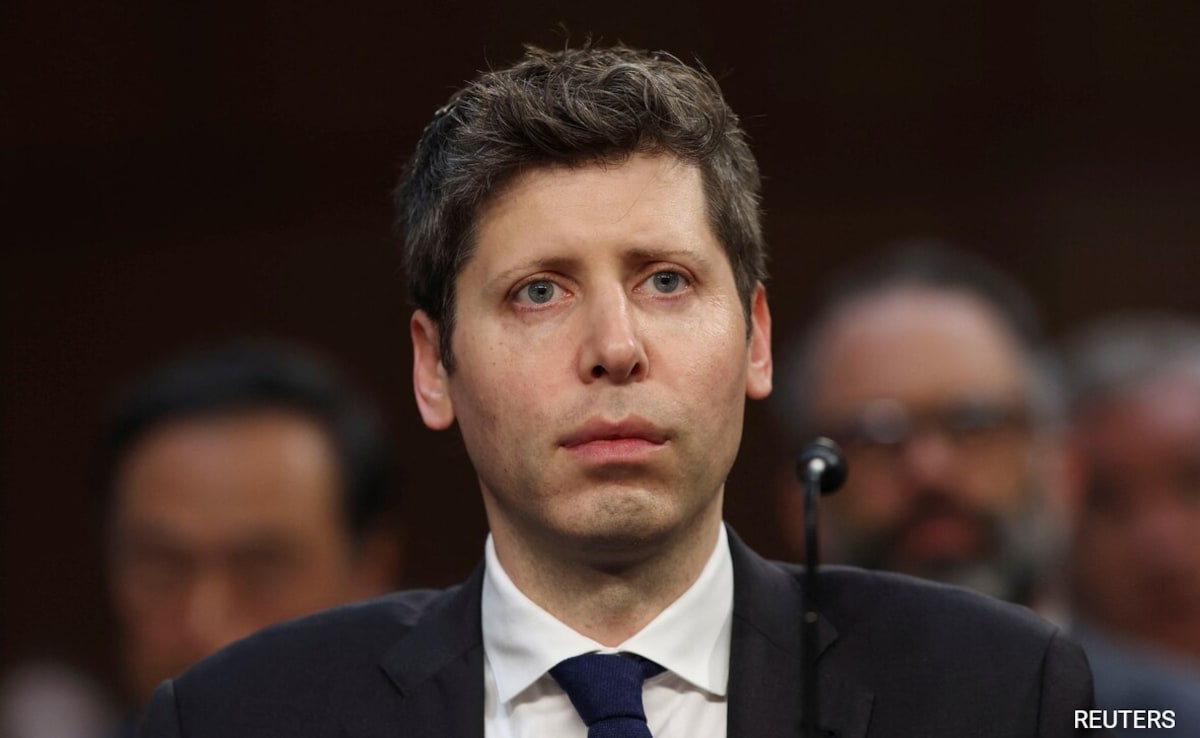
Sam Altman has become the personification of our collective uncertainty. As the CEO of OpenAI, he is the man who opened the box. To some, he is a visionary guiding us toward a post-scarcity utopia where disease is cured and labor is a choice. To others, he is the captain of a ship heading straight for an iceberg, smiling while he tells the passengers that the ice is actually quite refreshing.
When you become a symbol, you lose your right to be a person. You become a canvas for everyone else’s projections. If you lost your copywriting job to a large language model, Altman is the reason. If you fear your children will grow up in a world where truth is a legacy format, Altman is the architect.
Security footage captured the moment the bottle was lit. It is a haunting image. The flicker of the flame against the dark street. The frantic, jerky movements of a man who believed, however misguidedly, that a jar of gasoline could stop the momentum of a trillion-dollar industry.
Police reports describe a brief struggle. Officers arrived quickly. The fire was extinguished before it could do more than char the pavement and singe the exterior of the house. No one was hurt. The physical damage was negligible. The psychological damage, however, is a different story.
The Illusion of Security
We like to think that the men and women shaping our future are protected by layers of steel and sophisticated algorithms. We assume they live in fortresses. But the reality is that the physical world is stubbornly porous. You can build a firewall that stops a million hackers, but you can’t easily stop a man with a jar of gas and a grudge.
Consider the irony. Altman spends his days thinking about "existential risk"—the hypothetical possibility that a superintelligent AI might decide humanity is an inefficiency to be corrected. He worries about the "alignment problem," the technical challenge of ensuring a machine's goals match our own. Yet, the most immediate threat he faced wasn't a rogue line of code. It was a man who felt alienated by the very world Altman is trying to build.
This is the human element that data points always miss. When we talk about "disruption" in Silicon Valley, we use it as a positive term. We talk about disrupting the taxi industry, disrupting healthcare, disrupting education. But disruption is a violent word. To the person being disrupted, it feels like a demolition. It feels like the ground being pulled out from under their feet.
Childress wasn't a sophisticated saboteur. He wasn't a corporate spy or a state actor. He was a man with a history of erratic behavior who found a target for his frustration. In the eyes of the law, he is a criminal. In the eyes of a psychiatrist, he may be a patient. But in the eyes of a sociologist, he is a symptom.
The Friction of the Future
History is littered with the scorched remains of things people tried to stop. During the Industrial Revolution, the Luddites smashed power looms because they saw their livelihoods disappearing into the jaws of the machines. They weren't anti-technology; they were pro-survival. They saw a future where the profits of the new world would stay at the top while the people at the bottom were left with the scraps.
We are seeing a modern echo of that rage. The stakes feel higher now because the technology isn't just replacing our muscles; it’s mimicking our minds. It’s writing our poems, coding our software, and soon, it may be making our life-or-death medical decisions.
The gap between the people creating this technology and the people who have to live with it is widening into a canyon. On one side, you have the "accelerationists"—people who believe we should push forward as fast as possible, consequences be damned. On the other side, you have a public that feels like they are being experimented on without their consent.
When a man throws a Molotov cocktail at a house, he isn't trying to start a debate. He is trying to force a pause. He is trying to make the person inside feel the same level of instability that he feels every day. It is a crude, horrific way to communicate, but it comes from a place of profound powerlessness.
The Price of Progress
If you walk through the streets of San Francisco today, you see two worlds overlapping like a double exposure. You see the gleaming offices of tech giants where people eat free artisanal lunches and talk about changing the world. And you see the tents, the needles, and the vacant stares of people for whom the world has already changed too much.
The incident at Altman’s home is a reminder that these two worlds cannot occupy the same space indefinitely without a reaction. You cannot innovate in a vacuum. You cannot build a future that ignores the visceral, messy, and often angry reality of the present.
The police took Childress into custody without further incident. He will likely spend time in a facility, and the news cycle will move on to the next product launch or the next stock market surge. Altman will hire more security. He will perhaps move to a more secluded location. The glass will be replaced. The char marks will be power-washed away.
But the image of that flame remains. It is a warning. It tells us that the more we try to automate the human experience, the more the "human" part will fight back in unpredictable, jagged ways. We are obsessed with the "AI safety" of the future—the fear of robots with red eyes. We are ignoring the safety of the present—the reality of people who feel they have nothing left to lose.
The fire didn't catch this time. The house stands. The servers are still humming in their cooled rooms, processing quintillions of operations per second, indifferent to the man on the sidewalk. But the air in Cow Hollow doesn't taste quite so much like eucalyptus anymore. It tastes like smoke. It tastes like the realization that no matter how high you build your walls, the world you are changing is still right outside your door, waiting for an answer.
The lighter clicks. The rag catches. And for a brief, terrifying second, the future and the past stare each other in the face through a pane of glass that is much thinner than anyone cares to admit.