Silence.
That is the first thing you notice when you step into the witness room at the Walls Unit in Huntsville, Texas, a brick-and-mortar fortress sitting fifty miles north of Houston where the air smells faintly of floor wax, stale coffee, and the metallic tang of old radiator pipes. People outside these walls assume an execution sounds like thunder, or perhaps like the dramatic slam of a heavy iron door, yet the reality inside that cramped, fluorescent-lit viewing chamber is defined entirely by the suffocating hum of an air conditioner and the muffled rustle of a reporter turning a page in a spiral notebook.
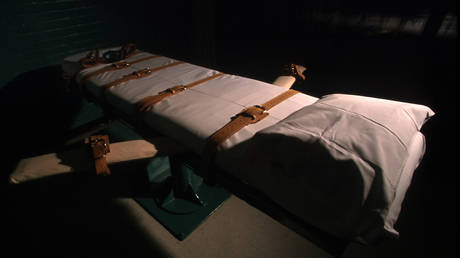
You stand shoulder to shoulder with strangers, separated from a gurney by a thick pane of Plexiglas and a wall of concrete cinderblocks. Behind that glass lies a man strapped down with wide leather belts, white sheets tucked neatly beneath his chin like a patient awaiting an ordinary outpatient procedure. The state wants you to believe this is medicine. The state wants you to believe that the ending of a human life can be reduced to a clean, clinical equation—a measured dose of barbiturates, a flatline on a green monitor, a signed death certificate, and an orderly exit through the back gate before midnight.
Until the needle misses.
The Architecture of a Clinical Illusion
When attorneys, journalists, and medical observers accuse Texas of botching an execution, the phrase itself sounds strangely bureaucratic, almost like a misplaced comma in a tax filing or a delayed shipment at a warehouse. "Botched" sanitizes blood. It turns a frantic, forty-five-minute struggle over collapsed veins into a sterile headline that scrolls past your thumb before your morning coffee cools.
To understand what actually happens when an execution goes wrong in Texas, strip away the legal jargon and look closely at the anatomy of the procedure. In a standard hospital operating room, an anesthesiologist spends years mastering the delicate mechanics of vascular access, guided by ultrasound machines, bright surgical lamps, and the immediate feedback of a patient who is free to move, speak, and adjust their posture.
Inside the execution chamber in Huntsville, none of those safeguards exist.
Consider a hypothetical scenario—a composite drawn from decades of sworn witness affidavits, autopsy reports, and Department of Criminal Justice logs—to see how easily the machinery stalls. Picture a man who has spent twenty-two years on death row in Livingston, aging inside a concrete box where fluorescent lights never fully dim, eating processed starches, developing hypertension, diabetes, and scarred, hardened veins from years of routine blood draws and poor circulation. When the execution team wheels him into the chamber, they are not licensed anesthesiologists; medical ethics boards strictly prohibit doctors from participating in executions. Instead, anonymous technicians—whose identities, training records, and medical credentials Texas shields behind sweeping state secrecy laws—step forward with syringes filled with compounded pentobarbital.
They tie a rubber tourniquet around his bicep. They slap the crook of his elbow, searching for a blue ridge beneath the skin. Nothing rises. They try the back of his hand, sliding a rigid needle under the dermis, probing left, then right, puncturing the fragile vessel wall until blood pools beneath the surface in a dark, spreading bruise. Minutes tick by on the wall clock. Behind the glass, the victim's family stares at the ceiling tiles, their grief suspended in agonizing limbo, while the condemned man’s family watches him wince, gasp, and clench his jaw as technicians move down to his ankles, his groin, or the base of his neck.
This is not an abstract legal debate. According to research compiled by Austin Sarat, a professor of jurisprudence and political science at Amherst College who tracked every American execution between 1890 and 2010, lethal injection carries the highest rate of botched procedures of any execution method ever used in the United States—roughly 7.12 percent. That means more than one in every fourteen lethal injections deviates violently from the script.
Why Texas Keeps Running Into the Same Wall
But the real problem lies elsewhere, buried deep inside the supply chains and secrecy statutes that keep the Huntsville chamber running.
For decades, Texas relied on a three-drug cocktail developed in Oklahoma in 1977: sodium thiopental to induce unconsciousness, pancuronium bromide to paralyze the muscles, and potassium chloride to stop the heart. That second drug—the paralytic—served a purely cosmetic purpose. It acted as a chemical curtain, ensuring that even if the first drug failed to anesthetize the prisoner, the witnesses behind the glass would never see the man thrash, convulse, or scream as the potassium chloride burned through his veins like liquid fire.
Then the European Union banned the export of execution drugs, and American pharmaceutical manufacturers refused to sell their products to departments of correction. Facing empty shelves, Texas pivoted in 2012 to a single-drug protocol using massive doses of pentobarbital, a powerful barbiturate typically used in euthanasia and high-dose sedation. When commercial supplies of that drug dried up too, the state turned to compounding pharmacies—small, loosely regulated facilities that mix custom medications from raw chemical ingredients.
Here is where the analogy to everyday medicine breaks down completely. Think of a commercial pharmaceutical plant as a precision watchmaker's cleanroom, where every gear is laser-measured and tested for purity before leaving the floor. A compounding pharmacy, by contrast, operates more like an old-fashioned apothecary mixing ingredients by hand from bulk powders purchased on unregulated markets. Without independent laboratory testing, there is no guarantee that a vial of compounded pentobarbital maintains uniform potency, proper pH balance, or sterility.
If the pH is off, the solution turns acidic, searing the lining of the vein the instant the plunger is pushed. If the drug has degraded in storage—a recurring accusation raised by defense attorneys pointing to expired or re-tested batches in Texas inventory logs—it loses its potency. Instead of shutting down the central nervous system within thirty seconds, the drug induces acute pulmonary edema. Fluid floods the microscopic air sacs of the lungs. The prisoner does not drift peacefully to sleep; he begins to drown from the inside out, gasping, snoring violently, his chest heaving against the leather restraints while witnesses watch helplessly through the glass.
The Invisible Witness
I have spent years reading the transcripts of men and women who stood in those rooms, and what stays with you is never the political rhetoric from either side of the capital punishment divide. It is the physical toll etched into the voices of the witnesses.
A journalist who covers executions in Huntsville once described the drive back down Interstate 45 toward Houston after a prolonged lethal injection. He told me he had to pull his sedan onto the gravel shoulder near Conroe because his hands were shaking too badly to hold the steering wheel. He had gone into the chamber expecting a ten-minute assignment—a quick quote from the warden, a timestamp for the morning edition, and a clean conscience. Instead, he spent forty minutes watching a human being turn purple while unseen hands behind a curtain adjusted IV lines, wiping sweat from a forehead, whispering urgent instructions out of microphone range.
That is the part of the story that rarely makes the evening news. When Texas is accused of botching an execution, the state's immediate instinct is containment. Because the Texas Department of Criminal Justice controls the microphones, the curtains, and the clock, the official narrative is written before the body is even loaded into the van for the medical examiner.
Notice how the choreography works. When the execution team encounters trouble finding a vein, they pull the heavy curtains across the viewing window, cutting off the witnesses' line of sight. When the gurney finally reappears, the microphones dangling from the ceiling remain switched off until the warden reads the final statement. If a prisoner groans, heaves, or murmurs that the needle burns, prison spokespeople routinely dismiss those sounds as "involuntary post-mortem reflexes" or "snoring" caused by deep relaxation.
How do you verify the truth when the only independent observers are locked behind thick glass with no audio feed and no access to the drug vials?
You look at the autopsies. And when independent pathologists have been allowed to examine the bodies of executed prisoners across the country—including cases in Texas, Oklahoma, and Arizona—they have repeatedly found lungs heavy with frothy, blood-tinged fluid, weighing nearly twice as much as normal human lungs. That is the unmistakable physiological signature of flash pulmonary edema, a condition where the body fights desperately for oxygen while paralyzed or half-sedated, experiencing the terror of suffocation before the heart finally gives out.
What Happens When Secrecy Becomes Policy
Consider what happens next whenever defense attorneys demand transparency.
In 2015, the Texas Legislature passed Senate Bill 1697, shielding the identities of any person or entity that manufactures, compounds, tests, or supplies lethal injection drugs to the state. State officials argued that secrecy was necessary to protect pharmacists from harassment and boycotts. Yet the practical consequence was the total removal of public accountability from the most irreversible power a government can exercise: the taking of a human life.
Think about the standards we apply to every other corner of public life. If a municipal water plant adds chlorine to the reservoir, citizens have the legal right to inspect the chemical batch numbers, purity tests, and safety records. If a restaurant serves tainted food, health inspectors publish the violation online within days. Yet when the state of Texas injects a lethal chemical cocktail into a human bloodstream, the source of the drug, its expiration date, the qualifications of the person holding the needle, and the protocols followed when things go wrong are treated as state secrets.
Even the Eighth Amendment of the United States Constitution—which forbids "cruel and unusual punishments"—gets twisted into a semantic maze inside federal appellate courts. In a series of landmark rulings, the U.S. Supreme Court established that the Constitution does not guarantee a painless death; it only prohibits procedures that create a "substantial risk of serious harm" compared to a known and available alternative.
Read that standard again. In the eyes of the law, a prisoner challenging a faulty lethal injection protocol cannot simply prove that compounded pentobarbital might cause him to drown in his own lung fluid. He must also identify an alternative method of execution—such as a firing squad or nitrogen hypoxia—and prove that the state is refusing to use it without a legitimate penological reason. The burden of designing a humane death falls entirely on the condemned man, while the state guards every piece of evidence he would need to make his case.
The Weight of the Unseen Room
It is easy to lose sight of the human stakes when the conversation gets trapped inside appellate briefs and pharmaceutical jargon. Many people reading about a delayed or prolonged execution in Huntsville will instinctively think of the original crime—the shattered lives, the empty chairs at family dinner tables, the decades of grief carried by the victims' relatives who traveled to Huntsville hoping for a final chapter.
Their pain is real, and it deserves to be honored without reservation. Yet when an execution is botched, even those families are robbed of the closure they were promised. Instead of a solemn, dignified conclusion, they are forced to watch a chaotic medical crisis unfold behind a pane of glass, leaving them haunted by images they never asked to carry home.
And what of the staff inside the chamber? The correctional officers, the chaplains, the technicians who strap down a man they may have greeted in the hallway for years, only to spend an hour puncturing his arms and ankles while his mother weeps three feet away on the other side of the wall? No human being walks out of that room untouched. Every time the system misfires, it leaves behind a quiet trail of moral injury that stretches far beyond the prison gates.
We like to believe that technology and clinical procedure have civilized capital punishment—that replacing the gallows and the electric chair with an IV drip removed the brutality from state-sponsored death. That belief is a comforting fiction. A needle is not mercy; it is simply a quieter instrument, and when the hands holding it are hidden behind secrecy laws, unverified chemicals, and decaying veins, the mask slips entirely.
Outside the Walls Unit in Huntsville, red brick buildings line the quiet streets under tall East Texas pines, and traffic moves steadily along the highway just a few blocks away. Inside, the floor wax is freshly buffed, the white sheets are folded crisp and square over the gurney, and the syringes sit arranged in neat rows behind a closed door—waiting for the next midnight, and the next human body to test whether the needle will find its mark.