Silence.
That is the first thing you notice when a trillion-dollar institution holds its breath—not a klaxon, not a dramatic red warning screen on a Times Square billboard, just the sudden, suffocating quiet of a grocery store checkout lane at 5:14 PM on a Friday when the little green light on the card reader refuses to blink.
I stood in that line once, holding a carton of milk, two bruised peaches, and a pack of diapers while a line of exhausted commuters stacked up behind me like dominoes. The cashier tapped the terminal with a chipped fingernail. She looked at the screen. She looked at me. She tried again. "Declined," she said, though her voice lacked the usual practiced sympathy reserved for people who have miscalculated their checking balance. Her monitor showed an error code she had seen fourteen times in the last twenty minutes. Behind me, a man in a damp raincoat sighed so loudly it felt like a physical shove against my shoulder blades.
You pull out your phone, thumb trembling slightly as you tap the blue octagon of the Chase app, expecting the familiar reassurance of numbers arranged in neat, black rows. Instead, the spinning wheel turns. And turns. And turns. A pale gray banner drops down like a stage curtain: We are experiencing technical difficulties.
Panic.
It arrives faster than logic, cold and metallic at the back of your throat, because modern money is no longer paper you can fold into a leather wallet or silver you can rattle in a coat pocket. Money is an agreement maintained by servers hummed over in windowless data centers in New Jersey and Texas, and when those servers stutter, your life does not merely pause—it evaporates into an unverified rumor.
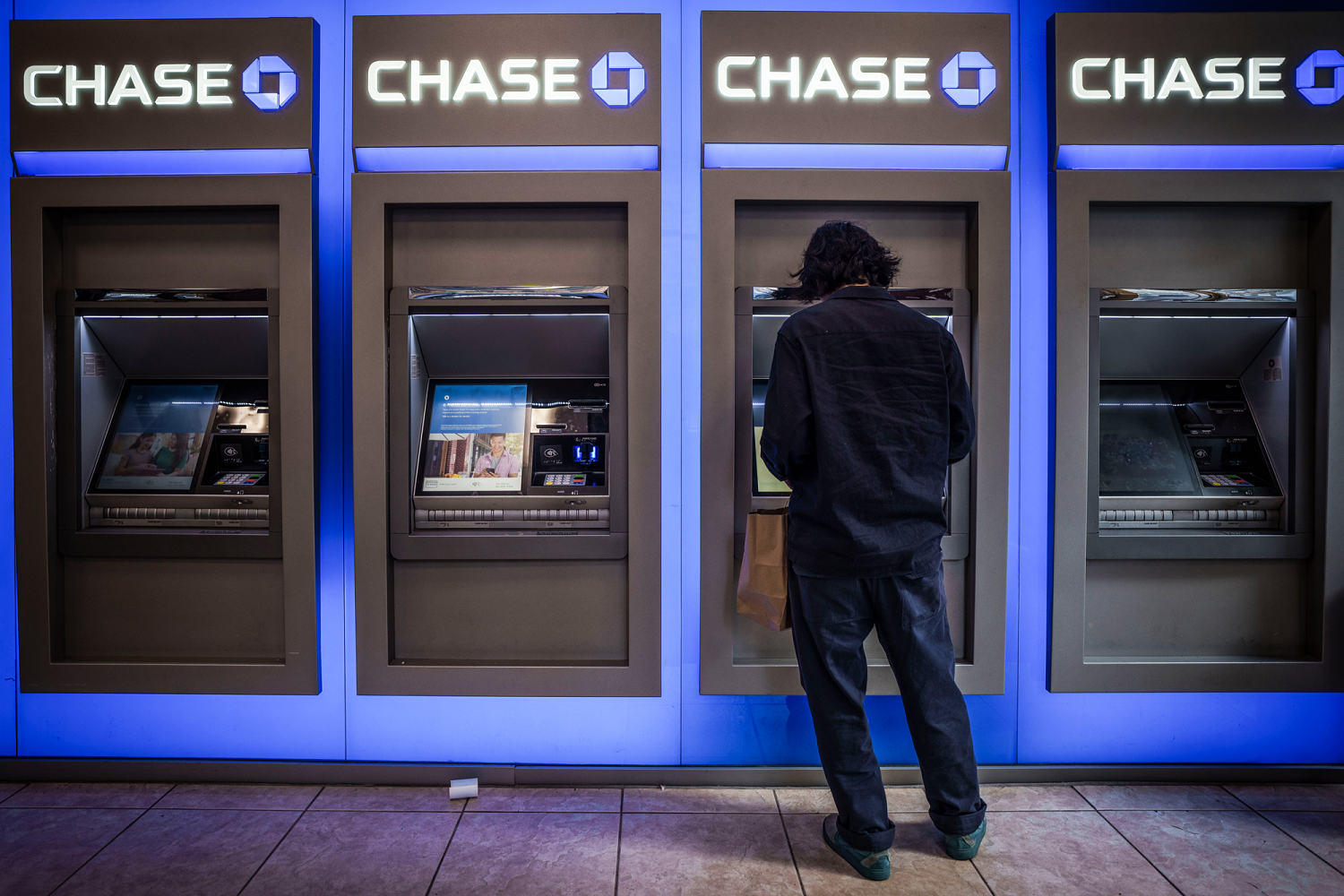
When Chase Bank recently announced that its transactions were "back to normal" following a widespread outage that crippled its online banking portal, mobile app, and physical branch systems, the corporate statement read like a weather report for a mild drizzle. Systems were restored. Processing had resumed. Customers could once again check balances and move funds. Five sentences of sanitized reassurance, delivered after the storm had already passed through millions of kitchens, checkout aisles, and payroll offices.
The Architecture of Invisible Trust
To understand why a few hours of digital darkness at America’s largest bank feels less like an inconvenience and more like an existential betrayal, you have to look at what we traded away for speed.
For centuries, banking was heavy. It smelled of damp limestone, mahogany counters, and ink. If a ledger was lost, a clerk walked across a floor and opened a vault. The friction was annoying, certainly, yet that very friction acted as a shock absorber against sudden collapse. Today, JPMorgan Chase processes roughly ten trillion dollars in payments every single day—a river of capital so vast it exceeds the annual economic output of every nation on earth save two. More than eighty million consumers rely on its digital pipes to pay rent, buy insulin, settle invoices, and receive the direct deposits that keep the lights humming in their living rooms.
Think of the modern banking system not as a vault, but as a pressurized water main buried beneath a sleeping city. You never think about the welds holding those iron joints together while you are brushing your teeth at seven in the morning. You simply turn the handle and expect clear water. Only when the pipe fractures under the frost do you realize that every sink, every radiator, and every fire hydrant on the block was sharing a single, fragile pulse.
Consider a hypothetical scenario—one that played out in thousands of variations across the country during the recent blackout. Picture Elena, a freelance pediatric physical therapist in Chicago whose rent auto-drafts on the first of the month and whose car needs a four-hundred-dollar alternator repair before she can reach her morning appointments. At 11:30 AM, she opens her banking app to transfer money from her savings account to her checking account. The screen freezes. She drives three miles to a brick-and-mortar branch, assuming that human beings behind bulletproof glass still hold the keys to the kingdom. Inside, the tellers are standing idle beside dark monitors, offering apologetic smiles and paper pamphlets. Without access to the central ledger, a physical bank branch in the twenty-first century is just a lobby with very expensive carpeting.
Elena is not broke. Her numbers exist somewhere in the magnetic dark. Yet for four hours, in every practical sense that matters to a mechanic holding a wrench or a landlord checking a ledger, she has zero dollars to her name.
What Actually Happens When a Bank Goes Offline
People often ask whether a bank outage means their money has been stolen or erased. It is the first dark whisper that crosses the mind when a balance shows up as two dashes instead of a figure.
The short, factual answer is no. Your deposits are not sitting inside the mobile app on your glass screen; the app is merely a periscope looking down into a deeply redundant core ledger. Under federal law and banking regulations, customer account balances are backed by multi-site data replication, meaning every penny is recorded simultaneously across geographically separated mainframes designed to survive fires, floods, and power grid failures. Even in a worst-case scenario, Federal Deposit Insurance Corporation coverage protects depositors up to two hundred and fifty thousand dollars per ownership category.
So why does the periscope go black?
Usually, the culprit is not a cinematic cyberattack launched from a bunker, though financial institutions ward off millions of automated probes every week. More often, it is the mundane, terrifying fragility of software updates colliding with legacy code. Beneath the sleek, minimalist interfaces of modern banking apps lie layers of architecture built across decades—some written in COBOL in the 1970s, stitched together with APIs from the 2010s, and wrapped in cloud microservices deployed last Tuesday. Updating one load balancer or misconfiguring a single routing table can trigger a cascading failure, like a single stalled commuter car turning a twelve-lane highway into a parking lot within eleven minutes.
During the recent Chase disruption, the failure cut across both digital channels and internal branch networks—a telling clue that the bottleneck sat deep in the core authentication or transaction-routing layer rather than just the public-facing website. When a branch teller cannot look up your account, it means the internal veins and the external arteries share the exact same heart. And when that heart skips a beat, the system defaults to locking the doors rather than risking duplicate transactions or corrupted records. From an engineering standpoint, shutting down is a safety mechanism. From the standpoint of a father trying to buy antibiotics at a twenty-four-hour pharmacy, safety feels indistinguishable from abandonment.
The Myth of the Cashless Utopia
We were promised a frictionless future. Over the past decade, tech evangelists and financial executives alike have nudged us away from physical currency, closing thousands of neighborhood branches nationwide while framing cash as a relic for tax evaders and grandparents. Tap your watch. Scan your face. Let the algorithm handle the rest.
Yet every major outage—whether it hits Chase, Bank of America, Wells Fargo, or the payment rails of Visa and Zelle—exposes the quiet lie at the center of cashless living. Efficiency removes redundancy. When you eliminate cash registers, paper ledgers, and local teller authority in favor of centralized cloud verification, you build a machine that runs at blinding speed ninety-nine point nine percent of the time, and fails completely during the remaining fraction of a percent.
Numbers can deceive you here. Ninety-nine point nine percent uptime sounds heroic in a quarterly earnings call. Spread across eighty million customers and three hundred and sixty-five days, however, that tiny sliver of downtime translates into nearly nine hours of paralysis every year—hours that inevitably land on paydays, Friday afternoons, or the first of the month, when transaction volume spikes and pushes fragile servers past their breaking point.
And what happens to the fees? A question millions of customers frantically type into search engines the moment their screen freezes is whether they will be penalized if a scheduled bill bounces while the bank itself is broken. Legally and procedurally, major institutions maintain policies to waive overdraft charges, late payment fees, and returned-item penalties caused by verified internal system outages. Yet those waivers are rarely automatic in the moment. They require phone calls, hold music, screenshots, and emotional labor from people who were already humiliated at a checkout counter three days earlier. The bank apologizes in a press release; the customer spends forty-five minutes on Tuesday morning proving they were innocent of a crime committed by a router.
Building Your Own Fire Escape
I no longer walk out of my front door without two twenty-dollar bills folded tightly behind my driver’s license. It is a small, slightly superstitious habit born in that grocery aisle years ago, yet it changes the chemistry of a crisis immediately.
You cannot rewrite the backend code of a global financial giant, and stuffing your life savings under a mattress invites far greater dangers—fire, theft, inflation—than a temporary server glitch. What you can do, however, is refuse to let a single institution hold a monopoly over your immediate survival.
True financial resilience in an era of fragile software comes down to deliberate, old-fashioned redundancy. Keep a modest emergency buffer—even a few hundred dollars—at an entirely separate bank or local credit union that runs on different processing infrastructure. If your primary checking account goes dark on a Friday afternoon, a secondary debit card turns a catastrophe into a mild annoyance. Hold onto a small reserve of physical cash in small denominations at home and in your wallet, enough to cover a tank of gas, a bag of groceries, or a cab ride when card readers across town suddenly refuse to speak to the cloud.
Take screenshots of major bill payments and scheduled transfers when systems are behaving strangely, creating your own paper trail before an automated penalty algorithm decides you were late. And perhaps most importantly, recognize the warning signs early: when an app hangs for more than ten seconds, do not furiously tap "Submit" four times in a row. When the pipes finally clear, queued requests have a habit of firing all at once, turning one intended rent payment into three simultaneous withdrawals that take days to untangle.
Back to Normal
By evening, the corporate statement arrived. Systems were green. Queued deposits were clearing. The spinning wheel had vanished, replaced once more by tidy black numbers on a bright white screen.
In the clean language of press releases, the incident was over, folded neatly into the archives alongside past outages and future promises of upgraded infrastructure. Life resumed its frictionless glide. Taps were tapped; transfers glided silently beneath the oceans and across the fiber-optic cables; coffee was bought with the flick of a wrist.
Yet somewhere in a brightly lit supermarket, a woman still pauses for half a second before sliding her card into the slot, watching the tiny dark screen with the quiet, watchful eyes of someone who has seen the glass wall go dark once before, and knows it can happen again.