When the United Nations human rights chief steps to a podium to issue an emergency warning about automated systems, the diplomatic circuit responds with polite nods, closed-door committees, and non-binding declarations. This ritual has played out before. Bureaucrats draft toothless principles while software engineers deploy predictive policing models, automated border walls, and workplace surveillance tools that strip away basic dignities before any legislature can draft a single paragraph of statutory law.
The core issue is not a lack of warnings. The core issue is an international regulatory vacuum engineered by corporate lobbyists and enabled by state actors who prefer weaponized data over civil liberties. Also making news in related news: The Digital Ghost in the Archive.
For years, the technology sector operated under a convenient fiction. Companies promised that self-regulation would suffice, that market incentives naturally aligned with ethical behavior, and that innovation would suffer if constrained by archaic legal frameworks. That fiction has shattered under the weight of observable reality. Algorithmic bias in healthcare triage systems denies care to marginalized populations. Automated hiring software quietly weeds out candidates based on demographic proxies. Generative models scrape private data without consent, feeding a multi-billion-dollar commercial engine built on intellectual theft and personal exposure.
Yet, international governance remains paralyzed. To understand why the UN warnings fall flat in corporate boardrooms, one must examine the structural architecture of modern technological power. More information regarding the matter are covered by Engadget.
The Anatomy of Regulatory Paralysis
International law moves at the speed of a glacier. Software development moves at the speed of a nightly code commit. This temporal mismatch is intentional. Silicon Valley and its counterparts in Shenzhen and London rely on this lag to entrench their market dominance before regulators even understand the architecture of the systems they wish to police.
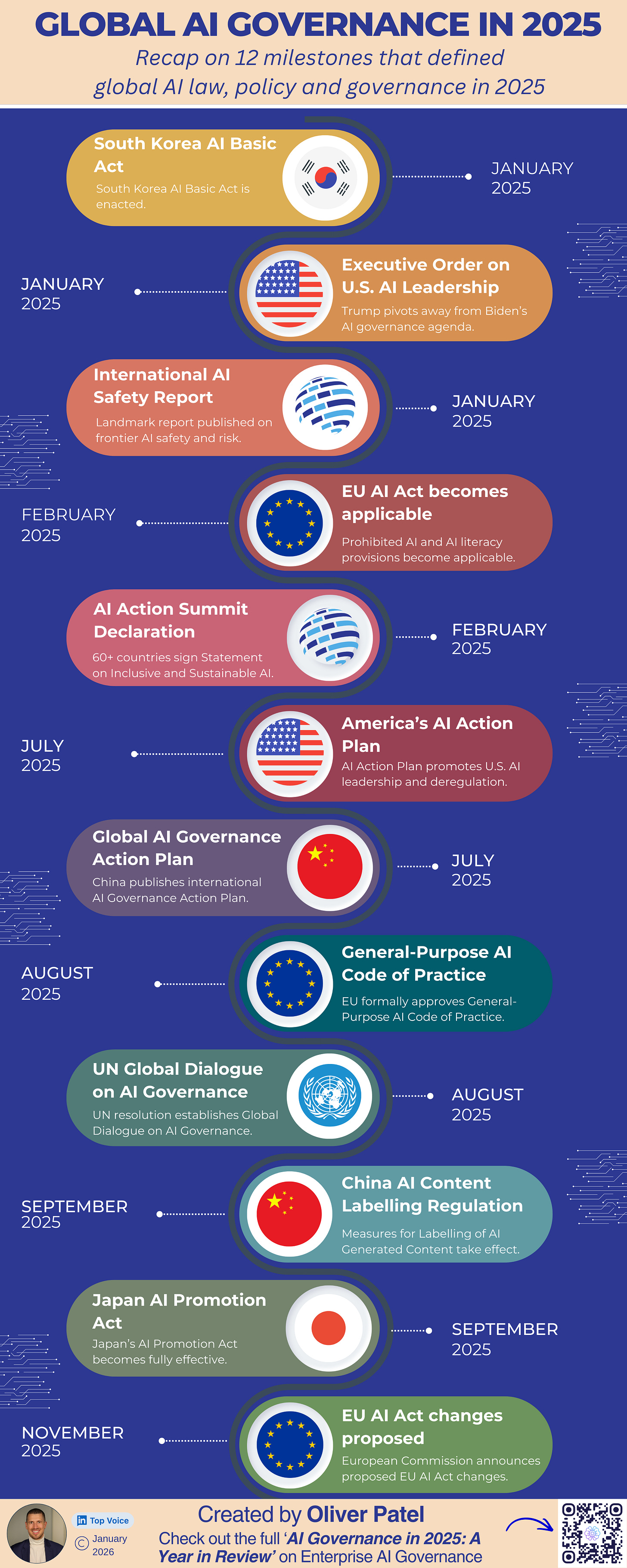
Consider the geopolitical chessboard. Washington views artificial intelligence through the lens of national security and great-power competition with Beijing. In this framing, slowing down domestic development for the sake of human rights is treated as unilateral disarmament. Beijing views algorithmic deployment through the lens of social stability and state control, integrating predictive monitoring directly into municipal infrastructure. Brussels tries to bridge the gap with sweeping legislation like the European Union Artificial Intelligence Act, but compliance mechanisms often rely on self-assessment by the very companies profiting from the deployment.
When sovereign states prioritize geopolitical supremacy and commercial dominance over human rights, international bodies are reduced to advisory boards with microphones. The United Nations can document abuses, publish reports, and summon panels of experts. It cannot slap a multi-billion-dollar fine on a multinational corporation, nor can it jail executives who deploy unvetted biometric surveillance in public squares.
The result is a fragmented regulatory marketplace. Companies engage in jurisdictional arbitrage, moving high-risk data processing operations to nations with lax oversight while marketing compliance theater in Western capitals.
When Code Becomes the Courtroom
Theory is cheap. Harm is measurable. The transition from human-driven bureaucracy to algorithmic administration has transformed administrative systems into black boxes of denial.
Take the realm of public welfare administration. Across multiple democratic nations over the past decade, governments rushed to replace human caseworkers with automated fraud-detection algorithms. These systems evaluate risk scores based on opaque criteria, flagging recipients for audits or benefit suspensions. Because the underlying code is protected as proprietary trade secrets, citizens accused of fraud cannot inspect the evidence against them. They cannot cross-examine an algorithm. They cannot ask why their file received a high-risk rating.
This violates foundational principles of due process established centuries ago. A human bureaucrat, however flawed or overworked, can be questioned. An algorithmic decision is treated by institutional hierarchies as objective truth precisely because it is wrapped in mathematical clothing.
For example, consider a hypothetical welfare recipient whose bank transactions are flagged by an automated fraud detector because they bought groceries in a different postal code while visiting a sick relative. The system automatically halts disbursements. The recipient spends weeks trying to reach a human support line, navigating automated phone trees that lead nowhere, while their rent goes unpaid. The human cost of this administrative violence is staggering, yet corporate developers label the system a success because it lowered administrative overhead by four percent.
The same dynamic plays out in criminal justice. Risk-assessment algorithms used to determine bail and sentencing rely on historical arrest data. Because historical arrest data reflects decades of systemic bias and over-policing in specific neighborhoods, the algorithm takes racist policing practices, wraps them in statistical formulas, and presents them as predictive science. Judges defer to the score, believing it to be neutral, thereby laundering human prejudice through a machine.
The Corporate Capture of Oversight Boards
Big tech companies love ethics boards. Whenever a public scandal erupts over biased training data or invasive surveillance contracts, executives hastily assemble panels of academic philosophers, legal scholars, and civil society leaders. These boards issue reports, hold conferences, and recommend best practices.
Almost none of this results in structural change.
Corporate ethics boards function as internal safety valves designed to vent public pressure without altering the commercial engine. When individual researchers or board members push too hard for substantive changes—such as canceling lucrative contracts with military agencies or abandoning facial recognition deployment—they are marginalized, ignored, or quietly replaced.
The funding streams tell the real story. Academic institutions that produce research critical of algorithmic surveillance frequently receive multi-million-dollar grants from the very companies they are studying. Think tanks and policy institutes that champion voluntary industry codes are often sustained by corporate sponsorships. This ecosystem creates an intellectual chokehold where radical critique is defanged into academic incrementalism.
Furthermore, the personnel revolving door between regulatory agencies and corporate legal teams ensures that enforcement remains toothless. Regulators who spend years drafting guidelines often leave public service to take lucrative positions as compliance directors for the companies they used to oversee.
Labor and the Invisible Underclass
The public obsession with autonomous systems often obscures the human sweat required to make them function. Artificial intelligence is not magic. It is millions of low-wage human workers cleaning data, labeling images, and filtering out extreme violence from training sets.
In data-processing centers across the Global South, workers spend ten-hour shifts viewing horrific imagery—child exploitation, torture, suicide—to train moderation filters. They are paid pennies per hour, bound by strict non-disclosure agreements, and given little to no psychological support. When these workers develop severe post-traumatic stress disorder, corporate contractors drop their contracts with impunity.
Meanwhile, traditional labor markets face systematic restructuring. Generative models ingest the copyrighted work of writers, artists, photographers, and coders without compensation or attribution, using that labor to build commercial products that directly compete with the original creators. This is not innovation. It is extraction on a planetary scale.
Labor unions are scrambling to negotiate protection clauses in collective bargaining agreements, but the speed of deployment leaves workers perpetually reactive. By the time a union wins protections against automated replacement in one sector, the technology has already shifted to a new domain.
Breaking the Stalemate
If international governance is failing and corporate self-regulation is a sham, what constitutes an effective countermeasure? The answer requires moving away from abstract philosophical debates about machine consciousness and focusing entirely on legal liability and structural transparency.
First, liability must shift. Right now, technology companies enjoy broad legal shields that protect them from the downstream consequences of their products. If a pharmaceutical company releases a drug that causes severe side effects due to negligent testing, the company faces catastrophic liability. If a software company releases an autonomous hiring algorithm that discriminates against thousands of applicants, the company faces a slap on the wrist, if anything at all. Removing these liability shields would instantly change corporate behavior.
Second, the myth of the proprietary black box must end. No company should be permitted to deploy high-risk algorithms in critical infrastructure, healthcare, policing, or finance if the underlying logic cannot be audited by independent public regulators. Trade secret protection should never supersede constitutional rights and public safety. If a system makes decisions that affect human freedom, health, or livelihood, its mechanics must be open to public scrutiny.
Third, the governance model must be decentralized and democratized. Decisions about where and how automated systems are deployed cannot be left to a small cadre of executives in coastal tech hubs and bureaucrats in international capitals. Affected communities must have veto power over surveillance infrastructure and automated administration in their neighborhoods.
The United Nations rights chief is correct that this is a watershed moment. But treating it as a moment for more polite dialogue guarantees defeat. The algorithms are already running. The civil liberties are already eroding. Real resistance requires treating algorithmic deployment not as an inevitable natural force, but as a political choice subject to public control.
The time for ethical guidelines has expired. The era of strict legal accountability must begin, or the future will be administered by systems designed to serve power rather than people.


