India used to be the world's favorite back office. Ten years ago, global boards viewed the country as a hungry consumer of Western software and a reliable hub for cheap IT outsourcing. That era is officially dead.
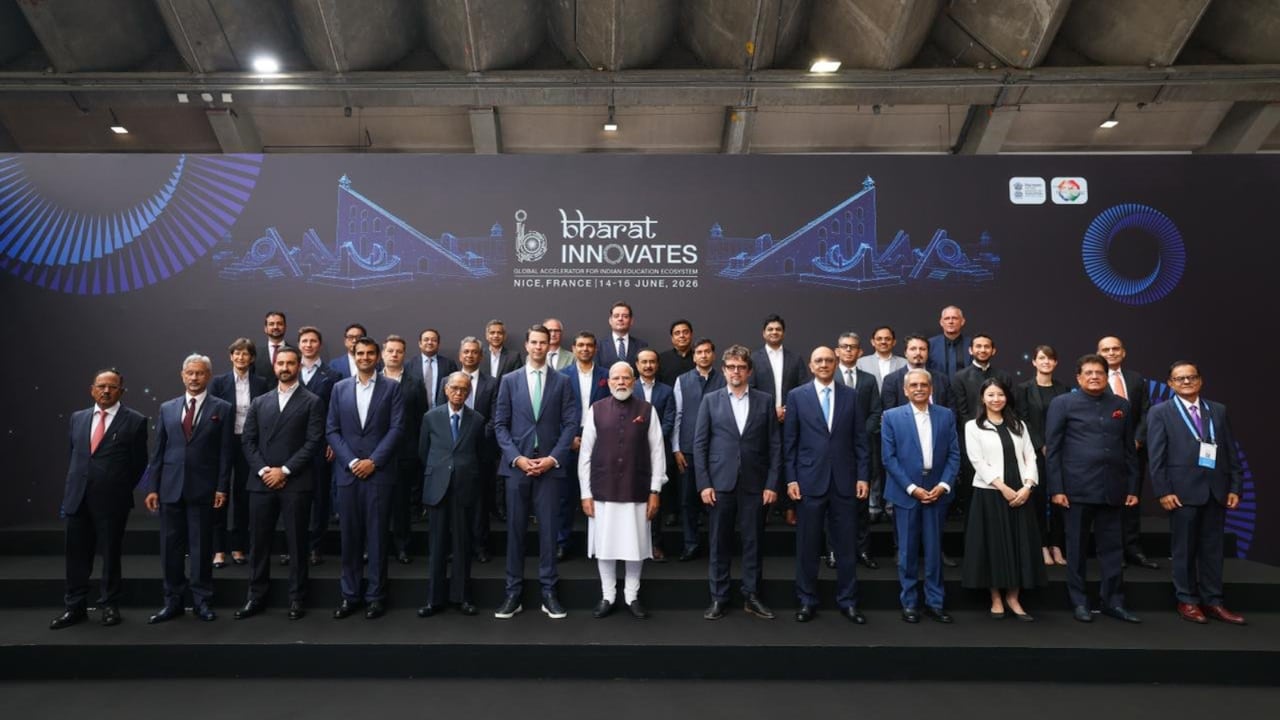
At the Bharat Innovates 2026 conclave in Nice, France, Prime Minister Narendra Modi and French President Emmanuel Macron laid out a clear picture of how global tech dynamics have shifted. The narrative isn't about India adopting tools built in Silicon Valley anymore. It's about India building deep-tech solutions for the global market.
If you're still looking at India through the lens of cheap engineering labor, you're missing the massive shift toward high-value innovation.
From Code Consumer to Global Solutions Provider
The transition from a technology adopter to a provider isn't just political rhetoric; it's visible in the underlying data. India's startup ecosystem has grown from around 400 startups a decade ago to roughly 230,000 today. It stands as the third-largest startup market globally, responsible for creating nearly 25 lakh jobs.
What changed? The type of technology being built.
The early wave of Indian tech success relied heavily on modifying Western business models for local consumers. Today, the focus has shifted toward deep-tech fields. We are talking about 13 strategic sectors, including:
- Semiconductors and hardware architecture
- Satellite technology and commercial space exploration
- Advanced computing and AI infrastructure
- Biotechnology and human-centric healthcare systems
At the Nice conclave, over 120 Indian deep-tech startups and 20 institutes of excellence, including the premier IITs, demonstrated solutions designed for international export. When Indian startups build today, they build with scale in mind from day one.
The Economics Behind the Technology Provider Pivot
Global investors aren't backing Indian startups out of goodwill. They do it because the cost-to-scale ratio in India is incredibly efficient.
Consider how India handles artificial intelligence. While Silicon Valley pours billions into training massive, closed LLMs to automate corporate tasks, Indian engineers focus heavily on applied, resource-light AI.
Modi framed this approach as "AI for All." In practice, that means building localized systems that use satellite imagery to predict crop yields for smallholder farmers or training lightweight AI models to diagnose diseases in rural clinics without reliable internet access.
This human-centric focus makes Indian tech highly exportable to other developing nations and cost-conscious Western enterprises. French President Macron noted this value during the summit, warning against the global trend of closing off AI models into exclusive, hyper-concentrated corporate silos. The alternative is open, distributed innovation, which India actively champions through its digital public infrastructure.
Why the India France Corridor Matters Right Now
The bilateral partnership between New Delhi and Paris has moved far beyond traditional defense deals and hardware manufacturing. The Bharat Innovates 2026 event highlights a strategic corridor built to counter the tech monopolies of the US and China.
By anchoring this tech showcase in France, India is positioning itself as the primary innovation partner for Europe. European venture funds face strict regulatory compliance frameworks like GDPR and the EU AI Act. Indian deep-tech startups, accustomed to building within highly regulated, population-scale frameworks like the Unified Payments Interface (UPI), fit perfectly into these compliance-heavy markets.
Prominent Indian tech leaders like Infosys co-founder N.R. Narayana Murthy, Peak XV Partners Managing Director Rajan Anandan, and Accel's Prashanth Prakash attended the Nice summit to finalize cross-border funding mechanisms. This level of institutional backing proves that the "reform express" Modi mentioned isn't slowing down. The Indian state is actively deregulation strategic sectors, making it easier for foreign venture capital to flow directly into early-stage deep-tech.
How Global Tech Leaders Should Position Themselves
If you manage a global tech stack, run a venture fund, or lead corporate R&D, treating India as a mere deployment destination is an expensive mistake. You need to adjust your strategy to align with India’s current role as an innovation provider.
Co-Develop, Don't Just Outsource
Stop sending fully formed product specs to Indian teams just for execution. Shift your strategy to joint R&D. Establish innovation labs in Indian tech hubs like Bengaluru or Hyderabad that possess equal decision-making power to your home office.
Tap Into Tier 2 and Tier 3 Talent
More than 50% of India's current startups originate outside the major metro areas. The next breakthrough in agritech, logistics, or climate tech won't necessarily come from Delhi or Mumbai. It will likely come from a Tier-2 engineering hub where developers live closer to the real-world problems they are solving.
Integrate with Indian Digital Public Infrastructure
If you are building fintech, healthcare platforms, or identity verification software, look at India's open-source public rails. Building applications on top of these protocols gives your product instant scalability across emerging markets.
The global technology landscape is no longer a one-way street running from West to East. The companies and investors winning in 2026 are those treating Indian engineers as peer innovators, co-creating the systems that will run the global economy.


