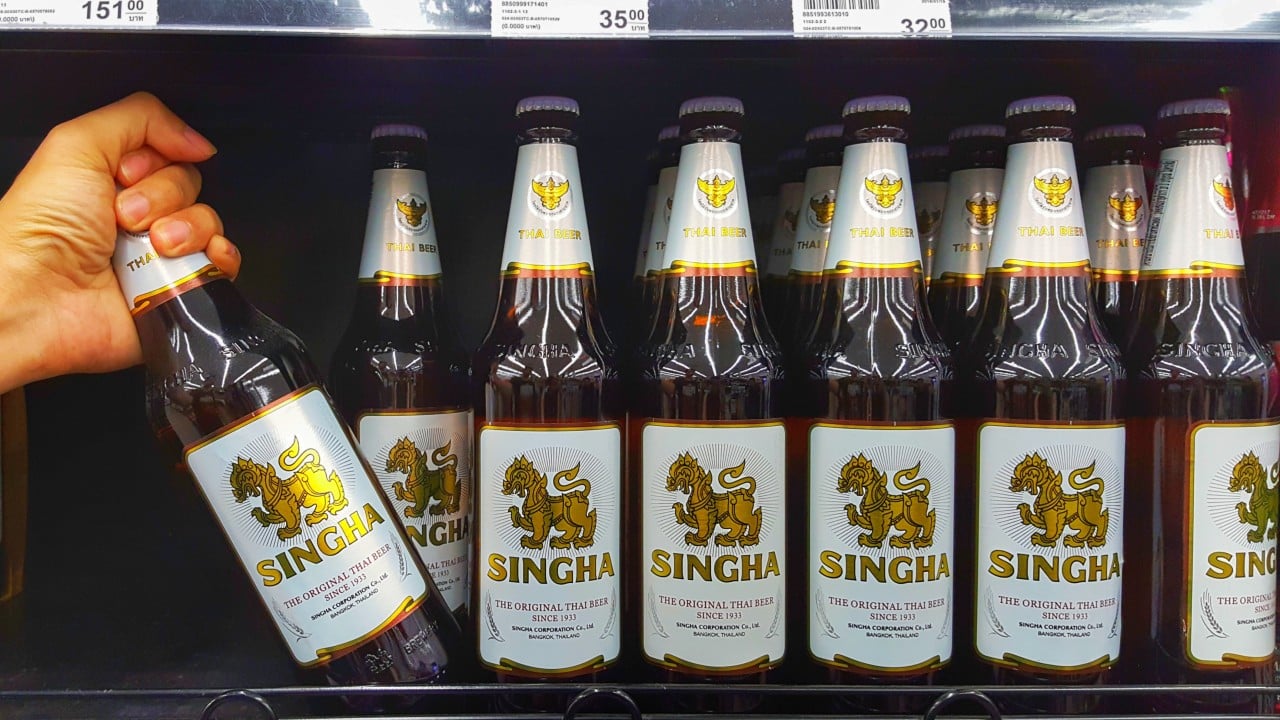
The amber liquid flowing through a cold glass of Singha beer is, to millions of people, the very taste of Thailand. It is crisp. It is reliable. For nearly a century, the golden lion on the label—the mythical Singha—has stood as an unshakeable symbol of national pride, corporate dominance, and unimaginable wealth.
But wealth is a strange, distorting mirror. When you peer past the gold leaf and the boardroom mahogany of Boon Rawd Brewery, the corporate empire behind the beer, the reflection turns fractured and dark.
Dynasties do not usually collapse from external pressure. They rot from the inside out, eaten away by the very proximity to power that created them.
In the spring of 2026, the golden curtain veiling Thailand’s most prominent family was torn wide open. It did not happen through a hostile takeover or a market crash. It happened because two brothers, born into the stratosphere of Bangkok’s ultra-elite, engaged in a fratricidal war that ended with one brother cast out into the cold and the other leveling allegations that threaten to stain the family legacy forever.
This is not just a story about a corporate dismissal. It is a glimpse into the heavy, suffocating reality of a modern-day royal court, where blood is thick, but the survival of the empire is always thicker.
The Weight of the Golden Spoon
To understand the sudden, shocking ouster of a senior heir from Boon Rawd Brewery, you have to understand the sheer scale of what was at stake. We are not talking about a successful family business. We are talking about an institution that helped shape modern Thailand.
Imagine growing up in a world where your surname is a household word, where your family’s decisions dictate economic policy, and where your internal sibling rivalries are played out across international headlines. It sounds like a television drama. For the Bhirombhakdi family, it is simply Tuesday.
For decades, the family maintained an immaculate public image. They were patrons of the arts, pillars of society, and masters of the premium beverage market. But the problem with keeping up a flawless facade is that when a crack finally appears, the structural failure is catastrophic.
The tension had been quietly building for years, bubbling beneath the surface like carbonation in a tightly sealed bottle. The public only saw the sleek suits, the charitable donations, and the political influence. They did not see the quiet jockeying for position in the boardroom. They did not see the whispers in the corridors of power.
Then, the seal broke.
The Explosion in the Boardroom
The official announcement from Boon Rawd Brewery was predictably sanitized. It used the dry, sanitized language of corporate governance to mask a deeply personal execution. A senior heir, a man who had spent his entire life preparing to steward a portion of this multi-billion-dollar empire, was abruptly stripped of his duties and shown the door.
The catalyst? A public, scorched-earth accusation of sexual abuse leveled by his own brother.
Let the reality of that sink in.
This was not a leak by an anonymous whistleblower. This was not an investigative exposé by a hostile media outlet. This was a direct, devastating strike from within the tightest circle of trust imaginable. One brother looked at the other and chose to pull the pin on a grenade, knowing full well that the shrapnel would hit everyone in the family line.
Consider what happens next when an empire faces this kind of existential threat. The corporate reflex is always the same: self-preservation.
When a scandal of this magnitude touches a family member, the board of directors does not act out of morality or familial love. They act out of math. They look at the brand equity. They look at the distribution networks. They look at the political relationships that keep the taps flowing.
The calculus was brutal, swift, and absolute. The accused brother was excised like a tumor to save the body corporate. He was dismissed from his roles, cut off from the operational levers of the firm, and left to navigate the wreckage of his reputation alone.
The Invisible Stakes of Thai High Society
To an outsider, a public falling out like this looks like madness. Why not handle it quietly? Why not use the immense wealth at their disposal to settle the matter behind closed doors, away from the prying eyes of the public and the volatile fluctuations of the market?
The answer lies in the unique, pressure-cooked environment of Thailand’s hi-so (high society) culture.
In this rarified air, reputation is not just a social asset; it is the currency upon which all power is traded. The Bhirombhakdi family does not operate in a vacuum. They exist in a complex web of alliances with the military, the government, and other elite families. A scandal involving sexual abuse is no longer just a private shame—it is a massive liability in a shifting cultural landscape where public tolerance for the misdeeds of the ultra-wealthy is wearing dangerously thin.
By moving decisively to dismiss the accused brother, the family firm attempted to signal a new era of accountability. They wanted to show that the Singha lion answers to the law of the land, not just the law of the family.
But the move also revealed a profound vulnerability. It proved that despite their billions, the heirs of the Singha empire are trapped in an iron cage of their own making. Every action is scrutinized. Every personal flaw is amplified. The moment an individual becomes a threat to the collective survival of the dynasty, the family will not hesitate to drop the blade.
The View from the Outside
For the ordinary person buying a cold beer at a night market in Bangkok, this entire saga feels like a dispatch from a distant planet. It highlights the vast, chasm-like divide between the people who consume a product and the people who profit from it.
We look at these dynasties and we envy them. We see the luxury cars, the elite educations, the unassailable privilege. We forget that when you are born into a corporate empire, your life is not entirely your own. You are a custodian of a brand. You are an asset on a balance sheet. And assets can be liquidated the moment they underperform or bring disrepute.
The dismissed brother now finds himself in a strange, limbo-like existence. He is still a multi-millionaire by birthright, but he is a ghost within his own kingdom. He has been stripped of the one thing that money cannot buy back: his place at the table.
Meanwhile, his brother remains, having secured his position at a terrible, permanent cost. The holidays will be quiet. The family dinners will be tense. The silence in the family compound will be deafening.
The Residual Taste
The corporate machinery of Boon Rawd Brewery will keep turning. The trucks will roll out of the breweries at dawn, delivering crates of Singha to every corner of the kingdom and across the globe. The marketing campaigns will continue to feature beautiful, smiling people enjoying the pristine, golden product.
But the story has changed.
The next time you look at that iconic golden lion on the label, you might see something else beneath the fierce, proud posture. You might see the anxiety of a family trying desperately to hold its empire together. You might see the ghosts of a brotherhood shattered by ambition and toxic secrets.
An empire can survive market downturns. It can survive changing consumer tastes. It can even survive political upheaval. But when the foundation itself begins to crack, when the people who are supposed to guard the legacy turn on each other with knives drawn, the gold begins to look remarkably thin.
The beer is still cold, but the dynasty has never felt more fragile.