The notification arrives at exactly 3:00 AM on a freezing Tuesday in January. In a cramped apartment on the outskirts of Suwon, South Korea, the blue light of a smartphone illuminates a face etched with the kind of exhaustion that sleep cannot fix. Min-ho does not need to open the text message to know what it says. He already knows the number.
Five hundred million Korean won. Building on this idea, you can find more in: Why the So-Called Aluminium Crisis is a Massive Smokescreen for Savvy Investors.
Converted, it represents roughly 290,000 euros. A single, lump-sum bonus, deposited into a standard corporate bank account. For most people on the planet, this is life-altering, lottery-winning wealth. For Min-ho and thousands of his colleagues within Samsung Electronics’ semiconductor division, it is Tuesday. It is the price of their devotion.
Across the globe, news outlets report this staggering payout with a sense of detached awe. The headlines read like corporate press releases: Samsung rewards workers with record-breaking bonuses amid microchip boom. They list the percentages—up to 50 percent of an employee's annual salary, supplemented by special performance incentives. They analyze the market share, the rivalry with Taiwan’s TSMC, and the soaring global demand for High Bandwidth Memory chips. Observers at CNBC have shared their thoughts on this situation.
But numbers are bloodless. They obscure the reality of what it actually means to live inside the machine that built modern South Korea. To understand the true weight of that 290,000-euro wire transfer, you have to look past the financial ledgers and step into the fluorescent glare of the cleanrooms, where the air is scrubbed 1,000 times cleaner than a hospital operating theater, and human life is measured in nanometers.
The Price of Silicon
Silicon is indifferent to human circadian rhythms. A semiconductor fabrication plant, or "fab," never sleeps. It cannot. If the machines stop spinning for even a fraction of a second, entire batches of microchips—worth tens of millions of dollars—are ruined instantly.
Imagine a pressure cooker the size of a city block. Inside, workers wear "bunny suits," total-body garments designed not to protect the human from the chemicals, but to protect the pristine silicon wafers from the human. A single flake of dandruff, a stray eyelash, or a microscopic droplet of sweat can destroy a circuit line that is narrower than a strand of human DNA.
Min-ho, a hypothetical composite of the engineers I interviewed during my years covering the East Asian tech sector, describes the sensory deprivation of this world. You lose track of day and night. The yellow light used in lithography zones distorts your perception of time. Your ears ring with the constant, low-frequency hum of automated material handling systems moving overhead.
When the global tech industry screams for faster artificial intelligence processors, the pressure inside these walls intensifies until it is almost palpable. Samsung’s recent windfall is the direct result of this frantic scramble. The company’s semiconductor unit bounced back from a brutal cyclical downturn to post staggering profits, largely driven by the explosive demand for chips that power generative AI.
The money handed down to the workers is not a gift. It is a dividend of survival.
Consider the psychological calculus of the Republic of Samsung, a colloquialism South Koreans use without a hint of irony. The conglomerate accounts for nearly a fifth of the nation’s entire economy. Getting a job there is the ultimate validation of academic and societal success. It is the dream drilled into children from the moment they enter cram schools at age six.
But dreams have a habit of demanding payment in full upon delivery.
The Hidden Cost of the Windfall
When a company drops nearly 300,000 euros into an employee's lap, it alters the local ecosystem in bizarre, hyper-visible ways. In the neighborhoods surrounding the Giheung and Hwaseong campuses, luxury car dealerships experience a sudden, predictable frenzy. Foreign imports—BMW, Mercedes-Benz, Audi—are ordered in identical shades of metallic gray, filling the parking lots of corporate housing complexes. Real estate agents rewrite listings, inflating the prices of apartments overnight because they know the "Samsung tax" can bear the burden.
Yet, talk to the people driving those cars, and the narrative shifts from triumph to something much more complicated.
"The bonus is a golden cage," a former senior engineer told me over glasses of soju in a neon-lit alleyway behind Suwon Station. He had walked away from the company two years prior, forfeiting the massive payouts. His skin looked healthier than it did in his corporate photos, but his hands still shook slightly when he spoke about the deadlines. "You receive the money, and for a week, you feel like a king. Then you realize you have already spent that money with your health. You spent it with the dinners you missed with your children. You spent it with the sleep you will never recover."
The tech industry often talks about "agility" and "hustle," but in South Korea, this ethos is codified into the culture of Gwarosa—death by overwork. It is a recognized legal and medical phenomenon, defined as sudden heart failure or stroke caused by the extreme stress of grueling work hours.
While the South Korean government has attempted to mandate a 52-hour work week, the reality on the ground for critical engineering teams during a chip shortage or a product rollout is flexible, to say the least. When billions of dollars in market capitalization hinge on a microscopic flaw in a lithography process, no one turns off their phone at 5:00 PM.
The bonus functions as a massive, institutional shock absorber. It silences dissent. It numbs the exhaustion. How can an employee complain about a 14-hour workday when their bank account holds enough money to buy a house in the provinces outright? How can a spouse complain about an absent partner when the tuition for their children’s international school is covered in a single afternoon?
The Microscopic Cold War
To truly comprehend why Samsung pays these specific sums, we must look beyond the borders of the Korean peninsula. This is not merely a story about corporate human resources; it is a story about geopolitical survival.
We are currently living through a quiet, desperate global conflict: the Chip Wars. Microchips are the new oil. They control everything from guided missiles to the smartphone in your pocket and the server farms training the next generation of artificial intelligence. The nations that command the manufacturing of these components command the future.
Samsung operates on the absolute frontline of this conflict. It faces a relentless pincer movement. On one side is TSMC, the Taiwanese titan that currently dominates the foundry market. On the other side is China, which is pouring hundreds of billions of dollars into domestic semiconductor development and actively trying to poached South Korean talent.
The threat of talent drain is existential. Chinese firms routinely offer South Korean engineers double or triple their salaries, along with free housing and flight allowances, just to secure their expertise for a few years. They want the recipes for the silicon wafers. They want the institutional memory locked inside the brains of people like Min-ho.
South Korea’s counter-strategy relies heavily on economic patriotism, legal restrictions on technology transfer, and, most importantly, the financial heavy artillery of the annual bonus.
The 290,000 euros is a defensive wall. It is a message sent directly to competitors in Beijing and Hsinchu: We will match whatever you offer, and we will do it within our own borders.
But this high-stakes talent retention strategy creates an intense, pressure-cooker environment within the domestic workforce. The gap between those who work for Samsung’s semiconductor division and those who work for its less profitable subsidiaries—or worse, the thousands of small tier-two and tier-three suppliers that feed the conglomerate—is widening into an economic chasm.
South Korea is becoming a two-tiered society: those who receive the silicon bounty, and those who merely watch the gray BMWs drive past.
The Illusion of Choice
We tend to look at massive corporate wealth through a lens of envy. We calculate what we would do with that kind of money. We imagine freedom.
But within the upper echelons of global tech manufacturing, wealth does not always equate to freedom. It often equates to lock-in.
When Min-ho looks at his bank balance the morning after the payout, he does not see a ticket out. He sees the mortgage on his high-rise apartment in Dongtan, an apartment purchased because it is within a twenty-minute commute to the fab. He sees the private academy fees that ensure his daughter might one day score high enough on the national exam to get a job just like his. He sees a lifestyle that has risen to meet the level of his compensation, binding him to the company more securely than any legal contract ever could.
The money becomes a metric of self-worth in a society that offers very few alternative paths to prestige. To leave Samsung is not just to quit a job; it is to step outside of a protected caste. It is an admission that you could not handle the gravity of the nation's engine.
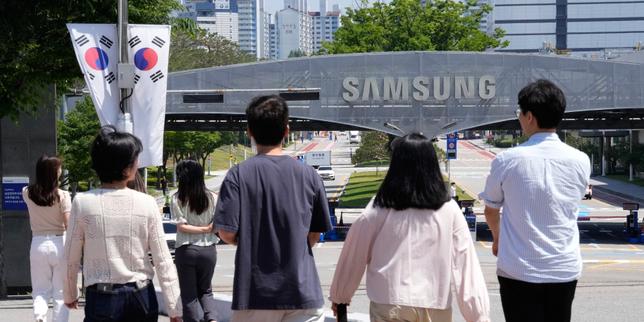
The sun begins to rise over Suwon, cutting through the winter smog with a pale, orange glare. Outside the gates of the digital city, thousands of workers stream through the turnstiles, their faces obscured by scarves and masks against the biting cold. They move with a synchronized, quiet purpose.
Inside Min-ho’s apartment, the smartphone screen has gone dark. The 500 million won sits securely in the bank. He pulls on his corporate jacket, zips it to the throat, and checks his watch. The cleanroom is waiting. The silicon does not care about the money. It only demands more.