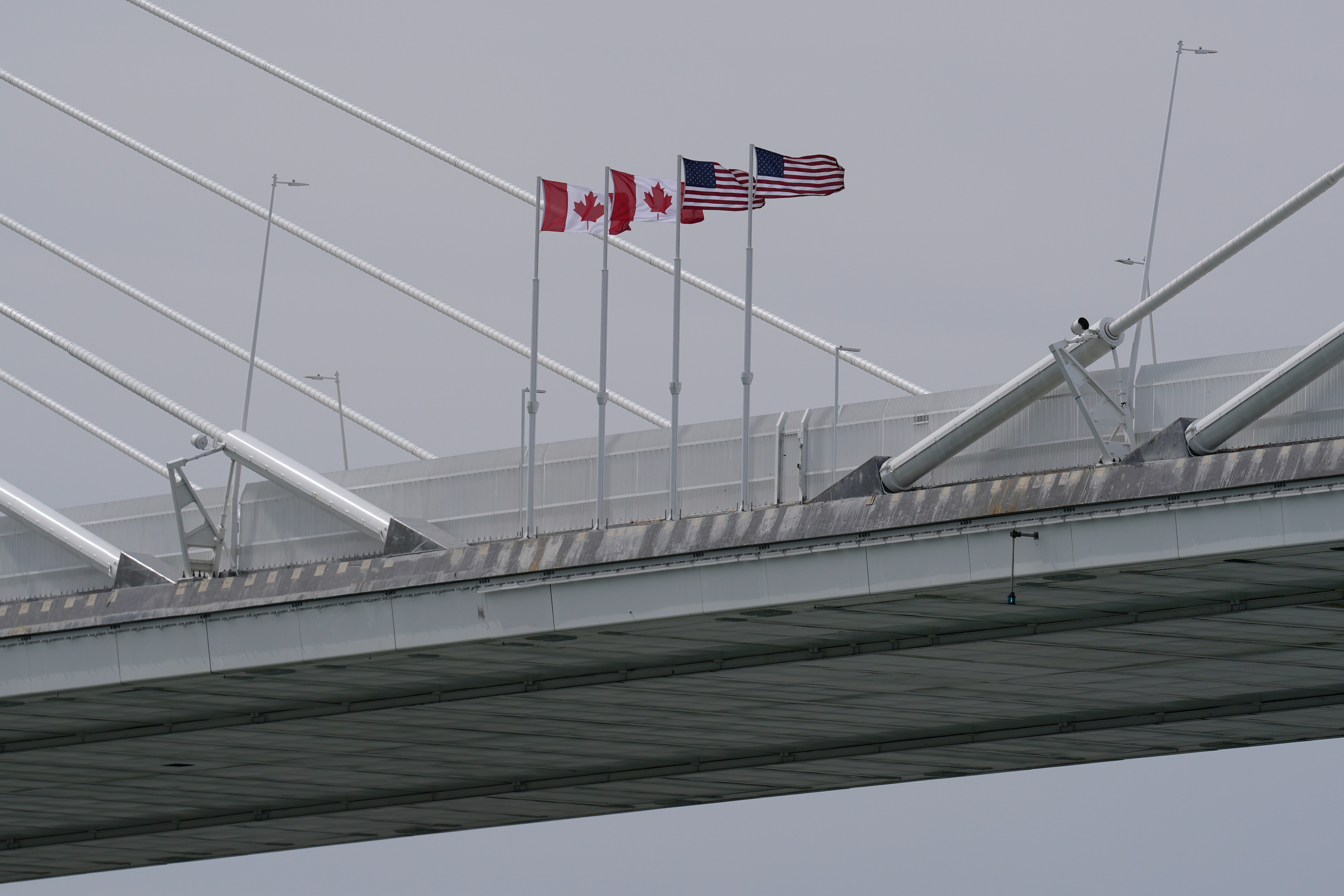
The headlines are bleeding collective panic. "Delayed until September 2025!" the copy-paste financial desks cry. They treat the updated timeline of the Gordie Howe International Bridge as a bureaucratic failure, a systemic collapse of infrastructure planning, and a disaster for cross-border supply chains.
They are wrong. They are looking at the wrong numbers, measuring the wrong metrics, and fundamentally misunderstanding how massive infrastructure actually generates value.
The lazy consensus loves a delay story. It is easy to write. You take the original target date, contrast it with the new date, calculate the cost overruns, and find a resident to quote about traffic congestion. But in the real world of mega-project logistics, a rushed bridge is a dead asset.
This delay is not a failure. It is an intentional, highly calculated optimization masquerading as a setback. If you are panic-selling logistics stocks or weeping for the future of the Detroit-Windsor trade corridor, you are missing the entire plot.
The Trillion-Dollar Myth of the Immediate Opening
The foundational error of the current commentary is the obsession with the opening ribbon-cutting ceremony. The prevailing logic assumes that every day a bridge sits unfinished is a day of lost GDP.
Let us dismantle that premise with basic industrial physics.
The Detroit-Windsor crossing handles roughly 25% of all surface trade between the United States and Canada. We are talking about automotive components, heavy machinery, and just-in-time manufacturing inputs. This is not consumer commuter traffic; it is the literal spine of North American industrial output.
I have spent years analyzing capital allocation in supply chain networks, and if there is one universal truth, it is this: Unpredictability kills margins faster than waiting ever will.
When a mega-project pushes its timeline to ensure total operational readiness, it prevents a catastrophic friction point. Imagine launching on the original rushed timeline. The physical structure is there, but the digital customs integration is glitching. The automated toll systems have a 3% failure rate. The secondary inspection plazas are bottlenecked because the staff hasn't completed simulation training.
A two-hour delay at a border crossing costs the North American automotive sector millions of dollars per day. A systemic shutdown due to an unforced operational error at launch could trigger a multi-week logistics freeze.
By taking the extra months, the Windsor-Detroit Bridge Authority (WDBA) and Bridging North America are absorbing the volatility before it hits the market. They are choosing a controlled, predictable extension over a chaotic, error-ridden debut. That is not a delay. That is risk mitigation at the highest level.
The Ambassador Bridge Monopoly Explodes Regardless
The real panic isn't happening in the boardrooms of logistics companies; it is happening in the executive suites of the Ambassador Bridge owners. For nearly a century, a single private entity has held a functional monopoly over the most critical trade artery on the continent.
The narrative suggests that a delay gives the incumbent monopoly more time to extract rents and solidify its position. This ignores the psychological reality of the shipping industry.
Logistics procurement managers do not make decisions based on next week's calendar. They sign multi-year freight contracts. The mere certainty that the Gordie Howe Bridge will open with six lanes, dedicated truck lanes, and direct highway-to-highway connections has already broken the monopoly's pricing power.
- The Old Paradigm: Pay the toll, endure the stoplights on Huron Church Road, and accept the bottleneck because there is no alternative.
- The New Reality: The alternative is inevitable. The contract negotiations happening right now for 2026 and 2027 freight lanes are already pricing the Ambassador Bridge out of its leverage.
Whether the structural shift occurs in early 2025 or late 2025 is statistically irrelevant to a twenty-year corporate strategy. The leverage has flipped. The monopoly is done. A few months of administrative calibration will not stitch that crown back together.
The Toll Calculation Error Everyone is Making
Let us talk about the money. The critics are hyper-focusing on the $6.4 billion CAD adjusted project cost and the financial penalties associated with the extension.
What they fail to calculate is the compounding return of structural longevity.
The Gordie Howe Bridge is being built to last 125 years. Let that number sink in. It is designed to outlive almost everyone reading this text. When you are engineering an asset for a century-long lifecycle, optimizing the final 5% of construction quality yields massive exponential dividends in reduced maintenance downtime forty years from now.
| Metric | Rushed Construction | Optimized Construction (With Delay) |
|---|---|---|
| Initial Lifespan Target | 75 Years | 125+ Years |
| Early-Stage Maintenance Interventions | High frequency within year 1-5 | Near zero due to verified stress-testing |
| Customs Processing Capacity at Day 1 | 60% (Iterative rollout) | 100% (Fully simulated) |
| Supply Chain Friction Risk | Extreme | Minimal |
Rushing a stay-cable bridge of this magnitude to satisfy a political cycle or a short-term news cycle is fiscal malpractice. The concrete curing times, the tensioning of those massive cables, and the installation of the comprehensive port-of-entry security arrays require precision that does not adhere to quarterly earnings calls.
The Hard Truth About Local Economic Readiness
There is another layer to this that no one wants to say out loud: neither Detroit nor Windsor was actually ready for a 2024 opening.
An international bridge does not exist in a vacuum. It requires a massive web of local infrastructure to feed it. The surrounding feeder roads, the logistics hubs, the warehousing complexes, and the local customs brokerage offices all have to scale up to meet the new capacity.
Walk through Delray or Southwest Detroit. Look at the logistics footprint in Windsor. The private sector is still scrambling to build the cold-storage facilities, the trailer drop yards, and the cross-docking terminals needed to leverage the massive influx of efficient freight capacity.
This timeline extension is a lifeline for local economies. It provides the necessary runway for private capital to finish building the supporting ecosystem. If the bridge opened tomorrow, the bottleneck would simply move from the river crossing to the local municipal roads that aren't fully prepared to route thousands of additional Class 8 trucks per day.
Stop Asking the Wrong Questions
The media keeps asking: "Who screwed up the timeline?"
The correct question is: "Why were we benchmarking a once-in-a-generation engineering feat against an arbitrary, pre-pandemic estimate?"
The world changed between the initial design phase and today. Supply chains fractured, material costs fluctuated, and labor markets tightened. To stick rigidly to an outdated timeline just to save face would require cutting corners on materials, testing, or labor safety.
If you want a lesson in what happens when you rush international infrastructure to meet a political deadline, look at the historical failures of fast-tracked transit systems and poorly tensioned bypasses worldwide. They become financial black holes requiring constant retrofitting.
The Gordie Howe International Bridge is a masterpiece of modern engineering. It features the longest main span of any cable-stayed bridge in North America. It houses the largest Canadian port of entry along the border. It is a monument to bilateral economic integration.
Stop measuring its success by the standard of a suburban strip-mall construction schedule.
The delay is not a sign of weakness. It is evidence of architectural and financial discipline. The builders are refusing to hand over a compromised asset to the global market. They are delivering a flawless economic engine, exactly when the continent's infrastructure needs it most.
The smart money is waiting quietly. The rest can keep whining about the calendar.