The basement office of a regional counterterrorism unit in the American Midwest does not look like a movie set. There are no glowing blue maps, no high-tech sweeps tracking satellites, and certainly no dramatic music. Instead, there is the hum of a cheap desk fan, stacks of manila folders, and the smell of stale coffee.
For Arthur, an analyst who spent fifteen years tracking domestic extremism, the job was never about ideological theater. It was about patterns. It was about tracking the lonely, angry young men who spent their nights in dark corners of the internet, slowly building a lexicon of grievance. To Arthur, a pipe bomb does not have a political party. Shrapnel does not vote.
But three hundred miles away, in a wood-paneled Senate committee room filled with the warm glow of television cameras, those distinctions dissolved.
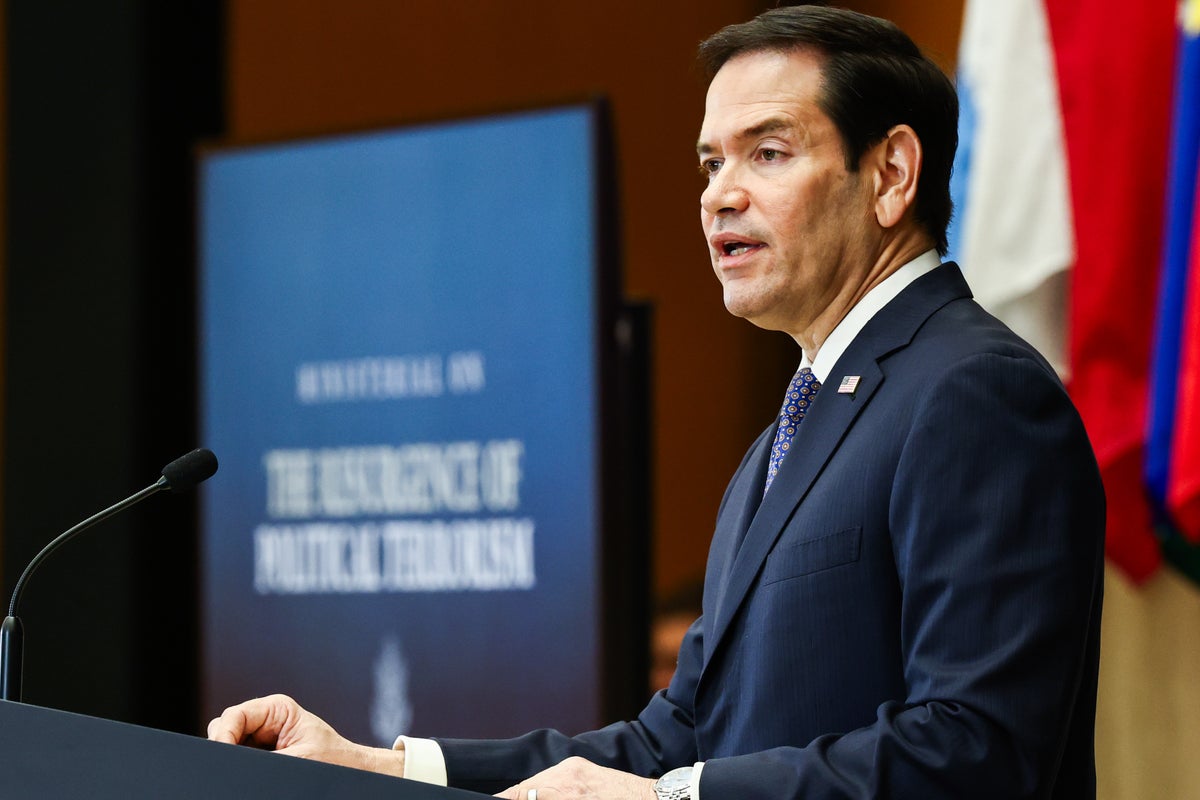
Senator Marco Rubio stood at the center of a carefully stage-managed summit. The topic of the day was "far-left terrorism." To the senators on the dais, the threat was clear, singular, and conveniently packaged for the evening news. Outside the room, reporters remembered a different tone just months earlier, when concerns over armed right-wing groups and the rhetoric surrounding the Capitol riot were brushed aside as partisan hand-wringing.
The contrast was stark. In Washington, threat assessment had become an exercise in editing. You highlight the lines that hurt your opponents; you cross out the lines that might alienate your base.
This is the story of what happens when the language of national security is hijacked by the demands of reelection campaigns, and the quiet, dangerous blind spots we create along the way.
The Screen and the Stage
To understand the disconnect, you have to look at how threat assessments are actually made.
In Arthur’s world, danger is measured in capability and intent. For years, the intelligence briefs landing on his desk pointed in a remarkably consistent direction. The most lethal, organized, and active threats in the country came from white supremacists, anti-government militias, and sovereign citizen movements. The data was not partisan. It was written in the blood of synagogue attendees, supermarket shoppers, and police officers ambushed in their cruisers.
Yet, during the hearings led by Rubio, the focus shifted entirely.
The witnesses called to testify spoke of a nation under siege by a highly organized, subterranean network of left-wing anarchists. They pointed to the fiery protests of 2020, the broken windows of downtown storefronts, and the clashes between activists and police. To a casual viewer tuning in on cable news, it appeared as though a standing army of radical leftists was poised to march on suburban America.
But the reality on the ground was far more chaotic and far less organized.
Consider a hypothetical teenager named Leo. In the summer of 2020, Leo found himself angry. He saw videos of police violence on his phone, felt the suffocating isolation of the pandemic, and decided to march. He wore black, threw a water bottle at a riot shield, and went home feeling a temporary rush of solidarity.
But Leo was not part of a highly funded, hierarchically structured terror cell. He did not have a commander. He did not have a manifesto. He had a smartphone and a deep, unstructured rage.
By labeling Leo and thousands like him as "terrorists" on par with international syndicates, political leaders achieved two things at once. They gave their constituents a tangible, frightening enemy. And they avoided having to talk about the systemic failures that brought those young people into the streets in the first place.
The Art of the Pivot
The path to Rubio’s summit was paved with a very deliberate kind of silence.
When Donald Trump spent the latter half of his presidency fixating almost exclusively on antifa, security experts repeatedly warned that this focus was dangerously lopsided. They argued that by elevating a decentralized movement of street protestors to the status of a primary national security threat, the administration was actively diverting resources away from far more lethal, organized domestic networks.
Rubio, representing a swing state with its own complex web of political factions, was a key defender of this strategy. When asked about the lopsided focus, he dismissed the concerns. He argued that the threat from the left was being ignored by a sympathetic media, and that the government had a duty to restore order.
But the numbers told a different story.
According to databases compiled by independent researchers and the government’s own law enforcement agencies, right-wing extremists were responsible for the vast majority of extremist-related homicides in the United States over the previous decade. Left-wing violence, while destructive to property and occasionally resulting in clashes, accounted for a tiny fraction of those deaths.
When you ignore that math, the consequences are felt far beyond the halls of Congress.
In local police departments, federal funding is tied to threat priorities. When Washington declares that far-left terrorism is the premier danger of the day, resources shift. Training programs are rewritten. Surveillance assets are redeployed.
Arthur saw this play out in his own office. A task force that had been quietly monitoring an armed local militia—a group that had openly discussed raiding a state capitol—was suddenly asked to produce a report on local anarchist graffiti.
The analysts in the room looked at each other in silence. They knew the militia possessed automatic weapons and ammonium nitrate. The anarchists possessed spray paint and copy paper. But the order had come from above. The political appetite had changed.
The Language of Division
There is a unique danger in using the word "terrorism" too lightly.
Historically, the label was reserved for organized groups using systematic violence to achieve political aims. It carried a specific legal and social weight. When you call someone a terrorist, you remove them from the realm of normal political disagreement. You make them an existential threat.
By applying this label to a broad, loosely defined group of left-wing activists, political figures did more than just score points on talk radio. They lowered the bar for what constitutes an enemy of the state.
Imagine a small-town business owner named Sarah. Sarah watched the news coverage of Rubio's summit. She saw images of burning trash cans juxtaposed with warnings about a coordinated campaign to destroy American values.
Sarah did not have time to read academic studies on domestic extremism. She trusted her representatives. When a local group of college students organized a protest outside her town hall to advocate for defunding the police, Sarah did not see her neighbors' children. She saw the terrorists she had been warned about. She called her cousin, a member of a local "patriot" group, and asked if they could bring their firearms to the town square to "protect the community."
This is how the cycle feeds itself.
The political rhetoric from a Senate hearing room trickles down into a Facebook feed, which turns into an armed standoff in a park behind a public library. The politicians who started the fire are safely back in their offices, preparing for the next fundraising email, while ordinary citizens are left holding the matches.
The Empty Spectacle
The summit itself was a masterclass in political theater.
There were large, glossy charts showing the financial damage of the 2020 riots. There were testimonies from business owners whose properties had been damaged. These were real victims, and their pain was genuine. No one could deny the fear of watching your livelihood burn.
But the summit did not seek solutions. It did not ask why these communities were burning. It did not invite sociologists, community leaders, or local mediators to discuss how to de-escalate tension.
Instead, it offered a villain.
By focusing the entire conversation on "far-left terrorism," the hearing functioned as a shield. It protected the political establishment from having to address the deep, structural inequalities that drive civil unrest. It allowed them to frame a complex social crisis as a simple law-and-order problem.
For Arthur, watching the broadcast from his basement office, the whole exercise felt like a betrayal of his profession.
He knew that the real work of keeping people safe did not happen under the glare of television lights. It happened through tedious, objective analysis. It happened when you were willing to look at the data, even when the data told you something you did not want to hear.
As the hearing drew to a close, a senator leaned into his microphone to deliver a final, dramatic warning about the threat to the republic. The cameras flashed, capturing the serious, determined expressions of the politicians on the stage.
Outside, the sun was setting over Washington, casting long shadows across the marble monuments. The city felt quiet, but it was the fragile quiet of a place where the rules of reality had been traded for the rules of the stage. The real threats remained, ignored in the shadows, waiting for the moment when the lights finally went out.