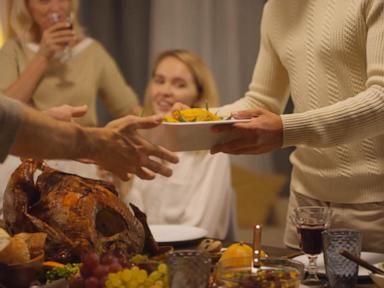
The turkey was gray. Not golden-brown like the glossy magazine covers scattered across the coffee table, and certainly not the bronzed masterpiece promised by the food blogger whose recipe I had taped to the kitchen cabinet. It looked like a damp, oversized river stone sitting in an aluminum roasting pan, and it was still cold in the center at 7:45 PM.
Eleven people were sitting in my cramped, overheated living room. Two of them were perched on overturned milk crates because I hadn't realized how few chairs I actually owned until the doorbell started ringing. Everyone was starving. Everyone was clutching warm cans of cheap beer because I had forgotten to buy ice, and the conversation had degraded into that polite, brittle hum people use when they are trying desperately not to look at the kitchen. For a different view, read: this related article.
I stood over the counter, sweat pooling at the base of my neck, gripping a dull carving knife and feeling a hot, prickling wave of shame. I had spent three hundred dollars and fourteen hours trying to prove that I was a functioning adult capable of orchestrating an effortless autumn feast. Instead, I had trapped eleven of my favorite people in a hot apartment with an undercooked bird and a sink overflowing with scorched pans.
That disaster happened six years ago. Since then, I have hosted five more Friendsgivings, attended a dozen others, and watched an entire generation quietly turn what should be the warmest, most forgiving night of the year into an exhausting performance art piece. Further reporting regarding this has been provided by Apartment Therapy.
We have gotten Friendsgiving completely backward.
The Invisible Stakes of the Chosen Family Table
To understand why we sabotage ourselves every November, you have to look at what Friendsgiving actually represents. Traditional Thanksgiving is a ritual of obligation. You go home, you sit in the seat you have occupied since you were nine, you eat the same sweet potato casserole your aunt has made since 1998, and you navigate the familiar, well-worn minefields of family politics. The menu is fixed. The roles are assigned before you even walk through the door.
Friendsgiving has no script. It emerged over the last two decades as young adults moved farther from their hometowns, delayed marriage, and built dense, vital support networks in cities where they knew nobody at twenty-two. Sociologists call these "chosen families," though that phrase almost feels too neat for the messy reality of the people who help you haul a mattress up four flights of stairs or sit on your bathroom floor when a relationship implodes.
When you invite those people to a holiday dinner, the invisible stakes are remarkably high. You aren't just serving mashed potatoes. You are trying to build a tradition out of thin air. You are announcing, without saying the words out loud, these are my people, and this is our home.
Because we want the night to feel significant, we confuse significance with difficulty. We assume that love is measured in scratch-made puff pastry, brined heritage poultry, and artisanal floral arrangements. Social media pours gasoline on that instinct, feeding us endless reels of sunlit loft apartments where twenty-somethings in linen aprons laugh effortlessly over grazing boards that cost more than a car payment.
Consider a hypothetical host we will call Maya. Maya works fifty hours a week in a fluorescent-lit office, lives in a two-bedroom apartment with a stove whose back right burner only lights if you blow on it, and hasn't baked a pie from scratch since high school. Yet when November rolls around, Maya decides she will host fourteen people for a sit-down dinner. She buys a sixteen-pound frozen turkey on Tuesday without realizing it takes four full days to thaw safely in a refrigerator. By Thursday morning, she has a twelve-pound block of ice in her crisper drawer, three bags of fresh cranberries she doesn't know how to thicken, and a rising sense of panic that makes her snap at her roommate for leaving a mug on the counter.
Maya isn't failing at cooking. She is failing at project management, because she designed a menu for a commercial restaurant kitchen inside a space built for reheating takeout.
The Architecture of a Disaster
If you strip away the nostalgia and look at a holiday dinner purely as a logistical operation, the traditional Thanksgiving menu is a nightmare. Every single dish demands the exact same resources at the exact same time.
The turkey wants the oven for four hours. The stuffing wants the oven for forty-five minutes. The green bean casserole wants the oven. The mac and cheese wants the oven. The dinner rolls want five minutes at the very end when the oven is already crammed with foil-covered Pyrex dishes. Meanwhile, the stovetop is locked down by a massive pot of boiling potatoes, a saucepan of gravy that will turn into wallpaper paste the second you stop whisking it, and a skillet of Brussels sprouts demanding high heat.
In a standard apartment kitchen, you have one oven cavity and four burners. Attempting to execute a classic eight-dish spread in that space is like trying to land six commercial airliners on a single rural airstrip during a fog bank. Something is going to crash.
The real tragedy isn't the burned rolls or the lumpy gravy. The tragedy is that the host disappears.
I remember looking out from my kitchen during that disastrous first year and realizing I hadn't spoken a full sentence to my best friend, who had driven three hours in November traffic just to be there. I was a ghost at my own party. Every time someone tried to pull me into a story, my eyes darted to the kitchen timer. Every laugh from the living room felt like a reminder that everyone else was having the evening I had spent three days preparing for them.
Hospitality, at its core, is the art of making people feel welcome, seen, and unhurried. The moment your guests realize you are stressed, anxious, or martyrs to the kitchen, the spell breaks. Guests are empathetic creatures. When they see you sweating over a carving board at 8:00 PM, they don't feel pampered. They feel guilty. They start hovering near the kitchen doorway asking if they can chop something, desperate to relieve the tension they can feel radiating off your shoulders.
The Radical Shift From Chef to Conductor
The turning point for me happened two years after the gray turkey incident. I was invited to a Friendsgiving hosted by a guy named Marcus, a sound engineer who lived in a narrow walk-up with almost no counter space.
When I arrived at 6:00 PM, Marcus wasn't wearing an apron. He was sitting on his sofa with a drink in his hand, listening to an old soul record, completely relaxed. There was no turkey in his oven. Instead, he had bought two giant aluminum trays of smoked brisket and pulled pork from a local barbecue joint down the street, keeping them warm at 170 degrees. He had made one massive, extraordinary pot of bourbon-pecan sweet potatoes—his single signature dish—and outsourced everything else.
We ate at 6:45 PM. The food was phenomenal. Nobody hovered anxiously in the hallway. Marcus sat at the head of the table for three hours, telling stories, refilling glasses, and actually inhabiting the evening he had created.
Watching Marcus changed how I think about hosting. A great host isn't a short-order cook. A great host is a conductor. Your job isn't to play every instrument in the orchestra; your job is to set the tempo, make sure everyone has sheet music, and keep the room in tune.
When you adopt that mindset, the entire blueprint for Friendsgiving changes. You stop asking, What impressive things can I cook? and start asking, How do I remove every possible point of friction between my friends and a long, unhurried evening together?
Rebuilding the Menu Without the Martyrdom
Start with the centerpiece, because that is where most hosts lose the war before the first guest arrives.
If you truly love roasting a whole turkey, do it—but respect the physics of poultry. A whole bird is notoriously difficult to cook evenly because white breast meat dries out at 165 degrees Fahrenheit while dark leg meat doesn't become tender until it hits 175 or 180 degrees. You can solve this in two ways. You can spatchcock the bird—using kitchen shears to cut out the backbone so the turkey lies flat, which cuts the roasting time nearly in half and exposes all the skin to even heat—or you can skip the whole bird entirely and roast two bone-in turkey breasts alongside a pan of braised turkey thighs. You get twice the meat, half the oven time, and zero anxiety about salmonella at the center of a giant cavity.
Even better, give yourself permission to abandon poultry altogether. Nobody has ever walked into a warm apartment on a crisp November evening, smelled slow-braised short ribs, a tray of baked ziti bubbling with ricotta, or a massive spread of carnitas tacos, and complained about the lack of a pilgrim-era bird. Friendsgiving is a modern invention. You are allowed to write your own rules.
Once you have settled on a main dish that won't hold your oven hostage, look at how you distribute the rest of the meal. A pure potluck often results in four bowls of store-bought hummus, three bags of tortilla chips, and zero vegetables. A curated potluck solves that immediately.
About two weeks before the dinner, send a simple shared spreadsheet or group message with specific categories rather than vague requests. Assign the heavy hitters to your most reliable cooks. Ask your friend who loves baking to bring two pies. Ask the friend who works late and hates cooking to bring three bags of ice, two bottles of sparkling cider, and a stack of heavy-duty takeout containers for leftovers.
Make sure you capture dietary restrictions early without turning the menu into a medical chart. If two guests are vegan and one is gluten-free, don't cook three separate meals. Design your core sides so they naturally overlap. Roasted root vegetables tossed in olive oil, flaky salt, and fresh rosemary are naturally vegan, naturally gluten-free, visually stunning, and require almost zero active labor once they are in the oven. A wild rice pilaf with toasted pecans, dried cranberries, and fresh herbs satisfies everyone at the table without needing a separate label.
The Invisible Details That Shape the Room
Once the food is under control, pay attention to the sensory architecture of your space. People remember how a room felt long after they forget what was on their plate.
Lighting is the fastest way to transform a cramped apartment into a sanctuary. Overhead lights are the enemy of intimacy. Turn them off entirely before the first guest knocks. Rely on table lamps, floor lamps, string lights, and unscented candles. You want pools of warm, amber light rather than a flat, clinical glare. (Skip scented candles near the dining area; vanilla-bourbon wax fighting with the aroma of garlic and roasted thyme will give everyone a headache before the appetizers are cleared.)
Sound matters just as much. Silence at the beginning of a party feels heavy, and loud music forces people to shout until their throats ache by 9:00 PM. Build a playlist that runs for at least five hours—so you never have to touch your phone to queue songs—and keep the volume just below conversation level. Instrumental jazz, warm acoustic tracks, or mellow soul music creates a gentle floor of sound that absorbs awkward pauses without competing with human voices.
Think carefully about the flow of traffic. If you put the drinks, the appetizers, and the main dishes on the same table, you create a bottleneck where twelve people stand shoulder-to-shoulder holding plates while trying to pour wine. Separate your stations. Put the bar on a bookshelf, a bar cart, or a cleared corner of the desk in the living room. Put a small bowl of marinated olives, spiced nuts, or sharp cheddar and apples near the entrance so guests have something in their hands within ninety seconds of taking off their coats.
And solve the seating problem honestly. Do not pretend your four-person dining table magically expands to hold twelve adults. If you don't have enough chairs, embrace it. Push the coffee table against the wall, pile throw pillows and folded blankets around a low rug, or set up a folding card table draped in a real linen tablecloth so it blends seamlessly with your main table. Mismatched chairs—a desk chair, a piano bench, a folding chair borrowed from a neighbor—aren't a sign of failure. They are proof that you squeezed everyone in because their presence mattered more than your aesthetic.
Managing the Clock So You Can Actually Be There
The best hosts front-load their work so that by the time the doorbell rings, the hard part is already over.
Two days before the party, do all your grocery shopping and clear out your refrigerator. You need shelf space not just for ingredients, but for the wine, beer, and Tupperware containers your guests will inevitably show up holding. Set the table the night before. Lay out the plates, silverware, napkins, and serving spoons—even put sticky notes inside each empty serving bowl labeling what goes in it ("Mashed potatoes," "Green beans," "Cranberry sauce"). That tiny trick saves you from frantically digging through cabinets for a slotted spoon while guests are waiting in line.
On the day of the gathering, work backward from when you want to eat. If you tell people to arrive at 6:00 PM, plan to serve dinner at 7:15 PM. That seventy-five-minute window gives latecomers time to battle traffic, lets everyone settle in with a drink, and removes the pressure to rush food onto the table the second someone walks in.
Stop cooking thirty minutes before guests arrive. Even if a side dish isn't completely finished, wrap it, hold it warm, or finish it early and reheat it gently later. Use those final thirty minutes to take a shower, put on clothes you actually feel comfortable sitting in, pour yourself a glass of water, and take ten quiet breaths in your own living room.
When guests walk in and ask, "What can I do to help?"—and they will, because good friends always do—have real, low-stakes jobs ready. Don't wave them off with a strained smile while you frantically chop shallots. Hand someone a corkscrew and ask them to open three bottles of red wine so they can breathe. Hand someone else a pitcher and ask them to fill water glasses at the table. Letting people contribute turns them from passive spectators into co-creators of the night.
What Remains After the Plates Are Cleared
Two Novembers ago, I hosted Friendsgiving in a narrow apartment during a freezing rainstorm. Halfway through the evening, a fuse blew in the kitchen, plunging the stove and the refrigerator into darkness right as we were about to warm up the pies.
Six years earlier, that power outage would have reduced me to tears. Instead, we lit six more taper candles, opened a bottle of bourbon, and ate cold pumpkin pie straight out of the tin with forks while sitting on the living room floor. Nobody cared that the whipped cream had melted slightly or that the dishwasher couldn't run until morning. We stayed up until two in the morning talking about where we had been five years ago and where we hoped to be five years from now.
That is the secret no glossy lifestyle magazine will ever print: perfection is sterile. People don't bond over flawless execution. They bond over shared warmth, minor absurdities, and the quiet relief of being in a room where nobody is keeping score.
Eventually, the night winds down. The last rideshare pulls away from the curb. You stand in your kitchen surrounded by stacks of mismatched plates, half-empty glasses with lipstick smudges on the rims, and foil-wrapped bundles of leftover stuffing waiting to be packed into the fridge. Your feet ache. The air smells faintly of woodsmoke, roasted herbs, and candle wax. And as you turn off the last lamp in the living room, you realize you didn't miss a single second of it.