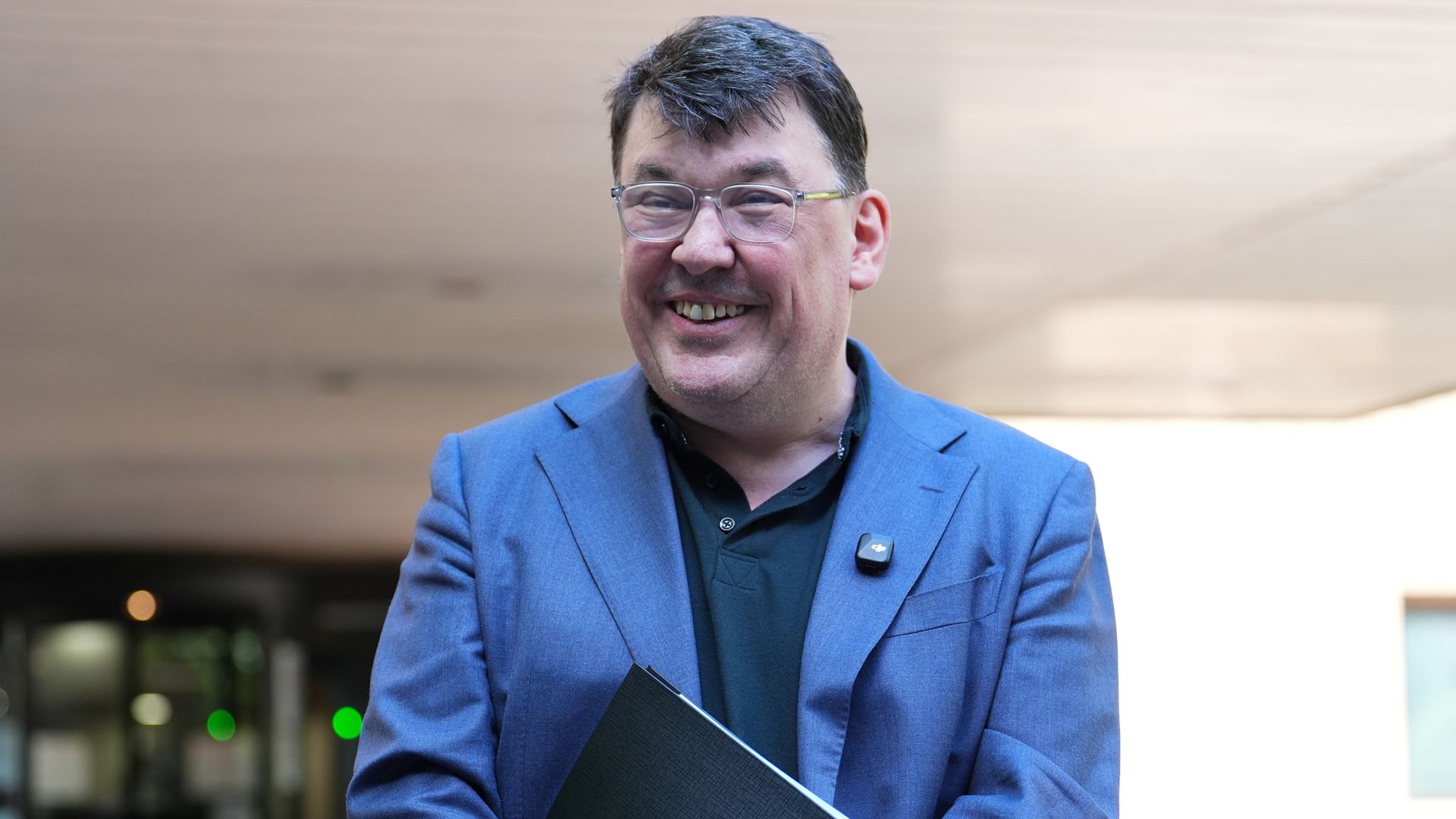
Scotland Yard is back in the hot seat over Graham Linehan. Just months after the Metropolitan Police paid the Father Ted co-creator £25,000 and issued an apology over his Heathrow Airport arrest, the Independent Office for Police Conduct ordered the force to reopen its investigation into his complaint.
That order matters far beyond one high-profile writer. It exposes a raw nerve in British policing. How far should officers go over social media posts? Where does legitimate public order end and political or ideological friction begin?
If you followed the headlines in October 2026, you saw the short version: the watchdog found failings in how the Met handled Linehan's complaint and told officers to re-examine his allegation of discrimination tied to his gender-critical views. Fair enough. Yet treating this strictly as a celebrity spat misses the real story. This case sits at the intersection of online speech, police discretion, non-crime hate incidents, and institutional accountability.
Why the Met Police Reopened the Graham Linehan Complaint
To understand why the Met Police is looking at this again, you have to trace the sequence from airport tarmac to watchdog directive.
In September 2025, armed officers detained Linehan at Heathrow Airport over posts on X concerning transgender issues. The initial suspicion centered on inciting violence, though the investigation into those social media posts was later dropped with no further action. Critics—ranging from conservative politicians to Harry Potter author J.K. Rowling—condemned the detention as heavy-handed and disproportionate. By July 2026, the Met had apologized and agreed to pay £25,000 in compensation following legal action backed by the Free Speech Union.
A payout and an apology usually close a chapter for a police force. Not this time.
On October 15, 2026, the Independent Office for Police Conduct (IOPC) ruled that the Met had not adequately handled Linehan's complaint and instructed the force to reinvestigate, specifically directing it to look again at his claim of discrimination over his gender-critical stance. A Met spokesperson confirmed the force would review the decision and reopen the complaint, while the IOPC noted Linehan retains a further right of review if he remains dissatisfied with the outcome.
Honestly, that distinction—between paying damages to settle a civil claim and actually reinvestigating why officers acted or handled a complaint the way they did—is huge. Money settles exposure. A reopened complaint tests conduct.
The Shift Away From Non-Crime Hate Incidents
One of the biggest policy ripples from the Linehan arrest involves non-crime hate incidents (NCHIs). Following the controversy around his detention and the dropping of the social media probe, the Met announced it would no longer investigate non-crime hate incidents so officers could focus on matters meeting the threshold for criminal investigations.
From a practical policing standpoint, I think that shift makes sense. Officers already stretch thin across violent crime, theft, and fraud shouldn't be pulled into policing borderline online arguments that don't cross a criminal line. Clearer thresholds help front-line officers avoid guesswork in fast-moving situations.
Still, ending NCHI investigations doesn't magically erase gray areas. Online speech rarely arrives neatly labeled as "lawful opinion" or "criminal incitement." When posts involve heated cultural debates, sharp insults, or provocative language, officers on the ground still have to judge context fast—and mistakes get expensive fast.
The Bigger Debate Around Online Speech and Police Powers
Strip away the famous name for a second and look at the mechanics. A passenger lands at Heathrow. Armed officers detain him over tweets. Weeks or months later, the social media investigation goes nowhere, a settlement follows, and a watchdog orders a fresh look at the complaint.
Why does that happen? Because modern speech controversies collide head-on with broad statutory powers designed to prevent disorder or harm. In the UK, free expression isn't an absolute shield; it sits alongside laws governing public order, harassment, and incitement. That tension isn't going away anytime soon.
On one side, free speech advocates argue that aggressive policing of online commentary chills lawful debate, wastes public resources, and turns controversial opinions into police matters. Look at the Free Speech Union's reaction to the case: they framed the detention and subsequent fallout as proof that policing has overreached into expression that belongs in public argument, not custody.
On the other side, defenders of strong online safeguards worry that rolling back scrutiny leaves people—especially marginalized groups—exposed to targeted abuse, intimidation, or genuine threats that escalate offline. Not every harsh post is harmless banter, and victims often struggle to tell where bluster ends and real risk begins.
Here's where I stand: both sides have a point, yet neither gets a free pass on sloppy execution. If police use high-visibility tactics like detaining someone at an airport over social media posts, the legal and factual footing has to be rock solid. When it isn't, public trust takes a hit on all sides.
What Watchdog Orders Actually Change on the Ground
People sometimes assume an IOPC directive to reinvestigate means a dramatic courtroom reckoning tomorrow. Usually, it's slower and more procedural than that.
When the watchdog orders a force to re-examine a complaint, it signals that the initial handling fell short—whether in how evidence was assessed, how discrimination allegations were addressed, or how explanations were given. The force has to take another look, document its findings, and account for its reasoning. If the complainant isn't satisfied afterward, they can ask for another review.
It's methodical work. Kinda unglamorous, too. Yet it's one of the few formal levers ordinary citizens and public figures have when they believe a police complaint was brushed off too lightly.
Common Misconceptions About This Case
Whenever a story involves a well-known writer, social media posts, and a police settlement, half-truths spread quickly. A few things are worth keeping straight:
- A reopened complaint isn't a new criminal charge. The IOPC ordered the Met to reinvestigate Linehan's complaint—including his discrimination allegation—not revive a dropped criminal prosecution over his tweets.
- An apology and £25,000 settlement didn't end scrutiny. Even after the Met apologized and paid £25,000 over the arrest, the watchdog still found issues with how the complaint itself was handled.
- Ending NCHI probes isn't the same as legalizing all online speech. Stepping back from non-crime hate incident investigations changes police policy on non-criminal logs; actual criminal offenses still exist under law.
If you're reading coverage about this, watch closely for conflation between the criminal investigation that was dropped, the civil settlement that was paid, and the complaint reinvestigation now underway. Keeping those tracks separate makes the whole story much easier to read.
Practical Takeaways If You Post or Follow Controversial Debates Online
You don't need to be a TV writer to care how speech and policing collide. Anyone posting publicly on contentious topics—whether politics, culture, or local disputes—operates in an environment where words live permanently and context can get stripped away.
If you want to protect yourself without self-censoring every thought you have, focus on practical habits:
- Separate strong argument from personal escalation. Criticizing an idea, policy, or public argument is very different from targeting an individual or nudging people toward confrontation.
- Keep receipts and timelines. If you ever have an interaction with police or file a complaint, write down dates, times, officer details, and what was said while your memory is fresh.
- Know the complaint and review route. If a police force handles a complaint poorly, you don't always have to accept the first answer—watchdogs like the IOPC exist specifically to review inadequate handling.
- Read past headlines on legal outcomes. Settlements, dropped inquiries, and watchdog reviews each mean something distinct legally; check which stage a story actually covers before drawing conclusions.
Public debates online are noisy, sharp, and often unforgiving. Clearer police boundaries and real watchdog accountability won't stop people from arguing—but they should make the rules of engagement a whole lot more transparent.