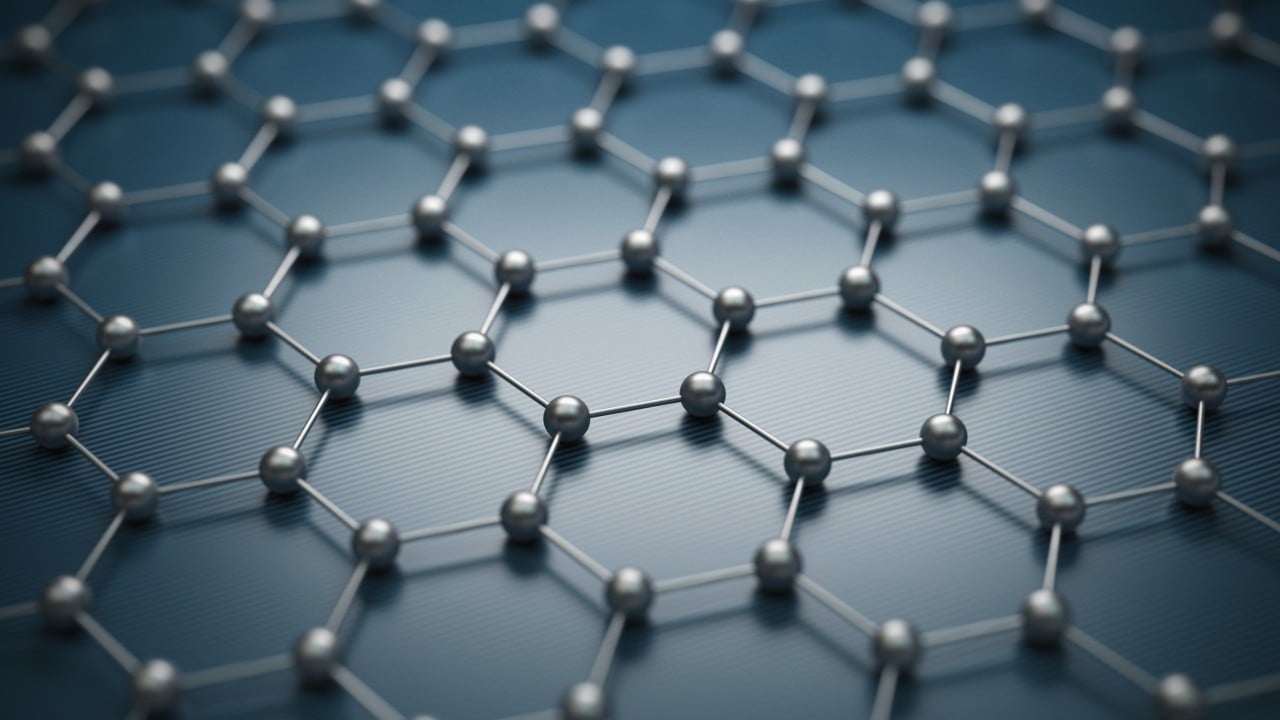
Every tech blog on the planet is currently hyperventilating over headlines about Chinese researchers supposedly cracking the code for mass-producing graphene-based quantum processors. The lazy consensus is predictable. Silicon is dead, two-dimensional carbon has won, and quantum supremacy is suddenly an assembly-line commodity.
It is a fairy tale for investors who do not know the difference between a bandgap and a kitchen counter. You might also find this connected article useful: Why AI Created Viruses Change Everything You Know About Biohacking.
I have spent the last decade watching venture capitalists and government grant committees throw billions at shiny material science breakthroughs that look incredible in a Nature paper and completely disintegrate the moment you try to scale them to a commercial wafer. Graphene is the perennial darling of this cycle. It is marketed as a miracle material—stronger than steel, more conductive than copper, and now, apparently, the magic bullet that will fix the notoriously fragile error-correction problem in quantum computing.
Let us look at what is actually happening beneath the hype. As discussed in latest coverage by CNET, the implications are widespread.
The Bandgap Fallacy That Everyone Ignores
The foundational flaw in the graphene quantum chip narrative is a stubborn piece of physics that journalists love to sweep under the rug: pristine graphene does not have a natural electronic bandgap.
In plain English, a bandgap is the switch that lets you turn an electrical current on and off. Without it, you cannot build transistors. You cannot control the flow of electrons. You just have a very expensive sheet of graphite that leaks current everywhere.
To make graphene work as a semiconductor, researchers have to introduce defects, cut it into narrow nanoribbons, or apply massive external electric fields. The moment you introduce those structural hacks to create a bandgap, you destroy the very electron mobility that made graphene attractive in the first place. It is an engineering catch-22. You either have a fast material you cannot control, or a controllable material that behaves like mediocre silicon.
Pretending this minor detail gets solved because of a new chemical vapor deposition method coming out of a lab in Shenzhen is intellectual laziness. Scaling a synthesis process does not rewrite quantum electrodynamics.
The Delusion of Defect-Free Scaling
Let us assume for a second that a research team found a way to grow pristine, wafer-scale graphene sheets without grain boundaries. Growing it is one thing. Transferring it onto a target substrate without ripping it, wrinkling it, or contaminating it with atmospheric residue is an entirely different nightmare.
I have seen cleanroom floors littered with ruined wafers because a single monolayer of carbon curled up like a potato chip during wet transfer.
Quantum processors are exponentially more sensitive to environmental noise than classical CMOS chips. Superconducting qubits require temperatures close to absolute zero and shielding that blocks out stray electromagnetic radiation. Introduce a polycrystalline graphene layer with random grain boundaries, and you are introducing a chaotic zoo of localized defect states. These defects act as traps for magnetic and electric flux.
Instead of a clean qubit coherence time, you get rapid decoherence. Your quantum state collapses before the gate operation even finishes executing. The very material properties touted as advantages—extreme sensitivity to the surface environment—make graphene a liability when you try to isolate delicate quantum states from thermal and electromagnetic noise.
What People Always Get Wrong About Carbon and Qubits
When laypeople ask about quantum hardware, they usually parrot the standard queries found across search engines. Let us address them directly, without the marketing gloss.
- Is graphene better than silicon for quantum computing? No. Silicon already has decades of multi-trillion-dollar manufacturing optimization behind it. Isotopic purification of silicon-28 allows for remarkably long spin-qubit coherence times. Graphene offers high Fermi velocity, sure, but it lacks a native oxide layer like silicon dioxide, which makes gate dielectric integration an unsolved purgatory.
- Can you mass-produce quantum chips using standard fab lines? Absolutely not. Quantum hardware is custom physics instrumentation masquerading as a semiconductor. Even superconducting circuits built on silicon substrates require bespoke lithography and etch recipes. Shifting the base material to carbon means throwing out every lithographic toolset in existence and starting from scratch.
- Does China actually hold a monopoly on advanced carbon manufacturing? They lead in bulk synthesis volume and certain precursor chemistries, but volume does not equal device-level yield. Producing cheap battery additives is a completely different universe from fabricating atomic-scale quantum gates.
The Real Bottleneck No One Wants to Fund
The obsession with novel materials is a coping mechanism for an industry that has hit a structural wall. Fixing quantum computing is not a materials discovery problem. It is an error-correction and interconnect routing crisis.
Right now, scaling a quantum processor from fifty physical qubits to a million logical qubits requires routing millions of coaxial lines and control signals into a cryogenic fridge. The thermal load melts your hardware long before you reach fault tolerance.
Shifting the substrate from silicon or aluminum to graphene does not reduce the wiring density problem. It does not invent surface codes for fault tolerance. It simply changes the flavor of the substrate while leaving the fundamental scaling brick wall completely untouched.
If you are allocating capital based on headlines about miraculous carbon chips, you are paying for PR, not physics.
Stop funding miracles. Start funding error correction.