The corporate machinery behind Washington’s upcoming summer spectacle is collapsing, prompting President Donald Trump to deploy his most reliable defensive maneuver: declaring a logistical disaster to be an absolute personal victory. Faced with a wave of high-profile artist boycotts from the state-sponsored "Freedom 250" concert series, Trump announced on Truth Social that he intends to replace the musical acts himself. He claimed he will draw larger crowds than Elvis Presley in his prime, framing his potential headlining speech as an upgrade over overpaid performers.
The reality, however, is a complex knot of partisan positioning and bureaucratic warfare. Musicians did not simply get "the yips," as the White House asserted. They walked away after discovering that an event marketed as a non-partisan celebration of the nation's semiquincentennial was actually a highly politicized operation managed by Freedom 250, a public-private entity established by executive order to bypass a traditional bipartisan congressional commission.
The Bureaucratic Schism Fracturing America's Birthday
The trouble began when the initial artist lineup for the Great American State Fair, scheduled to run on the National Mall from June 25 to July 10, was made public. Within forty-eight hours, five of the nine featured performers pulled out. Country mainstay Martina McBride, rock frontman Bret Michaels, R&B legends The Commodores, funk outfit Morris Day and The Time, and hip-hop artist Young MC all issued public withdrawals.
The common denominator in their exits was a feeling of administrative deception. The artists had been under the impression they were booked by America250, the official, bipartisan federal commission established by Congress to oversee the 250th anniversary of the United States.
Instead, they discovered the contract was with Freedom 250. This rival organization was designed specifically by the Trump administration to execute a parallel, explicitly nationalistic vision of the anniversary celebrations, independent of congressional oversight.
"Unfortunately, what was presented to us as a celebration of our country has evolved into something much more divisive than what I agreed to be a part of," Bret Michaels stated on social media, noting online threats and safety concerns regarding his touring crew.
Young MC was equally blunt, stating that performers had not been informed of any partisan strings attached to the booking. For prominent touring acts, the risk of alienating half their fan base by appearing at what amounts to a government-funded political rally outweighs any performance fee.
The Economics of the National Mall Boycott
The administration’s counter-offensive was swift and typical of Trump’s rhetorical style. He criticized the departing acts as "Third Rate" and "highly paid," while asserting that he does not want "so-called 'Artists' that get paid far too much money, who aren't happy."
This creates a convenient financial narrative, but the fiscal truth tells a different story. Freedom 250 is heavily capitalized by private donors aligned with the executive branch, meaning the budget was explicitly designed to secure mainstream talent to legitimize the Great American State Fair.
The artists who remain on the roster highlight the stark polarization of the event:
- Vanilla Ice, who defended the concert series by stating it is simply about celebrating the country and shouldn't be taken too seriously.
- Flo Rida, who has maintained his commitment to perform without issuing further political commentary.
- Fab Morvan (of Milli Vanilli fame), who stated his purpose was to entertain people rather than divide them.
By losing the cross-genre appeal of McBride and The Commodores, the festival lost its claim to broad cultural representation. The sudden deficit in programming left a massive hole in the schedule on the National Mall, leading directly to Trump's proposal to pivot the entire opening phase of the fair into an "AMERICA IS BACK Rally" on Wednesday, June 24.
Behind the Elvis Obsession and the Crowds Weapon
Trump’s comparison of his drawing power to Elvis Presley is not a novel rhetorical flourish; it is a recurring fixation that bridges his identity as a political figure and an entertainment brand. During a visit to Presley's Graceland estate in Memphis earlier this March, Trump frequently drew parallels between his crowd sizes and those of the King of Rock 'n' Roll, even wondering aloud if he could have bested Presley in a physical altercation.
The tactical function of the Elvis comparison serves to obscure a genuine political vulnerability. The current internal polling for the administration is under severe strain, weighed down by public anxiety over the military engagement in Iran and volatile domestic energy prices. With congressional midterms approaching, the Republican platform is facing headwinds.
Historically, when hit with dropping approval numbers, Trump returns to the arena environment. The National Mall project provides the ultimate backdrop. By substituting a diverse musical festival with a singular, giant political speech, the administration effectively converts a public infrastructure failure into a highly televised display of baseline loyalty.
Construction on the South Lawn and the Aesthetics of Coercion
The transformation of the 250th anniversary from a standard civic celebration into something uniquely aggressive is physically visible in Washington. Separate from the National Mall stage setups, a massive steel-and-iron arena is currently being constructed on the South Lawn of the White House.
This structure is slated to host a night of professional mixed martial arts cage fighting to mark the anniversary of American independence. It follows a smaller-scale birthday event on June 14, where Trump celebrated turning 80 by hosting bouts on executive grounds.
This aesthetic shift explains the rapid exit of mainstream corporate musicians. A traditional state fair format offers brands and performers an apolitical space to operate. A festival featuring cage fighting, unilateral executive branding, and an infrastructure built explicitly to bypass bipartisan committees makes corporate neutrality impossible.
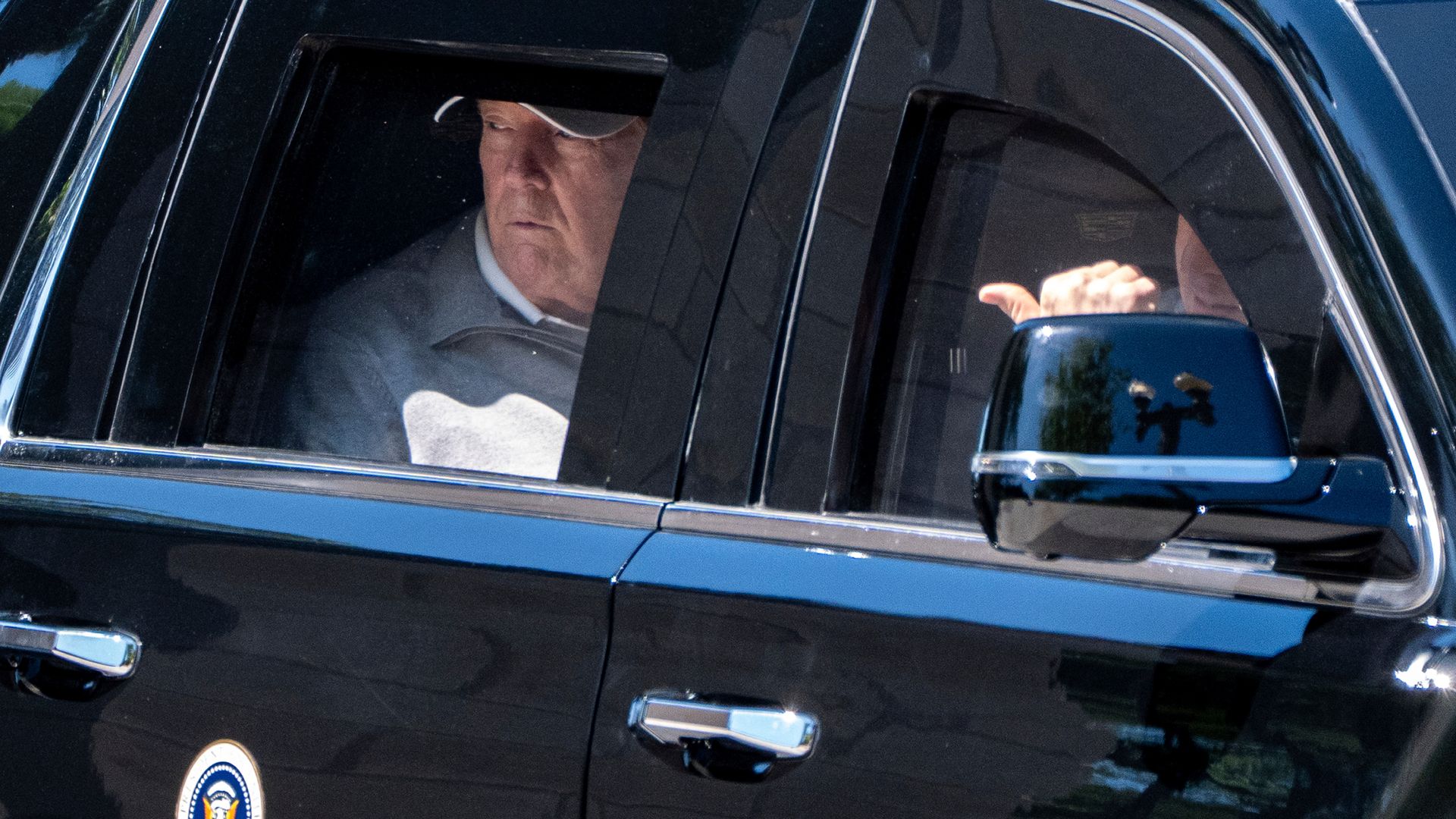
The White House political apparatus is now moving quickly to formalize the schedule change. Freedom 250 adviser Danielle Alvarez confirmed that the president will personally open the festivities on June 24. Aides have been ordered to evaluate the security logistics of a massive outdoor gathering on the Mall, a move that represents a significant departure from the tightly controlled, indoor or highly secure airport hangar environments the president has favored since surviving an assassination attempt during his 2024 campaign in Butler, Pennsylvania.
The Great American State Fair will continue through July 10, but its foundational premise has shifted irrevocably. It is no longer a shared national milestone; it is an active theater in the ongoing culture war, headlined by a leader who views an empty stage not as a logistical failure, but as a perfect cue for his entrance.