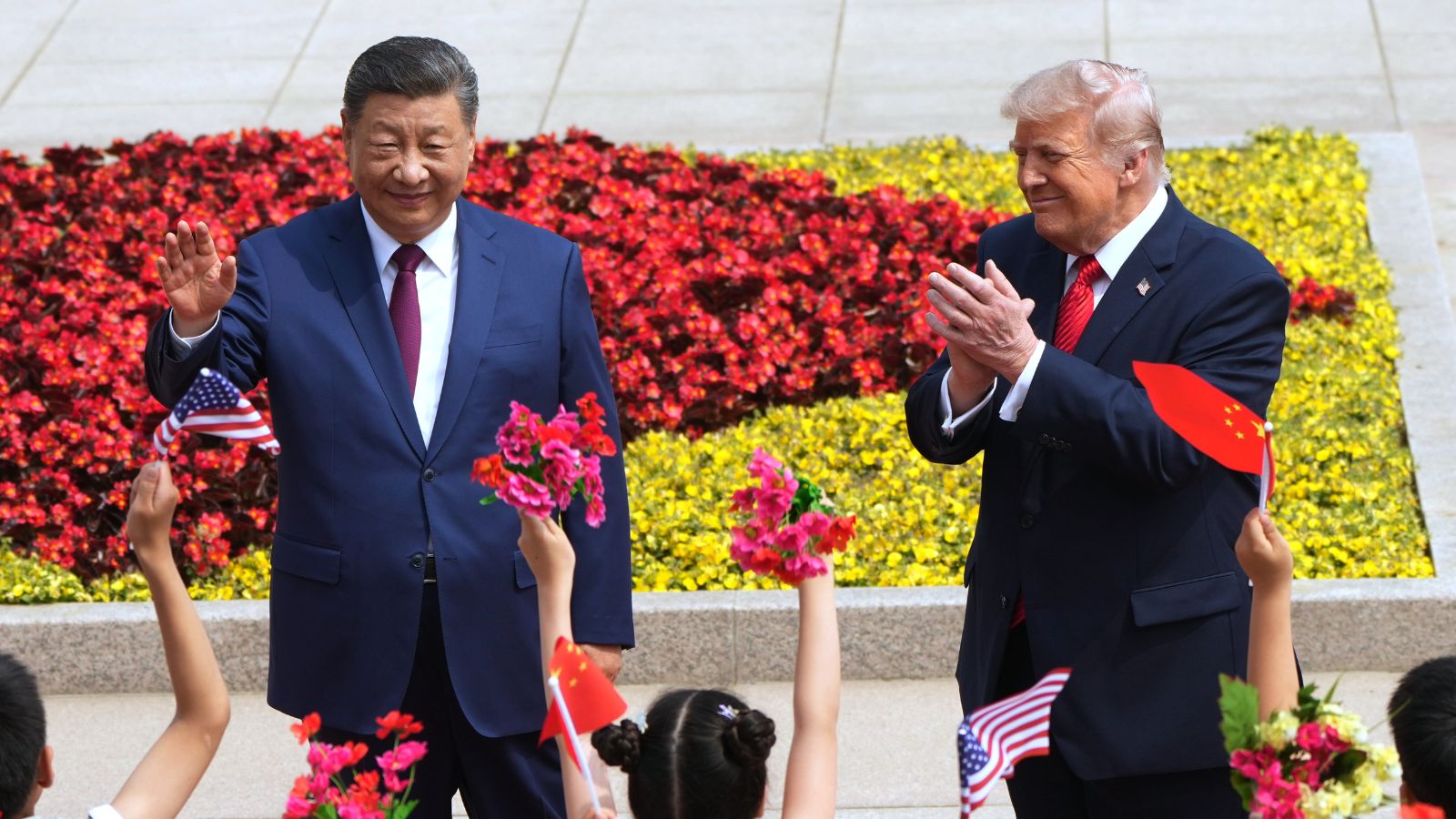
The Mirage of Personal Chemistry
Diplomacy is not a buddy movie. Yet, every time a US President sits down with Xi Jinping, the media falls over itself to document the "warmth," the "shared vision," and the "fantastic future." It is a tired script. We are told that personal rapport between leaders can override structural geopolitical friction. That is a lie.
The Beijing summit is being framed as a turning point. It isn't. It’s a performance. While the cameras capture smiles and talk of a "fantastic future," the underlying tectonic plates—semiconductor export bans, Taiwan’s sovereignty, and the dollar’s dominance—are grinding against each other with more friction than ever. I have spent years watching trade delegations burn through millions in "relationship building" only to see the actual policy dictated by cold, hard math and internal domestic pressures.
If you think a dinner in the Forbidden City changes the fundamental trajectory of the 21st century, you aren't paying attention to the balance sheets.
The Myth of the "Win-Win" Outcome
Pundits love to ask: "What does a successful summit look like?" They usually answer with vague metrics like "de-escalation" or "reopening lines of communication."
This is flawed logic. In the current global economy, we are no longer in a growth phase where a rising tide lifts all boats. We are in a zero-sum struggle for the command of specific technologies. You cannot have a "win-win" in a race for Artificial General Intelligence or the control of the South China Sea. One side gains an edge; the other side loses it.
The "fantastic future" Trump mentions is a projection of a 1990s-style globalization that died in 2018. China is no longer the "factory of the world" looking for a seat at the table; it is a peer competitor looking to build its own table. Pretending that a few rounds of golf or a high-profile banquet can reconcile these two competing visions is more than optimistic—it's dangerous. It creates a false sense of stability that prevents businesses from doing the actual work of de-risking their supply chains.
The Debt Trap of Optimism
Let’s look at the numbers the enthusiasts ignore. US-China trade is decoupling, even if the politicians refuse to use the word.
- Foreign Direct Investment (FDI): For the first time in decades, FDI into China turned negative in certain quarters recently. Investors are pulling capital out, not because of a lack of "rapport" between leaders, but because the regulatory environment is fundamentally incompatible with Western capital markets.
- Manufacturing Shifts: Mexico has overtaken China as the top exporter to the US. This isn't a temporary dip. It is a structural realignment.
When a President says we are going to have a "fantastic future" with China, he is talking to the stock market, not the history books. He is trying to prevent a Monday morning sell-off. The real policy happens in the quiet rooms where export controls are drafted, and those rooms don't care about "fantastic futures."
The Tactical Error of "Stability"
The most common question from the public is: "Why can't we just get along for the sake of the global economy?"
The premise is wrong. "Getting along" usually means ignoring intellectual property theft or looking the other way while a competitor subsidizes their industries into a monopoly. Stability is often just another word for stagnation.
The contrarian truth is that friction is necessary. Tension is what forces domestic industries to innovate. If the US wasn't terrified of losing the battery race to China, we wouldn't see a fraction of the current investment in domestic energy tech. Conflict, when managed correctly, is a catalyst. Peace, when forced through platitudes, is a sedative.
Why the Market Misreads the Room
Wall Street loves these summits because they provide a 48-hour dopamine hit. The headlines look great on a Bloomberg terminal. But if you are an executive basing your five-year plan on the "vibes" of a Beijing summit, you are failing your shareholders.
I have seen companies delay moving their production lines out of high-risk zones because they "felt good" about the latest diplomatic breakthrough. Six months later, a new round of tariffs hits, and those same companies are scrambling. They fell for the theater.
The Chinese leadership plays the long game. They understand that Western leaders are on a four-year or eight-year clock. Xi is on a legacy clock. He can afford to smile and nod through a "fantastic" dinner because he knows the fundamental goals of the Chinese Communist Party—self-sufficiency and regional hegemony—do not change regardless of who is in the White House.
Stop Asking if the Summit "Worked"
The question isn't whether the summit was a success. The question is: "Who used the summit to buy more time?"
Diplomacy in this era is a stalling tactic. The US is trying to buy time to rebuild its industrial base. China is trying to buy time to insulate its economy from sanctions. Both sides are using the "fantastic future" rhetoric to mask the fact that they are both preparing for a much colder reality.
The real winners of this summit aren't the people in the room. They are the secondary players—India, Vietnam, and Poland—who are quietly absorbing the manufacturing capacity that is fleeing the US-China crossfire while the two giants are busy posing for photos.
The Brutal Reality of the New Era
If you want to understand what is actually happening, ignore the joint statements. Ignore the "historic" nature of the meeting. Look at the budget allocations for defense and technology subsidies.
In 2024 and 2025, those numbers went up, not down. The rhetoric is soft, but the hardware is hard. We are witnessing the most expensive divorce in human history, and the lawyers are just telling everyone they’re "still friends" so the kids don't cry.
The "fantastic future" isn't a shared one. It’s a fractured one. And the sooner you stop looking for harmony, the sooner you can start preparing for the reality of a world split in two.
Don't buy the tickets to the show. Watch the exits.