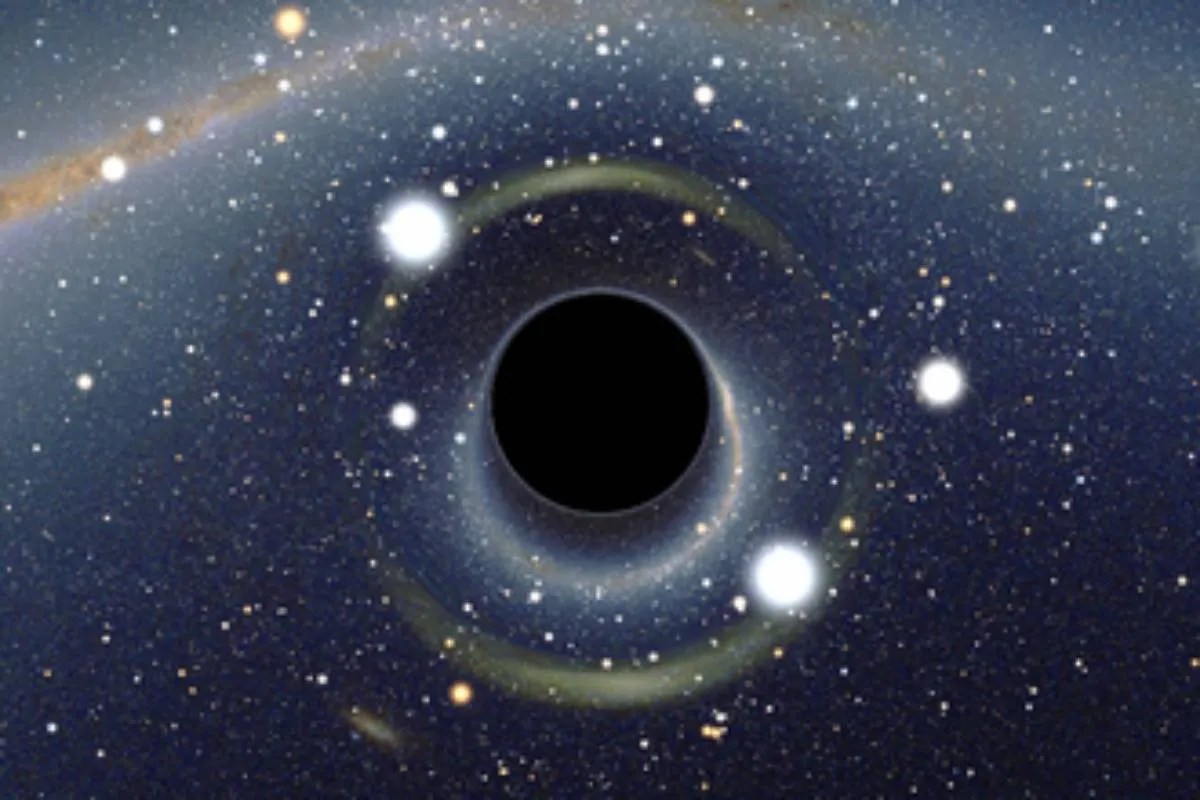
We were taught to fear the throat of the universe. For decades, the black hole sat in our collective imagination as the ultimate graveyard—a one-way street into nothingness where light goes to die and time itself unravels. It was the cosmic villain, the silent thief. But our maps were wrong.
Imagine a lighthouse. Now imagine that lighthouse doesn't just sweep its beam across the dark water to guide ships; imagine it is actually exhaling the very ocean it sits upon. This is the reality emerging from the coldest, most silent corners of space. Black holes aren't just cosmic vacuum cleaners. They are engines. They are pulses. They are, in a sense, alive with a terrifying, rhythmic metabolism.
The Heartbeat in the Void
Deep in the center of a distant galaxy, a monster is waking up. Astronomers have spent years staring into the abyss of Sagittarius A* and its more distant, more violent cousins. What they found wasn't the static silence of a tomb. Instead, they caught the universe in the middle of a massive, violent "burp."
When we talk about black holes "throwing up," we aren't being poetic. We are describing a physical rejection of matter so powerful it reshapes the destiny of entire star systems. As gas and dust spiral toward the event horizon—that invisible line of no return—they don't always fall in. Some of that matter gets caught in a magnetic chaotic swirl, heated to billions of degrees, and then screamed back out into space at nearly the speed of light.
These are the relativistic jets. They are columns of fire and radiation that stretch for thousands of light-years, piercing through galaxies like a needle through silk.
Consider the scale. If the black hole is the size of a grape, these jets would be the size of the Earth. This isn't a leak. It’s a flood.
The Galactic Gardener
Why does this matter to us, sitting on a small, blue rock tucked away in a quiet spiral arm?
Because without this cosmic rejection, we might not exist.
A galaxy is a delicate balance of heat and cold. To make stars, you need cold gas to collapse under its own weight. If a galaxy gets too crowded, star formation goes wild. It burns through its fuel too fast, becoming a short-lived firework that leaves nothing but a hollow shell behind.
The black hole acts as the gardener. By "spitting out" matter and energy, it heats up the surrounding gas, preventing it from cooling down and forming too many stars at once. It regulates the growth of its home. It is a thermostat set to the scale of billions of years.
If the black hole only swallowed, the galaxy would eventually choke on its own density. By vomiting, it ensures the survival of the suburbs—the quiet places where stars like our Sun have the time and stability to host life. We are the beneficiaries of a celestial temper tantrum.
Mapping the Inexplicable
The data coming from our latest observatories tells a story of incredible violence and strange grace. We’ve seen black holes that seem to "flicker." They eat for a few million years, then they shut down. Then, they erupt.
This isn't just a random event. It is a cycle.
Scientists used to think the material being ejected was "new" gas that never quite made it past the event horizon. But recent studies suggest something even more mind-bending. Through a process governed by the laws of thermodynamics and general relativity, the black hole might be leaking information itself.
Stephen Hawking famously proposed that black holes aren't perfectly black; they glow with a faint heat. But what we are seeing now is the macro version of that micro truth. The universe has a "no-deletion" policy. Information cannot be destroyed. If a black hole takes something in, it must, eventually, pay the debt back to the universe.
The Human Ghost in the Machine
It is easy to get lost in the math of $E=mc^2$ or the fluid dynamics of accretion disks. But there is a human weight to this discovery that feels like a shift in our very soul.
For centuries, we viewed the universe as a machine that was slowly winding down. We saw the black hole as the end of the line—the final period at the end of the cosmic sentence. We projected our fear of death onto these dark spheres.
But if the black hole breathes, the metaphor changes.
If the most destructive force in existence is also the very thing that keeps galaxies fertile, then our understanding of "endings" is fundamentally flawed. We are looking at a system of total recycling. Nothing is ever truly lost; it is merely transformed, accelerated, and cast back out to begin again.
The Invisible Stakes
There is a tension in the scientific community right now. It’s the tension of realizing we’ve been looking at the picture upside down.
When a black hole ejects a jet of plasma, it isn't just moving "stuff." It is moving the heavy elements—the carbon, the oxygen, the iron—forged in the hearts of dying stars. It is spreading the seeds of future worlds across the void.
Without the "burp" of a black hole, the heavy elements needed for your blood and your bones might stay trapped in the gravitational well of a dead neighborhood. Instead, they are flung into the intergalactic medium, traveling for eons until they settle into a cloud of dust that will one day become a child’s fingernail.
We are made of star-stuff, yes. But we are also made of the leftovers that a black hole found too difficult to swallow.
The Rhythm of the Abyss
We often think of progress as a straight line. We build, we grow, we consume. But the black hole teaches a different lesson: the lesson of the exhale.
Every action has a reaction that ripples across the vacuum. Every intake of power requires a release of energy. The universe is not a collection of objects; it is a collection of processes.
As we point our telescopes deeper into the dark, we aren't just looking for facts. We are looking for our own reflection in the grandest mirror imaginable. We are seeing that even in the absolute dark, there is movement. Even in the place where hope is supposed to die, there is a fountain.
The abyss is not staring back at us with hunger. It is breathing. It is rhythmic. It is a pulse that beats in time with the very atoms in our chests, a reminder that in the grand design of the cosmos, there is no such thing as a final exit.
The darkness doesn't just take. It gives back, screaming light into the empty spaces until the void itself begins to glow.