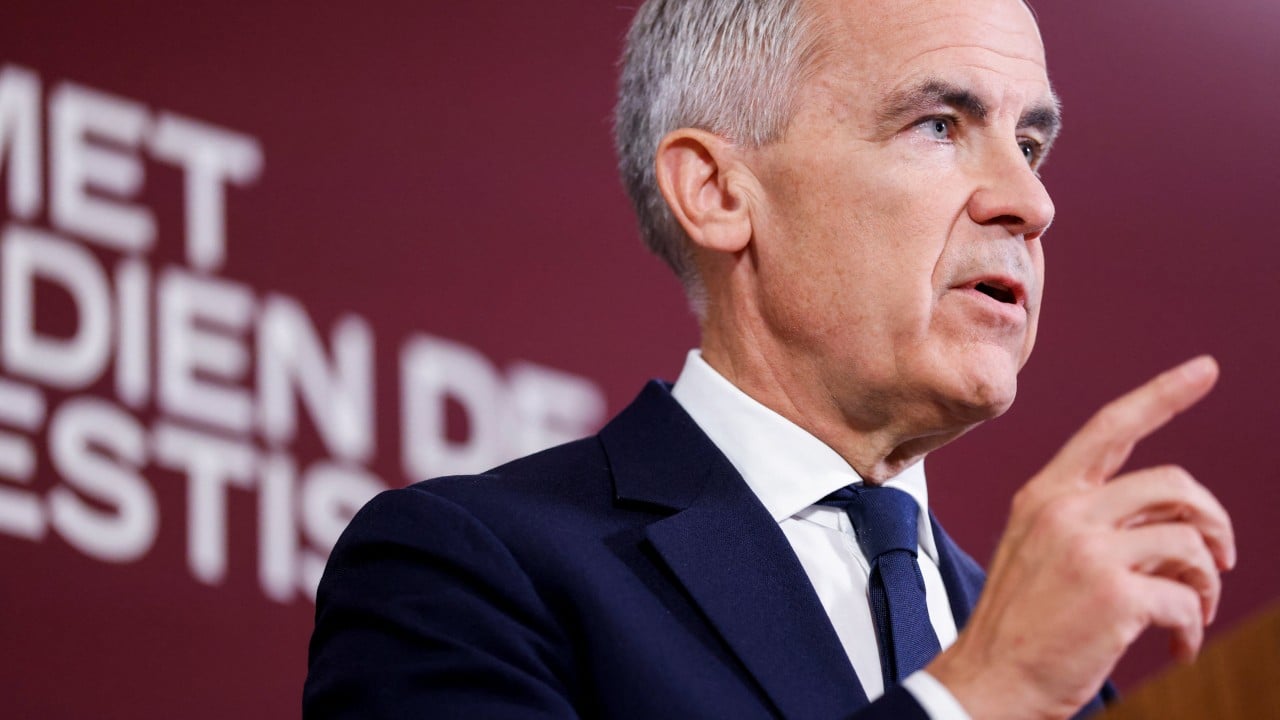
Prime Minister Mark Carney's dual-track economic strategy—courting sovereign wealth funds and international institutional capital in financial hubs while negotiating high-stakes trade terms with Washington—represents the most aggressive reorientation of Canadian foreign economic policy in a generation. Facing severe trade friction and heavy protectionist pressures from the United States, Ottawa is attempting a high-wire act. It is simultaneously pitching international investors on Canada's intrinsic stability and mineral wealth while acknowledging that severing the American economic umbilical cord is neither feasible nor desirable. This grand balancing act defines the current Canadian political economy, forcing corporate boardrooms and government ministries to rethink every assumption about cross-border commerce built over the past thirty years.
The North American Reckoning
Geography has never been an easy neighbor for Canada. For decades, the national economic model rested on a simple, comforting assumption: integrated supply chains with the United States provided a permanent floor for prosperity. When protectionist currents began sweeping through Washington, that floor started to fracture. Tariffs, renegotiated pacts, and an explicit American desire to pull manufacturing back across the southern border disrupted traditional assumptions. Building on this theme, you can also read: Why Canadian Workers Are Taking the Hit in the Trade War.
Carney stepped into this storm with a clear diagnosis. Relying on a single dominant market is no longer a sustainable baseline for a sovereign nation. Yet, acknowledging that vulnerability does not mean curing it overnight. The structural reality of continental integration remains absolute. Three-quarters of Canadian exports still cross the southern border. Energy grids, automotive assembly lines, and aerospace components are threaded together across thousands of miles of undefended border. Unraveling those ties would cause immediate industrial shockwaves that no domestic economy could absorb without catastrophic pain.
Consequently, the government finds itself executing a paradox. It must convince international markets that Canada is open for business independent of American approval, while simultaneously maintaining intensive, high-level channels with the White House to preserve access to the world's largest consumer market. Every speech delivered abroad carries a double meaning. To European and Asian capital allocators, the message is diversification and autonomy. To Washington, the message is that Canada remains a reliable, indispensable partner that cannot be easily replaced or bypassed. Analysts at Bloomberg have provided expertise on this trend.
Capital Without Borders
The attempt to attract global capital took center stage during major investment summits hosted in Toronto, where representatives from massive international funds gathered to evaluate Canadian opportunities. The strategy relies on pitching assets that the United States cannot easily replicate within its own borders. Critical minerals, green energy infrastructure, advanced technology sectors, and vast natural resource reserves form the core of this pitch.
International investors who attended these summits were confronted with a specific proposition. While the American market offers immense scale, it also carries rising regulatory unpredictability and domestic political volatility. Canada is positioning itself as a stable alternative within the Western alliance—a jurisdiction governed by rule of law, institutional predictability, and a deep commitment to environmental standards that still welcomes foreign direct investment.
However, attracting foreign capital requires more than persuasive speeches from a former central banker. Institutional investors operate on cold calculations of return, risk, and execution speed. When Carney tells global financiers that Canada offers a unique combination of stability and growth, he faces skeptical boardrooms that remember past regulatory bottlenecks, interprovincial trade barriers, and protracted project approval timelines. Turning promises of capital influx into concrete ground-breaking projects requires cutting through domestic red tape that has historically choked major infrastructure developments.
Furthermore, foreign investment brings its own political complications. Opening doors to international sovereign wealth funds means navigating national security reviews, foreign ownership limits, and public anxiety over domestic assets falling under foreign control. The government must constantly walk a fine line between needing external capital to fund the green transition and protecting national economic sovereignty from external overreach.
The Washington Reality Check
Even as delegations travel to Europe and Asia to forge new economic alliances, the shadow of Washington looms over every policy decision in Ottawa. Recent diplomatic exchanges have underscored the persistent friction in bilateral trade talks. Despite progress on certain fronts, major structural hurdles remain unresolved, particularly regarding the automotive sector and regional supply chain protections.
The American automotive market relies heavily on Canadian manufacturing integration, but shifts toward domestic production incentives have created acute anxieties among Canadian auto workers. When Carney reports progress following phone calls with American leadership, the domestic audience hears a mixture of reassurance and warning. The negotiation is not about achieving a sweeping new partnership that replaces the old one; it is about carving out carve-outs and exemptions that keep Canadian factories competitive under increasingly hostile tariff regimes.
This dynamic illustrates the limits of middle-power diplomacy. No amount of charm offensive in foreign capitals can eliminate the fundamental asymmetry of the relationship. When the United States sneezes, the Canadian economy catches pneumonia. Carney understands this better than most, having spent his career navigating global financial shocks. His insistence that Washington remains central to Canada's economic future is not an admission of defeat; it is a pragmatic recognition of economic gravity. The ongoing trade talks are less about winning a definitive victory and more about managing a permanent state of managed friction.
Diversification Beyond the Border
To mitigate the risks of this asymmetrical dependency, Ottawa has accelerated its pivot toward alternative international partners. Trips to European capitals, participation in Asia-Pacific summits, and the conclusion of targeted free-trade agreements reflect a deliberate effort to spread risk across multiple continents.
Europe represents a natural ideological and strategic ally for Canada in an era of rising geopolitical fragmentation. Addressing European parliamentary bodies and engaging with European Union leadership allows Canada to position itself as a trusted bridge between North America and the continent. The mutual desire to secure supply chains for critical goods creates genuine alignment. Yet, transatlantic trade faces heavy logistical costs and established European trade preferences that limit how fast volume can grow.
Simultaneously, outreach to Asian economies represents a high-stakes bet on the future center of global growth. By pursuing trade pacts and deepening diplomatic ties in Southeast Asia and East Asia, Canada aims to double its exports to non-U.S. markets over the coming decade. Yet, doing business in Asia requires competing against entrenched regional supply chains and navigating complex geopolitical rivalries, particularly involving China.
Carney's approach to Beijing highlights these complexities. While acknowledging that economic engagement with China carries risks, Ottawa has attempted to carve out commercial pathways that do not compromise national security or provoke American ire. Walking this diplomatic tightrope requires extraordinary discipline. One misstep can alienate the vital U.S. partner or close off lucrative Asian markets just as they are opening up.
Industrial Realities on the Ground
Macroeconomic strategy ultimately plays out in local communities, where workers and municipal leaders deal with the immediate fallout of trade disputes and corporate restructuring. The friction between federal ambition and local reality was laid bare in disputes over manufacturing commitments, such as assembly plant transformations and electric vehicle supply chain investments.
When federal funds are deployed to attract major industrial players, the public expects accountability. If corporations fail to meet their local obligations regarding employment and production timelines, political backlash is swift and severe. Carney's administration has faced tough questions regarding how government enforces agreements with multinational manufacturers that take public subsidies but pivot their strategies when market conditions shift.
These domestic pressures complicate the national branding exercise. It is difficult to sell Canada to global investors as a seamless destination for capital when domestic labor unions and regional premiers are locked in disputes over industrial policy and job security. The federal government must manage these internal fractures while projecting an image of unity and purpose abroad.
The Hard Arithmetic of Power
Mark Carney's grand strategy is an exercise in managed adaptation. It accepts that the old North American consensus is dead, replaced by an era of economic nationalism and transactional diplomacy. By aggressively marketing Canada's assets to the world while maintaining a firm grip on the indispensable American relationship, Ottawa is trying to engineer a safer, more resilient economic foundation.
Yet, strategy is not outcome. The success of this pivot depends on variables far beyond Canadian control: the trajectory of American protectionism, the willingness of global capital to absorb domestic regulatory risk, and the capacity of Canadian industry to innovate and compete without relying on geographic proximity as a crutch.
The ambition is clear. The execution remains a test of national resilience. Canada is attempting to rewrite its economic destiny while standing firmly on the fault lines of global power, and the tremors are only just beginning to be felt across the country.


