The Sound of Nothing
A loud bang occurs near an airplane during a holiday weekend. The internet immediately melts down.
Mainstream media outlets rush to churn out copy about terrified passengers, holiday fireworks hazards, and the presumed peril of flight. It happens every July. A commercial jet encounters a routine, completely managed operational anomaly, and the public is treated to a masterclass in aeronautical illiteracy.
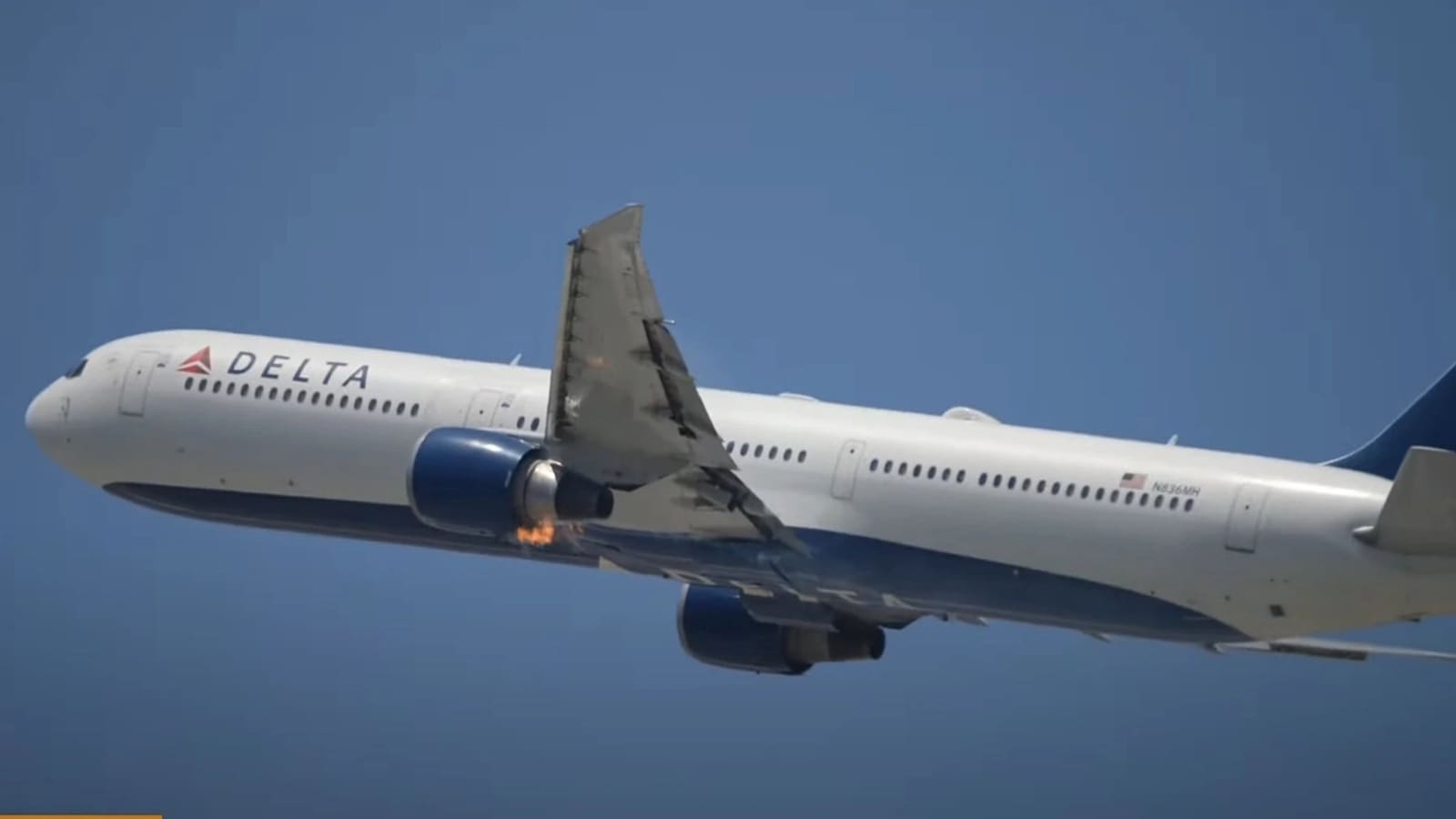
The recent coverage of a Delta flight experiencing a loud sound while landing in Chicago is the perfect case study in lazy journalism. The narrative practically writes itself for the click-hungry editor: airplanes flying through a war zone of backyard pyrotechnics.
It makes for great drama. It also happens to be mechanically and statistically absurd.
The lazy consensus wants you to believe that commercial aviation is a fragile system constantly on the brink of disaster, vulnerable to the whims of suburban revelers lighting off bottle rockets. The reality? Modern commercial aircraft are flying fortresses engineered to withstand forces that would obliterate ordinary machinery.
We need to stop treating every standard mechanical hiccup as a near-death experience. The obsession with manufacturing panic around routine flight events does not make anyone safer. In fact, it does the exact opposite.
Dismantling the Bottle Rocket Myth
Let us address the elephant in the airspace: the absolute impossibility of consumer fireworks bringing down a commercial airliner at landing altitude.
Every year, the same public anxiety surfaces. People ask, "Can fireworks hit a landing airplane?" Technically? In highly illegal, extreme edge cases involving professional-grade display shells fired directly into an active approach path under a few hundred feet, a piece of debris might strike a fuselage. But the premise of the question implies that such an event would cause catastrophic failure.
It will not.
To understand why, you have to understand the sheer engineering scale of a commercial jet engine. Take the high-bypass turbofans powering the modern domestic fleet. During certification, these powerplants are subjected to tests that look like medieval torture. Engineers literally fire dead birds, industrial ice chunks, and thousands of gallons of water directly into the intake at full throttle. The engine must demonstrate that it can either swallow the debris and keep producing thrust, or safely contain the failure internally without shedding dangerous shrapnel.
A cardboard tube filled with black powder and flash powder generating a brief flash of light does not possess the kinetic energy or the thermal mass to compromise a modern turbofan.
Imagine a scenario where an aircraft encounters a mortar shell at 1,000 feet. The shell weighs a few ounces. The aircraft weighs roughly 150,000 pounds and is traveling at 150 miles per hour. The physics are profoundly lopsided. The air density and aerodynamic pressure wave pushing off the nose of a descending jet alone are enough to deflect lightweight, unguided projectiles.
When a pilot reports a "bang" during landing, an experienced investigator does not look at the local fireworks display. They look at the pressure ratio bleeds, the compressor stages, and the environmental control systems.
The Compressor Stall: Aviation’s Most Misunderstood Event
What the public calls a "frightening mid-air explosion," aviation professionals usually call a compressor stall.
I have spent years analyzing flight data and working alongside maintenance crews who have to fix these systems after a flight crew writes them up. The disconnect between what happens in the cockpit and what gets reported in the news is staggering.
To understand a compressor stall, think of a jet engine as a highly disciplined aerodynamic machine. Air enters the front, gets compressed by dozens of rapidly spinning blades, mixes with fuel, ignites, and shoots out the back.
[Air Intake] -> [Compressor Blades] -> [Combustion Chamber] -> [Exhaust]
                      ^
             (Disrupted Airflow = Stall)
For this to work smoothly, the airflow through the compressor blades must remain steady. If that airflow is disrupted—due to a sudden change in wind direction, a bird ingestion, or a minor mechanical misalignment in the variable stator vanes—the aerodynamic lift on the compressor blades breaks down.
When lift breaks down, the high-pressure air inside the combustion chamber suddenly rushes backward out the front of the engine to escape.
The result? A massive, incredibly loud bang. Sometimes accompanied by a spectacular fireball shooting out of the engine intake or exhaust.
- It sounds exactly like a bomb going off.
- It looks like a catastrophic explosion to a passenger looking out the window.
- It is, in reality, a temporary aerodynamic burp.
The moment the pressure equalizes, the engine usually recovers and continues running normally. Even if it does not recover, modern twin-engine aircraft are explicitly designed, tested, and certified to fly, climb, and land safely on a single engine. Pilots train for engine failures during the most critical phases of flight until their responses are purely muscle memory. A single-engine landing is so routine in simulator training that it is considered basic proficiency, not heroism.
The Real Cost of Flight Anxiety Industrial Complex
The media’s insistence on turning every loud noise into a viral crisis has real, measurable consequences. It creates a toxic feedback loop that actively degrades the efficiency of our transportation network.
When a sensationalized article implies that fireworks are actively threatening commercial flights, it triggers a cascade of bureaucratic overreaction.
- Unjustified Flight Delays: Air traffic control centers are forced to implement overly cautious routing changes based on public noise complaints or unverified pilot reports, burning millions of gallons of fuel.
- Resource Misallocation: Federal oversight bodies are pressured to investigate non-events, diverting highly trained investigators away from systemic, invisible safety risks toward highly visible, irrelevant ones.
- Passenger Panic In Flight: A passenger who has read three sensationalized articles about "mid-air bangs" is far more likely to panic, attempt to open an exit door, or interfere with flight attendants during a minor, non-hazardous event like a bumpy landing or a sudden throttle reduction.
The hyper-focus on spectacular, noisy anomalies ignores the quiet, mundane risks that actually matter in aviation safety: crew fatigue, software integration flaws, supply chain quality control, and maintenance scheduling pressures. Those topics do not get clicks because they cannot be paired with a picture of July 4th fireworks over a city skyline.
Trusting the System Over the Spectacle
Aviation safety is not achieved by hoping nothing goes wrong. It is achieved by designing systems that assume everything will go wrong.
The system works because it is redundant, cynical, and utterly indifferent to emotion. When an airplane makes a noise, the pilots check their instruments, cross-reference their checklists, communicate with the tower, and bring the plane down on the concrete exactly as they were trained to do. They do not panic, because they know the math is on their side.
Stop falling for the holiday travel scare pieces. The next time you read about a sudden loud noise during a flight, remind yourself that the aircraft did exactly what the engineers built it to do: it absorbed the anomaly, maintained its structural integrity, and kept moving forward.
Turn off the breaking news alert. Trust the physics. The airplane is fine.