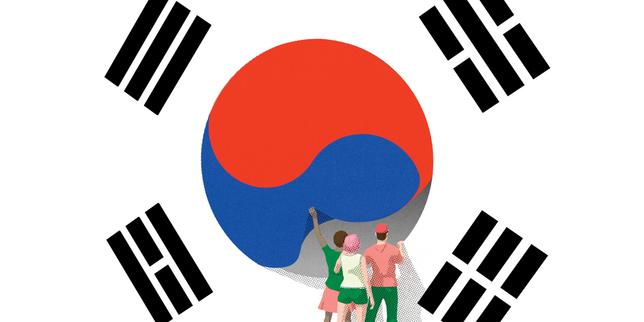
French universities are quietly presiding over a massive migration pattern, and nobody is willing to call it what it is: a collective exercise in cultural cognitive dissonance.
Every year, thousands of French students pack their bags for Seoul, fueled by a heavily romanticized diet of K-pop, Netflix dramas, and a vague desire to experience "the exotic other." The mainstream media frames this as a beautiful, harmonious exchange—a generation of open-minded Westerners embracing South Korea's sudden cultural dominance.
It is a comforting narrative. It is also entirely wrong.
The current influx of French students into South Korean universities is not an awakening; it is a marketing triumph. By treating a hyper-competitive, deeply conservative society as a playground for self-discovery, international students are setting themselves up for a brutal reality check. They are chasing a version of Korea that only exists on a screen.
Dismantling the Myth of the Cool Exchange
The mainstream consensus loves to use words like "cool" and "cosmopolitan" to describe Seoul’s appeal. But look closer at the actual mechanics of these study abroad programs.
Most French students arrive with basic conversational Korean at best. They are funneled into English-taught tracks at institutions like Yonsei, Korea University, or SNU (the prestigious SKY trio). Here is the first structural flaw: these international tracks operate as gilded academic ghettos.
During my years advising on educational mobility and tracking student integration data across East Asia, I have watched this exact pattern repeat. Students expect to blend into local youth culture. Instead, they find themselves trapped in an expat bubble, isolated from the very reality they paid thousands of Euros to experience.
Korean university culture is brutal. It is defined by the sunbae-hoebae (senior-junior) hierarchy and a relentless drive for academic perfection that starts in kindergarten. Local students are not hanging out at cafes dreaming about cultural exchange; they are networking, studying for corporate entry exams, and dealing with intense societal pressure. The idea that local youth have the time or inclination to act as tour guides for romanticizing Westerners is a fantasy.
The Data Behind the Korean Burnout
Let’s look at the numbers the glossy university brochures conveniently omit. South Korea consistently ranks near the top of the OECD for suicide rates and has some of the highest levels of workplace and academic stress globally.
When French students step outside the tourist districts of Hongdae and Itaewon, they run head-first into a society governed by rigid conformism, strict corporate hierarchies, and deep-seated lookism.
Imagine a scenario where a student from Paris, raised on a diet of individual rights, systemic debate, and a healthy work-life balance, enters a society where challenging a professor or a boss is considered social suicide. The psychological whiplash is real.
Expectation vs. Systemic Reality
| The K-Drama Expectation | The Structural Reality |
|---|---|
| Open, vibrant nightlife and effortless integration with locals. | Strict social circles; foreigners are often kept at a permanent arm's length (Weegookin syndrome). |
| A progressive, tech-forward utopia of absolute freedom. | A deeply patriarchal social structure with rigid gender roles and heavy surveillance. |
| Academic flexibility with a unique cultural twist. | Rote memorization, strict attendance tracking, and immense pressure to conform. |
The "coolness" of South Korea is an export product, curated meticulously by the Ministry of Culture, Sports, and Tourism. It is called Hallyu (the Korean Wave), and it was designed specifically to boost the country’s soft power and economy after the 1997 Asian financial crisis. It was never meant to be a reflection of daily domestic life. When you move to Seoul based on Hallyu, you are moving into a commercial.
Dismantling the Flawed Premise of Student Integration
People frequently ask: "Doesn't studying in Seoul give students an edge in the global job market?"
Let's address this with brutal honesty. Unless your goal is a highly specific niche in K-beauty supply chain management or luxury brand localization for French firms in Asia, a semester or two in Seoul adds very little institutional value to a French resume.
French companies operating in Asia do not hire French graduates who spent a semester partying in Sinchon and taking basic culture classes. They hire locals who understand the complex corporate etiquette, or they relocate senior Western executives with decades of operational experience.
Furthermore, South Korea’s job market for foreigners is notoriously difficult. Visa restrictions are tight, and the corporate culture—defined by mandatory after-work drinking sessions (hoesik) and uncompensated overtime—is a system most European graduates actively reject after six months of exposure.
Stop Treating East Asia as an Aesthetic
The real issue here is the commodification of travel. French students are swapping actual cultural fluency for an aesthetic. They want the photos in front of Gyeongbokgung Palace wearing a rented Hanbok, the Instagram reels of convenience store food combinations, and the status of living in a trendsetting city.
But true engagement with a foreign culture requires discomfort. It requires acknowledging the dark side of the miracle on the Han River. It means understanding the housing crisis, the extreme wealth disparity hidden behind the neon lights of Gangnam, and the crushing loneliness that many young Koreans themselves report feeling.
If you are planning to head to Seoul just to validate your media consumption habits, save your tuition money.
Go if you want to study the mechanics of a hyper-efficient economy. Go if you want to witness how a nation rebuilt itself from the ashes of war in less than half a century. Go if you are prepared to be an outsider, to be judged by conservative standards, and to navigate a society that operates on absolute collectivism rather than individual expression.
But if you are going because you think Seoul is "cool," you are merely paying to be a background extra in someone else's marketing campaign. The illusion will shatter the moment you step off the plane at Incheon, and by then, the tuition check will have already cleared.