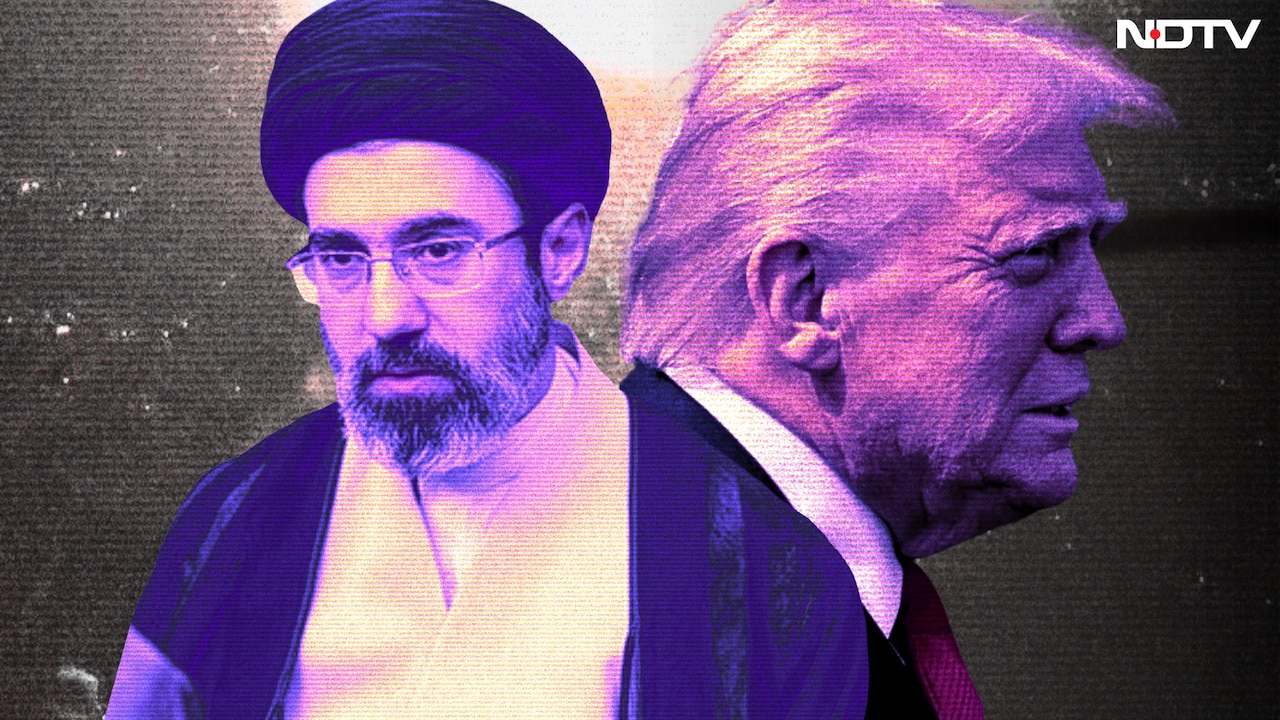
The mainstream media is falling for the oldest trick in the diplomatic playbook.
When Donald Trump announced that Ayatollah Ali Khamenei privately greenlit a comprehensive peace framework, the foreign policy establishment rushed to point out Tehran’s immediate, public pushback. Iranian foreign ministry officials quickly took to the microphones, insisting the "text is not final" and dismissing Washington's claims as premature electioneering or unilateral chest-thumping.
The talking heads looked at this friction and concluded that negotiations are on thin ice. They are completely wrong.
In international relations, public denial is almost always the final prerequisite for private capitulation. The lazy consensus assumes that a deal is only happening if both sides are smiling and shaking hands in front of a press wall. In reality, when an authoritarian regime start screaming about "unfinished texts," it means the structural foundation of the agreement has already been poured. They aren't walking away from the table; they are managing the domestic fallout of their own surrender.
The Mirage of the "Unfinished Text"
Let us dismantle the Western media's fundamental misunderstanding of Iranian political theater. For decades, the Islamic Republic has operated on a dual-track communication strategy. The external track negotiates with survival in mind; the internal track projects defiance to maintain ideological legitimacy among the hardline Islamic Revolutionary Guard Corps (IRGC) factions.
When Tehran claims the text is not final, they are technically telling the truth, but spiritually lying.
Of course the granular legal text isn't final. Diplomatic codicils, verification schedules, and sanctions-lifting sequencing take months to draft. But the grand bargain—the broad parameters of what Iran will give up and what Washington will concede—has clearly been established.
If Trump claims Khamenei signed off, he is operating on explicit assurances delivered through backchannels, likely mediated by Oman or Switzerland. If the Supreme Leader had genuinely rejected the framework, the Iranian response would not be a bureaucratic quibble over "final text." It would be a missile test, a drone strike in the shipping lanes, or an immediate acceleration of uranium enrichment to 90 percent.
A bureaucratic murmur is a sign of compliance, not defiance.
Sanctions Fatigue and the Art of the Face-Saving No
To understand why Iran is playing along while pretending to fight, look at the macroeconomic data. This isn't a matter of ideology; it is a matter of basic math.
The Iranian rial has plummeted to historic lows against the US dollar. Inflation is structurally entrenched above 40 percent. The regime's traditional proxies in the region have been systematically degraded over the past two years. The internal dissent, sparked by economic misery and social repression, is a constant, simmering threat to the clerical establishment's survival.
Khamenei is a survivalist above all else. He remembers the economic strangulation of the maximum pressure campaign. The regime knows it cannot survive another four years of absolute economic isolation without risking a systemic collapse from within.
Therefore, a deal is necessary. But how does a regime built on the foundational myth of "Death to America" sell a compromise to its most fanatical supporters?
You do it by dragging out the process. You do it by leaking complaints about American arrogance. You do it by maintaining that you are fighting for every single comma in the text. The public posturing is a calculated performance designed to convince the IRGC rank-and-file that the leadership did not bend the knee, but rather negotiated a heroic compromise.
The Flawed Premise of Diplomatic Symmetry
Western analysts consistently make the mistake of treating Washington and Tehran as symmetrical actors following the same rules of public relations. They assume that if Trump says "yes" and Iran says "maybe," then the reality must be somewhere in the middle.
This ignores the structural asymmetry of authoritarian negotiations.
In a democracy, a leader wants to announce a victory early to build political capital and shape the narrative. Trump gains leverage by projecting absolute confidence that the deal is done. It signals strength to his base and market stability to the global economy.
In an autocracy, announcing a deal early is dangerous. It gives domestic hardliners time to mobilize, organize protests, and sabotage the process. The regime needs to keep the negotiations looking precarious right up until the moment the ink is dry. They need the ambiguity. They need the population to believe that the deal was forced upon them by circumstance, or that they extracted impossible concessions from the West at the very last second.
If you are waiting for Tehran to confirm Trump's account, you will be waiting forever. They will deny, deflect, and delay until the very hour the signing ceremony is broadcast.
The Risks of Reading the Room Wrong
There is a distinct danger in buying into the media's skepticism. When corporate news outlets frame these denials as a sign of failing talks, they inadvertently give Iranian hardliners exactly what they want: leverage.
By echoing Tehran’s narrative that the deal is fragile, Western commentators pressure Washington to make further concessions just to keep Iran at the table. It creates a false sense of urgency in the West, making it seem like the US is on the verge of losing a historic opportunity.
I have watched diplomatic correspondents fall into this trap repeatedly. They mistake tactical friction for strategic divergence. They report on the noise and completely miss the signal.
The signal here is clear: Iran has not walked away. They have not shut down the backchannels. They have not expelled inspectors. They are actively arguing over the fine print. In the world of high-stakes diplomacy, arguing over the fine print is the definitive proof that you have already accepted the premise of the deal.
Stop listening to the press releases coming out of the Iranian Foreign Ministry. Stop analyzing the parsed sentences of state-aligned media in Tehran. Look at the structural reality. The regime is broke, its regional architecture is fractured, and the ultimate authority in the country has signaled to Washington that he is willing to talk.
The theater will continue. The denials will get louder before they disappear. But make no mistake: the deal is already in motion, and no amount of public hand-wringing will stop it.