The air in the room was thick with more than just the scent of expensive coffee and old wood. It was the weight of a century. For decades, the rules of the world were written in a specific shorthand—mostly in English, mostly in Washington, and mostly with a certainty that the future belonged to a very specific club.
Then the floor began to shift.
If you look at a map of the BRICS nations—Brazil, Russia, India, China, and South Africa, now joined by a sprawling waitlist of newcomers like Egypt and Iran—you don't see a natural alliance. You see a jigsaw puzzle where the pieces were cut by different manufacturers. They don't speak the same language. Their political systems clash like gears without oil. Some are booming tech giants; others are resource-heavy titans struggling with internal ghosts.
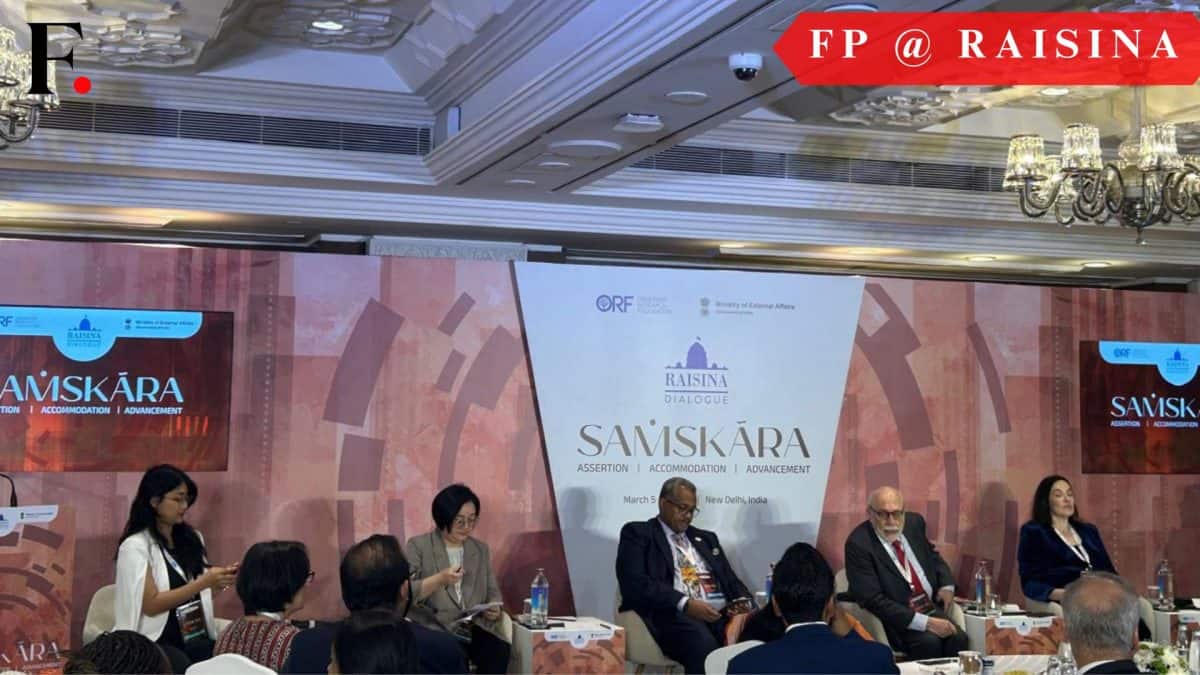
Critics call them a "complementary and odd group," a polite way of saying they are a mess of contradictions. But that assessment misses the invisible thread pulling them together. It isn't shared values. It’s a shared memory of being left outside in the rain.
The Quiet Hunger for a New Ledger
Consider a small business owner in Jakarta or a central banker in Cairo. For fifty years, their economic survival has been tied to the health of the U.S. dollar. When the Federal Reserve sneezes, they catch pneumonia. When a conflict breaks out on a different continent, their supply chains snap because the financial plumbing of the world is controlled by a handful of Western capitals.
This isn't just about money. It is about agency.
The surge in BRICS interest isn't a sudden love for multipolarity for the sake of a textbook definition. It is a pragmatic, cold-eyed realization that the "Old Guard" is no longer the only game in town. The world is witnessing a massive, messy, and highly experimental uncoupling from a single point of failure.
Imagine a global marketplace where the currency you use isn't a political tool used against you. That is the dream being sold. Whether it can be delivered is a different story, but the hunger is real. It is a hunger that goes beyond GDP or export quotas. It is about a world that doesn't just have one center of gravity.
The Fractured Foundation
But building a house is hard when the architects can't agree on where to put the door.
India and China are neighbors who have, at times, looked at each other over the barrels of guns in the Himalayas. Brazil is a vibrant democracy with its own internal pendulum. Russia is an isolated fortress, and South Africa is a nation navigating its own complex domestic story.
The "oddness" of this group is its greatest weakness. How do you create a unified trade policy when your members are also rivals? How do you create a bank—the New Development Bank—that doesn't just replicate the very institutions you are trying to bypass?
The answer isn't in a shared ideology. It is in a shared grievance.
There is a sense that the current world order is a gated community where the rules were written before the rest of the world arrived. When the G7 meets, it feels like a high-school reunion of the popular kids. When BRICS meets, it feels like the rest of the class is finally forming a study group.
They are learning that power is never given; it is taken by creating a credible alternative. That alternative is still a work in progress. It is a rough draft of a new global operating system.
The Quiet Power of the Non-Aligned
The mistake people make is assuming this is a "Cold War 2.0." It's not.
In the old Cold War, you had to pick a side. You were either for the West or for the Soviet Union. Today, the world is becoming "multi-aligned." A country like India or Egypt wants the best of both worlds. They want American tech and Chinese infrastructure. They want the dollar for trade but their own local currencies for regional stability.
This isn't betrayal. It is survival.
Consider what happens when the traditional powers try to enforce their will through sanctions or trade barriers. In the past, there was nowhere to turn. Now, there is a second, albeit slower, door. It is a door that leads to a different kind of bank, a different kind of supply chain, and a different kind of conversation.
We are living through the "Great Uncoupling." It is the moment when the world realizes that one size does not fit all. The BRICS nations are the physical manifestation of this realization. They are an experiment in what happens when the "rest" of the world decides to stop waiting for an invitation to the main table.
The Human Stakes of a Financial Divorce
Why does any of this matter to you?
If you are a consumer in New York, a farmer in Kansas, or a coder in Bangalore, the world is becoming more expensive and more unpredictable. The old efficiencies of a single, unified global market are being traded for the resilience of a divided one.
We are moving into an era of "just-in-case" instead of "just-in-time."
The invisible stakes are the prices on your supermarket shelves and the stability of your retirement fund. If the BRICS nations succeed in creating a parallel financial system, it will be the biggest shift in global power since the end of World War II. If they fail, it will be a chaotic, fragmented world where no one is truly in charge.
The tension is visible in every summit. Every joint statement is a compromise. Every expansion is a risk.
But the momentum is undeniable.
The story of the BRICS is not a story of a "complementary and odd group." It is a story of the world's majority deciding that they are tired of being the supporting cast in someone else's movie. They are writing their own script now. It’s a messy script. It has too many characters, a confusing plot, and no clear ending.
But it is their script.
The old world order was a monologue. The new one is a loud, crowded, and often angry conversation. It is a world where the quiet voices are finally being heard, even if they aren't all saying the same thing.
The question isn't whether BRICS will replace the G7. The question is whether we are ready for a world where no single group can claim to speak for everyone.
The era of the "global consensus" is over. The era of the "global negotiation" has begun.
The coffee in the room is still expensive, but the wood of the table is being replaced. The new architects are here. They are odd, they are contradictory, and they are exactly what the future looks like.
The map of the world is being redrawn, not with borders, but with ledgers.
The ink is still wet.