The physical disintegration of Cuba’s electrical grid functions as a lead indicator for the total degradation of the state’s logistical and social infrastructure. When protests flare in Havana and Santiago, they are not merely reactions to darkness; they are the localized output of a systemic failure in energy security, capital allocation, and geopolitical insulation. To understand the current unrest, one must move beyond the binary of "blockade vs. mismanagement" and analyze the specific mechanical and economic bottlenecks that have rendered the Cuban National Electric System (SEN) effectively terminal.
The Tripartite Failure of the SEN
The current crisis is defined by the simultaneous collapse of three critical pillars: fuel procurement, generation capacity, and distribution infrastructure. These are not independent variables; they form a feedback loop where the failure of one accelerates the decay of the others.
- Generation Obsolescence: The backbone of the SEN consists of eight aging thermoelectric plants (PTEs). These facilities have an average operational age exceeding 40 years, well beyond the standard 25 to 30-year lifecycle for heavy-oil steam turbines. Because these plants were designed to run on specific fuel grades, the shift to lower-quality domestic crude—which has high sulfur content—causes accelerated corrosion in boiler tubes and heat exchangers. This creates a permanent state of "forced outages" (salidas imprevistas) where repairs are reactive rather than preventative.
- Fuel Liquidity Constraints: Cuba’s energy matrix is roughly 95% dependent on fossil fuels. The decline in subsidized shipments from Venezuela has forced the Cuban state to enter the spot market, where they face severe liquidity constraints. The U.S. embargo acts as a cost multiplier here, not by a total ban on trade, but by restricted access to the dollar-clearing system and the "vessel contagion" effect, where shipping companies charge a premium to dock in Cuban ports due to the risk of secondary sanctions.
- Distributed Generation Fragility: In 2006, the "Energy Revolution" introduced thousands of small diesel generators to decentralize the grid. While this was intended to provide resilience, it created a massive logistical burden. Transporting diesel via truck to thousands of disparate sites is significantly less efficient than piped fuel to a central plant. As the domestic transport fleet suffers from its own parts and fuel shortages, these "decentralized" solutions have become the weakest link in the chain.
The Economic Cost Function of a Blackout
A blackout in a modern economy is a non-linear event. The damage is not simply the sum of hours without light; it is a cumulative destruction of capital and biological safety.
- Cold Chain Disruption: In a country with chronic food shortages, the loss of refrigeration is catastrophic. The energy crisis forces households to process or consume all perishable proteins immediately upon a power cut, leading to "forced consumption" cycles that destroy household savings and food security.
- Industrial De-leveraging: To maintain basic residential service, the government shuts down high-consumption industrial sectors. This halts the production of construction materials, processed foods, and export goods, further starving the state of the foreign exchange required to buy more fuel.
- Water Distribution Failure: Most of Havana’s water supply relies on electrical pumps to maintain pressure in the aging pipe network. Without power, water stagnates, and gravity-fed systems cannot reach the upper floors of high-density housing, creating a secondary public health crisis.
Logistics of Civil Unrest: The Havana Flashpoint
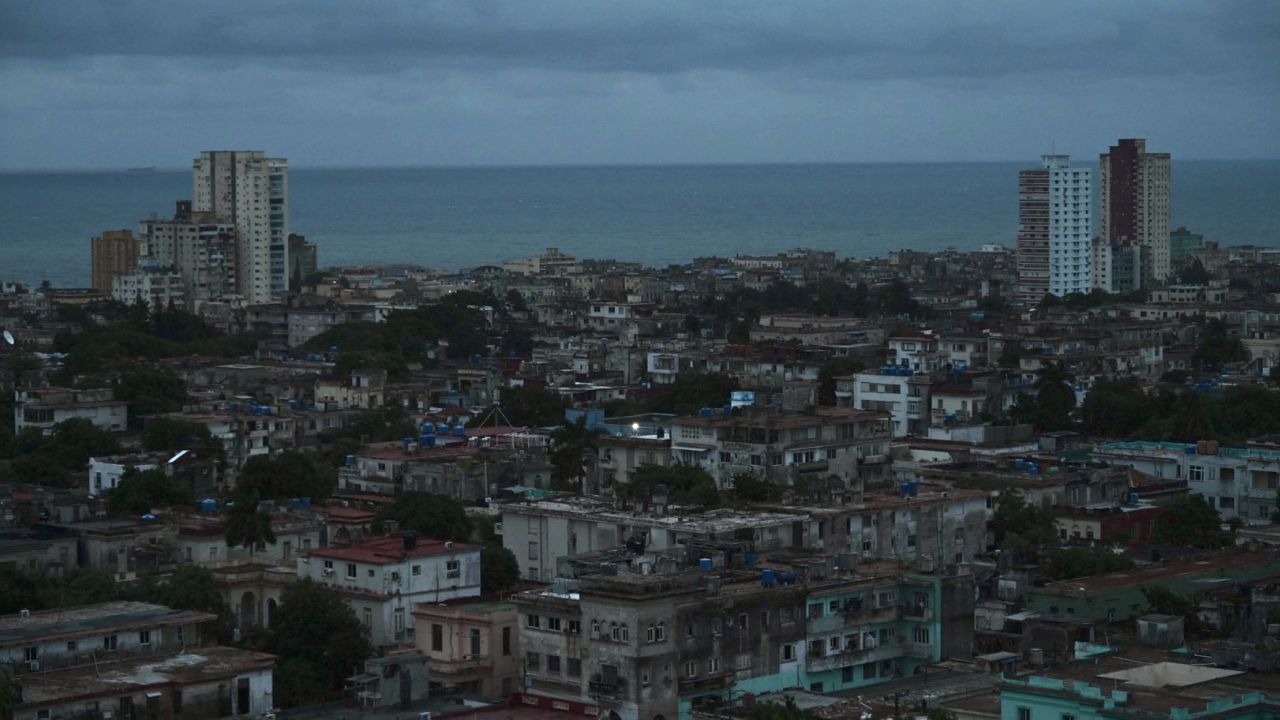
Protests in Havana differ from those in rural provinces due to the city’s population density and its symbolic role as the seat of power. The Cuban government historically prioritizes the Havana grid (the "Capital Protection" strategy) to minimize the risk of mass mobilization. When the lights go out in the Vedado or Cerro neighborhoods for extended periods, it signals that the state has lost the ability to manage its most critical strategic asset.
The anatomy of these protests follows a predictable sequence:
- Threshold 1 (6–12 hours): Passive frustration. Residents remain indoors, hoping for a restoration of the phase.
- Threshold 2 (12–24 hours): The "Casserole" phase. Spontaneous noise protests (cacerolazos) occur from balconies, signaling collective awareness.
- Threshold 3 (24+ hours): Street mobilization. Once refrigeration fails and the heat becomes intolerable, the cost of staying inside exceeds the perceived risk of state repression.
The state’s response—the "Patrol and Restore" tactic—involves moving heavy police presence into the area while simultaneously prioritizing that specific circuit for temporary power restoration. This is a tactical fix for a strategic deficit; it quiets the neighborhood but further destabilizes the national grid by creating uneven loads.
The Geopolitical Arbitrage Gap
Cuba’s energy strategy has relied on finding a "patron" to provide sub-market rate fuel. The transition from the Soviet Union to Venezuela, and now the attempt to court Russia and Mexico, demonstrates a pattern of external dependence. However, the current global energy market is less susceptible to ideological discounts.
- Russia's Calculus: While Russia has provided occasional shipments and promised to modernize the Mariel power plant, their own "Special Military Operation" costs and logistics limit their ability to provide a total bailout. They view Cuba as a geopolitical lever, but not one worth a multi-billion dollar annual subsidy.
- Mexico’s Role: Petróleos Mexicanos (PEMEX) has emerged as a critical supplier, but internal political pressure within Mexico and the risk of losing access to U.S. markets for their own exports limits how much "free" oil they can provide.
Theoretical Framework: The Energy-Social Contract
In the social contract theory applicable to the Cuban model, the state provides basic utilities and food security in exchange for political compliance. When the state fails to provide electricity, it is a visible, tactile breach of that contract. Unlike inflation or "shortages," which can be blamed on intermediaries or specific stores, a total grid failure is a centralized failure.
The SEN's current state is an entropy problem. The energy required to maintain the system (repairing leaks, fixing turbines, buying fuel) is now higher than the energy the system is capable of producing and monetizing. In physics, this is a terminal state. In political economy, it is the precursor to structural transition.
Strategic Forecast: The Move Toward Micro-Grids
The Cuban state has no path to a total grid recovery within the next five years. The capital requirements for a full PTE overhaul exceed $5 billion, a sum unavailable through current credit lines. Therefore, the strategic pivot will likely move toward "Islanded Micro-grids."
We can expect a fragmentation of the national grid into smaller, self-contained zones. These zones will be prioritized based on:
- Hard Currency Generation: Tourism hubs like Varadero and the keys will be separated from the national grid via dedicated solar farms and independent diesel generators.
- Military and Administrative Hardening: Dedicated lines for government buildings and hospitals.
- Tiered Residential Access: High-density urban centers will receive "rationed" windows of power, while rural areas are essentially left to off-grid survival.
The move toward small-scale solar is being incentivized by the government (allowing tax-free import of panels), but this creates a "Class-Based Energy Gap." Only those with access to foreign remittances can afford to opt-out of the failing national grid. This privatization of energy resilience undermines the egalitarian claims of the Cuban state and creates a new socio-economic hierarchy based on kilowatt-hour autonomy.
The survival of the current administration depends on its ability to secure a massive, immediate infusion of liquid natural gas (LNG) or fuel oil from a new partner. Without this, the frequency and intensity of grid-driven protests will increase as the physical infrastructure continues its inevitable slide toward total stasis. The grid is not being repaired; it is being cannibalized to keep the lights on for one more night.