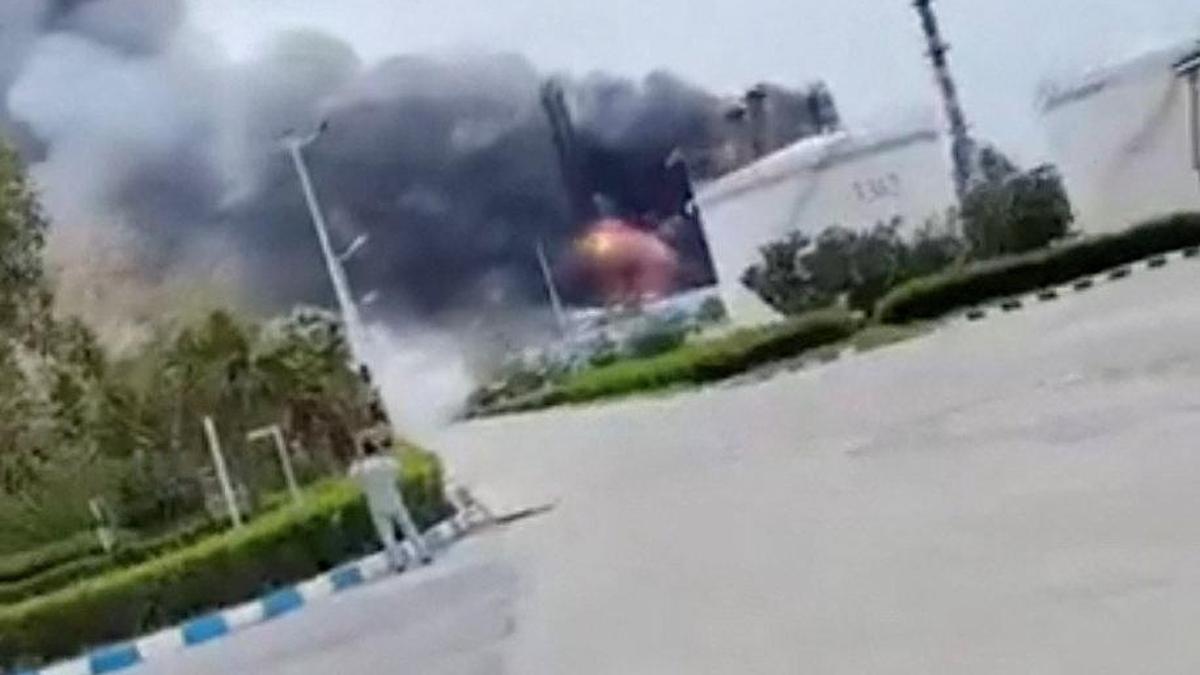
The ink on the Pakistan-brokered ceasefire wasn't even dry before the sky over the Persian Gulf lit up with outgoing interceptors. If you thought a two-week truce between Washington and Tehran would bring a moment of peace to the world's most sensitive oil arteries, you've been misreading the room. On Wednesday morning, April 8, 2026, the fragile diplomatic pause shattered as Iran launched a coordinated wave of drone and missile strikes against the United Arab Emirates and Kuwait.
The timing is the story here. Just hours after Donald Trump announced a suspension of US bombing in exchange for the reopening of the Strait of Hormuz, Tehran’s state TV (IRIB) confirmed that "retaliatory" strikes were underway. This wasn't a random act of aggression; it was a direct response to a strike on Iran's own Lavan Island refinery earlier that morning.
The Lavan Island Trigger
At around 10:00 am local time, the Lavan Oil Refinery—a facility that handles roughly 60,000 barrels of crude a day—was hit. While the Iranian National Oil Refining and Distribution Company called it a "cowardly attack," the fallout was immediate. Iran’s military doctrine doesn't do "de-escalation" in the face of what it perceives as a violation of a truce.
Within two hours, the counter-strikes began. This isn't just about "eye for an eye" anymore. It's about Iran proving that even under a ceasefire, they can and will reach across the water to hit the most vital organs of the global energy market.
Kuwait and the UAE Under Fire
Kuwait felt the brunt of the drone swarm. Their military confirmed that starting at 8:00 am, air defenses engaged a massive wave of 28 Iranian drones. It wasn't just a show of force. The damage reports coming out of the Mina al-Ahmadi refinery and the Shuwaikh oil complex are significant. We're talking about serious infrastructure hits to power stations and desalination plants.
In the UAE, the story was similar but more technologically advanced. The Ministry of Defence reported intercepting a mix of ballistic and cruise missiles alongside UAVs. Despite the interceptions, debris caused a fire at the Habshan gas complex in Abu Dhabi.
Why hit these specific spots?
- Economic Leverage: By targeting refineries and desalination plants, Iran hits both the export capacity and the domestic survival of its neighbors.
- Geopolitical Warning: It sends a message to the US and Israel that Gulf allies are "soft targets" if Iranian soil is touched.
- The Hormuz Factor: Iran is currently charging "transit fees" for the Strait of Hormuz, effectively treating the international waterway as a private toll road. Strikes on UAE and Kuwaiti facilities make those alternatives look even more precarious.
Why This Ceasefire Was Born to Fail
Let’s be honest. This "two-week pause" was never a peace deal. It was a tactical breather. The US claims to have achieved its military objectives, but the reality on the ground is a mess of overlapping conflicts. Israel, while technically backing the Trump-led pause, hasn't stopped its operations in Lebanon. Iran has already threatened to scrap the entire deal if those strikes continue.
The global energy market is already reeling. Brent crude is sitting around $109 a barrel, a 50% jump since February. When you hit a refinery like Mina al-Ahmadi, you don't just stop the oil today. You create a multi-month repair nightmare that keeps supply suppressed.
The Reality of Middle East Conflict in 2026
If you're looking for a silver lining, you won't find it in the official press releases. The "Islamabad Talks" are still on the calendar, but they’re happening while smoke is literally rising from the Sitra energy hub in Bahrain and the East-West pipeline in Saudi Arabia.
The strategy from Tehran is clear: demonstrate that there is no safety for anyone in the Gulf if Iran's oil infrastructure isn't protected. They aren't just fighting the US; they’re holding the global economy hostage by proxy.
Watch the shipping insurance rates next. If you're a maritime operator or an energy trader, the "ceasefire" is a label, not a reality. You should be planning for sustained volatility. The next steps aren't found in diplomatic cables—they're found in the repair schedules of the Lavan and Habshan facilities. If those don't come back online under a genuine security guarantee, expect the $120 barrel to be the new floor, not the ceiling.