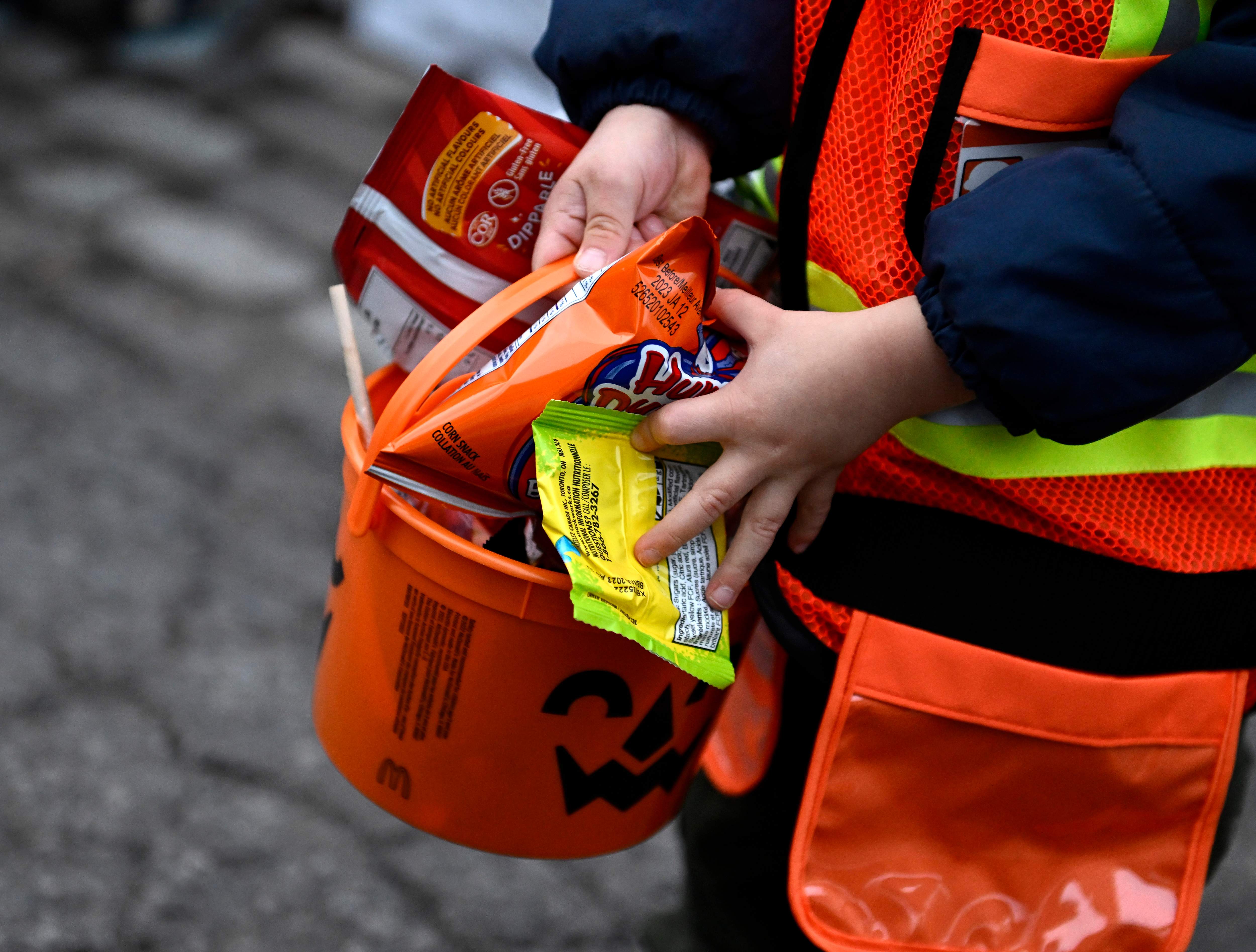
Every November, the exact same script runs like clockwork. A few families report finding a pin, a needle, or a stray pill in Halloween treats. Police issue urgent advisories telling parents to inspect every wrapper. News outlets run breathless roundups stitching together isolated reports from Winnipeg to Alberta to Atlantic Canada into a national menace.
And parents dutifully sort through pillowcases at midnight, feeling like responsible guardians.
Except the entire ritual rests on a lazy consensus. Standard coverage treats a handful of unverified or isolated reports as proof of a widespread threat to children. It validates the fear first and asks hard questions second, if it asks them at all.
When you strip away the seasonal panic and look at actual criminological evidence, the threat profile looks almost nothing like the headlines suggest. Worse, obsessing over candy tampering wastes limited parental attention on risks that genuinely injure and kill kids every October 31.
The Main Arguments of the Standard Candy-Panic Script
Competitor reports follow a remarkably predictable formula whenever Halloween wraps up. First, they aggregate scattered police notices across multiple cities to create an impression of momentum and scale. A pin in one province, a needle in another, a suspicious pill in a third becomes a wave of "tampered treats".
Second, they echo law enforcement's default advice: check every piece of candy, throw out anything suspect, and stay vigilant. That sounds sensible on the surface. Nobody wants a kid bitten by a sewing needle.
Third, they treat the mere existence of a report—or a photo posted on social media—as near-confirmation of malicious intent by a stranger. Rarely do those stories pause to separate alleged tampering from confirmed tampering, or to ask why real harm from trick-or-treat candy remains virtually nonexistent in decades of tracking.
What Criminologists Actually Found When They Tracked the Threat
Sociologist and criminologist Joel Best at the University of Delaware has spent decades tracking reports of Halloween candy contamination going back to the late 1950s. His findings—alongside broader criminological and public health reviews—cut straight through the folklore.
There is no credible evidence of a stranger poisoning a child to death through trick-or-treat candy. Famous historical scares often turn out to be fabrications, copycat claims after unrelated crises like the 1982 Chicago Tylenol murders, or crimes committed by someone known to the child rather than a random neighbor handing out death at the front door. Even in the famous 1974 Texas case where a child died after eating cyanide-laced Pixy Stix, the killer was the boy's own father trying to collect life insurance—not a random stranger targeting neighborhood kids.
When sharp objects like pins or needles do show up in reports, a massive share turn out to be hoaxes, attention-seeking pranks by kids or teens, or unsubstantiated claims. When genuine tampering by an outsider has been confirmed over the years, injuries have overwhelmingly been minor or nonexistent—a scratch, a prick, a scare rather than a catastrophe.
Imagine a scenario where a neighborhood reports three separate cases of metal objects in chocolate bars after Halloween. A reader seeing a combined headline assumes an organized or active saboteur is stalking the streets. Yet police investigations frequently find no geographic cluster, no prior injury, and no physical proof linking the candy to a specific house—leaving open possibilities ranging from a kid staging a prank to an isolated fluke or an unverified social media post.
Calling out that pattern isn't about mocking worried parents. When a child's safety is on the line, instinct moves faster than statistics. Still, letting a rare, sensationalized edge case dictate how we spend our protective energy is bad risk management.
Why Police Warnings and Media Roundups Keep Repeating
Police departments have a clear institutional incentive to issue cautionary notices. If an officer says, "Probably a hoax, don't worry about it," and one real needle turns up, that department looks reckless. Saying "inspect your treats and report anything unusual" costs nothing and shields the agency from criticism.
Media outlets have their own incentives. Fear gets clicks. A story about a pin in a chocolate bar triggers an immediate visceral reaction—sharp metal inside something sweet meant for a child. Nuance about base rates, hoax dynamics, and urban legends doesn't compete well in a breaking-news feed.
Add social media to the mix and the loop accelerates. A photo of a sewing pin next to a mini chocolate bar travels fast long before investigators verify whether the wrapper was actually sealed, where the treat came from, or whether the story holds up under scrutiny.
The Real Question Parents Should Be Asking
Instead of asking, "How do I spot tampered Halloween candy?" parents should ask a sharper question: Where are kids actually getting hurt on Halloween night?
The answer isn't mysterious, and it isn't hiding inside a foil wrapper. Pedestrian collisions with motor vehicles are a far deadlier, far more consistent hazard on Halloween than candy contamination has ever been. Darkness arrives earlier, kids move in groups across streets in costumes that can limit visibility or peripheral sightlines, drivers are distracted, and excitement makes children dart without looking.
Choking hazards for toddlers, food allergies, and basic traffic visibility pose real, measurable risks every single year. A phantom razor blade or poison plot makes a much better thriller than a distracted driver rolling through a crosswalk, which is precisely why people fixate on the candy.
Battle Scars, Nuance, and Where This Contrarian Take Can Go Wrong
I've spent years watching organizations, brands, and public communicators pour time and money into fighting the wrong crisis because the loud narrative felt urgent. When teams chase headlines instead of base rates, they build elaborate defenses against a one-in-a-million ghost while leaving the front door wide open to routine failures.
To be crystal clear on terminology: candy tampering means deliberately altering or contaminating a treat after manufacture, whether by an outsider, an acquaintance, or a hoaxer claiming tampering occurred. Manufacturing defects or accidental foreign objects entering food during industrial processing are a separate mechanical issue, even though both can put metal or debris near food.
Now for the honest downside of taking a hard contrarian stance here. Push skepticism too far, and you risk overcorrecting into complacency. A hoax is likely; zero tampering ever happening is not. If a real, malicious person does slip a needle or a pill into treats in a given town, brushing off every report as "just another urban legend" could cause a parent to ignore a genuine warning in their own zip code.
There is also a practical cost to parents: spending five minutes glancing over wrappers or tossing obviously torn packages isn't a massive burden. If a quick visual check gives a tired parent peace of mind without sparking terror or canceling trick-or-treating, that small habit has harmless value—provided it doesn't crowd out real safety measures.
Practical Moves That Actually Protect Kids
Skip the late-night forensic investigation of every wrapper and put your effort where the math actually points:
- Prioritize street safety over wrapper paranoia: Carry bright flashlights or wear reflective gear, walk facing traffic where sidewalks are missing, cross only at corners, and hold younger kids' hands near driveways and intersections.
- Treat reports with healthy proportion: If local police issue a specific warning for your exact neighborhood, pay attention—but don't treat three unrelated stories across two provinces as a reason to panic.
- Manage food realities simply: Throw away torn or unsealed packages, watch out for allergens and small hard candies with young children, and let kids enjoy the night without turning a neighborhood tradition into a hostage situation.
The real danger of Halloween candy scares isn't what's inside the wrapper. It's letting manufactured dread blind you to the road right outside.